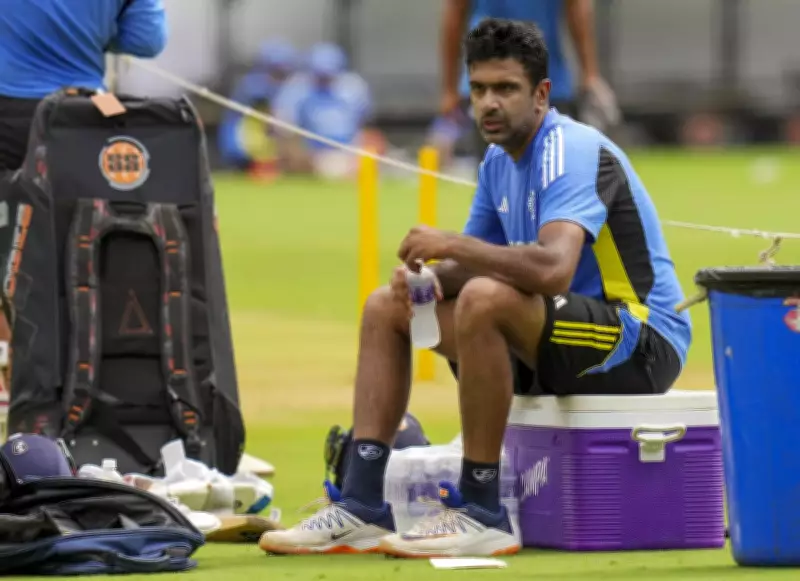
Ravichandran Ashwin Sounds Alarm on Cricket's Social Media 'Disease'
Indian spin maestro Ravichandran Ashwin has issued a stark warning about the escalating impact of organized 'fan armies' across social media platforms, suggesting that many of these digital narratives may not be entirely organic. The veteran off-spinner, who recently concluded his illustrious international career, characterized this troubling trend as a 'disease' that is fundamentally altering the culture surrounding Indian cricket.
Echoing Concerns of Cricket Legends
Ashwin's pointed observations resonate with similar apprehensions previously voiced by cricket icons Sunil Gavaskar and current India head coach Gautam Gambhir. Both legends have, at various times, questioned the increasing emphasis on individual superstars over collective team performance. This growing chorus of concern highlights a significant shift in how the sport is consumed and discussed in the digital age.
'There's something of a disease going around right now,' Ashwin stated emphatically during his appearance at the Revsportz Conclave in Kolkata. 'Many of the opinions that surface on social media through fan armies – I've heard them before, first-hand. Sometimes, I've heard these exact views at a breakfast or lunch table, only to see them later appear online under a different name. That's when you start to wonder: how is this happening?'
The Rise of Orchestrated Narratives and Player Entrepreneurship
While acknowledging that contemporary cricketers are actively building personal brands and managing their public personas, Ashwin drew a clear ethical line. He emphasized that such efforts become problematic when they deliberately undermine or target fellow players.
'I'm not saying players themselves are planting these opinions, but it is concerning. Is there some kind of orchestration? I can't say for certain, but there does seem to be a structured ecosystem at play,' he explained. 'Today, every player is an entrepreneur, and amplifying opinions externally can enhance brand value or improve PR. I understand that. But speaking negatively about another cricketer is something I would never do.'
From Cricket Analysis to Personal Criticism: A Case Study
Ashwin provided a revealing personal anecdote to illustrate his point. He recounted the backlash he faced after posting a technical analysis of Indian captain Shubman Gill's dismissals on social media. What began as an objective, cricket-focused breakdown swiftly devolved into accusations from certain fan factions that he was unfairly targeting a specific player.
'Where did this all begin? We started creating narratives around players. We built a superhero culture, almost cinematic in nature. Who even talks about cricket anymore? Hardly anyone focuses on the game itself,' Ashwin lamented.
He elaborated further: 'Some time ago, I shared a Twitter thread explaining the technical reasons behind Shubman's dismissals. For me, it's always about the 'what' and the 'why', never the 'who'. But it quickly turned into a comparison – why focus only on Shubman and not others? I wondered, do people even follow what I say? The problem is, we've shifted the conversation away from the essence of the game and made it about individuals.'
A Storied Career Concludes Amidst a Changing Landscape
Ashwin's comments come shortly after he announced his retirement from international cricket during the 2024-25 Border-Gavaskar Trophy. The decision followed his omission from the Perth Test, with all-rounder Washington Sundar being selected ahead of him. Recognizing that the team was embarking on a new direction, the champion bowler chose to step away.
He leaves the international arena as one of India's greatest-ever bowlers, finishing as the country's second-highest wicket-taker in Test cricket. His remarkable tally of 537 wickets from 106 Test matches places him behind only the legendary Anil Kumble in the all-time Indian rankings, cementing his legacy as a true giant of the sport.
Ashwin's critique extends beyond mere social media commentary; it is a profound reflection on the evolving soul of cricket fandom. His warning serves as a crucial reminder to preserve the sport's integrity and keep the focus firmly on the beauty of the game itself, rather than the manufactured dramas that increasingly surround it.