Remembering Andy Ganteaume: The One-Test Wonder Who Outshone Bradman
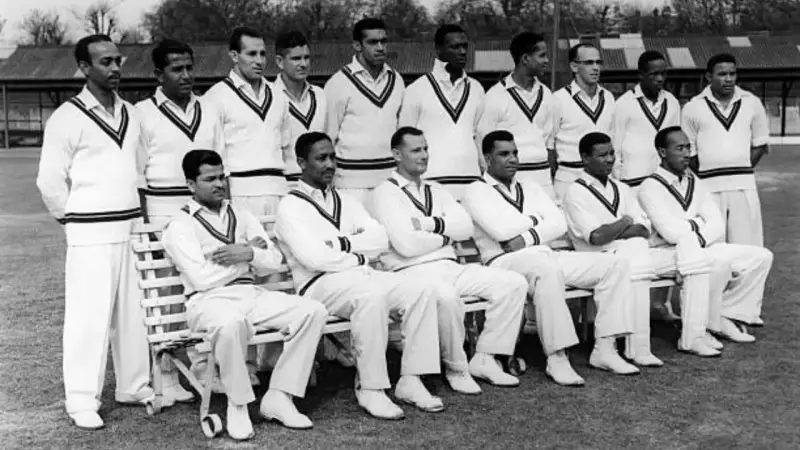
On January 22, exactly 105 years ago, a cricketing legend was born in Belmont, Port of Spain, Trinidad. Andrew Gordon Ganteaume, affectionately known as Andy Ganteaume, entered the world in 1921 and would carve out a unique place in cricket history with just one remarkable Test appearance.
A Solid First-Class Foundation
Ganteaume began his cricketing journey in the 1940/41 season, making his first-class debut for his home team Trinidad. Over his career, he played 50 first-class matches, accumulating 2,785 runs at a respectable average of 34.81. His batting prowess included five centuries and 17 half-centuries, while his wicketkeeping skills saw him take 34 catches and effect three stumpings.
While these numbers represented a solid domestic career, it was a single Test match that would immortalize his name in cricket folklore.

The Historic Test Debut
In February 1948, the then 27-year-old received his Test cap for the West Indies against England at his home ground in Port of Spain. What followed was nothing short of spectacular. Opening the batting in front of his home crowd, Ganteaume crafted a magnificent 112 runs in his debut innings, striking 13 boundaries along the way.
Remarkably, this would prove to be his only Test innings, as he never represented the West Indies again at the international level. He continued playing for Trinidad until the 1962/63 season and lived to celebrate his 95th birthday before passing away in February 2016.
The Statistical Anomaly That Surpassed Bradman
That solitary century created one of cricket's most fascinating statistical anomalies. With just one completed innings of 112 runs, Ganteaume finished his Test career with a batting average of 112. This placed him above none other than cricket's greatest legend, Sir Don Bradman, who famously concluded his illustrious career with an average of 99.94 after being dismissed for a duck in his final Test innings.
The Match That Made History
The historic Test match unfolded with England captain Gubby Allen winning the toss and electing to bat first. England posted 362 in their first innings, thanks largely to opener Billy Griffith's 140. West Indies bowler Wilf Ferguson impressed with figures of 5 for 137.
When West Indies came out to bat, Ganteaume and opening partner George Carew put on a commanding display. At stumps on Day 2, the pair had taken the score to 160/0, with Ganteaume unbeaten on 52 and Carew approaching his century.
The following day saw both openers reach milestones. Carew was eventually dismissed for 107, while Ganteaume completed his memorable century, finishing with 112 runs. West Indies ended the day at 447/6, holding an 85-run lead over England.
After being bowled out for 497 in their first innings, West Indies set England a challenging target. The visitors managed 275 in their second innings, with Ferguson completing an impressive 10-wicket match haul (11 for 229 overall). The match concluded in a draw with West Indies at 72/3 in their second innings.
Interestingly, despite opening in the first innings, Ganteaume did not bat in the second innings, adding another layer of intrigue to his brief Test career.
Why Only One Test?
The question that has intrigued cricket historians for decades remains: why did a century-maker on debut never play another Test? During this era, the West Indies boasted a formidable batting lineup featuring legends like Walcott, Worrell, Weekes, Sobers, Kanhai, Rae, Stollmeyer, and Gomez.
Contemporary accounts suggest that Ganteaume's approach during the latter stages of his century innings may have contributed to his omission. Jeff Stollmeyer later wrote that "Andy's innings in its later stages was not in keeping with the state of the game and his captain [Gerry Gomez] was forced to send a message out to him to 'get on with it.'"
This perceived slow scoring rate, possibly costing West Indies a victory chance, combined with the team's batting riches, likely sealed his international fate.

A Record That Stands Today
Currently, only one batter has a higher Test average than Ganteaume's 112: Australia's Kurtis Robert Patterson, who averages 144 after two Tests. However, since Patterson remains an active cricketer, Andy Ganteaume continues to hold the record for the highest career batting average in Test history among retired players, maintaining his statistical superiority over even the great Don Bradman.
His story serves as a fascinating footnote in cricket history—a reminder that sometimes, a single brilliant performance can create a legacy that endures for generations, outshining even the most celebrated careers through a unique statistical quirk.