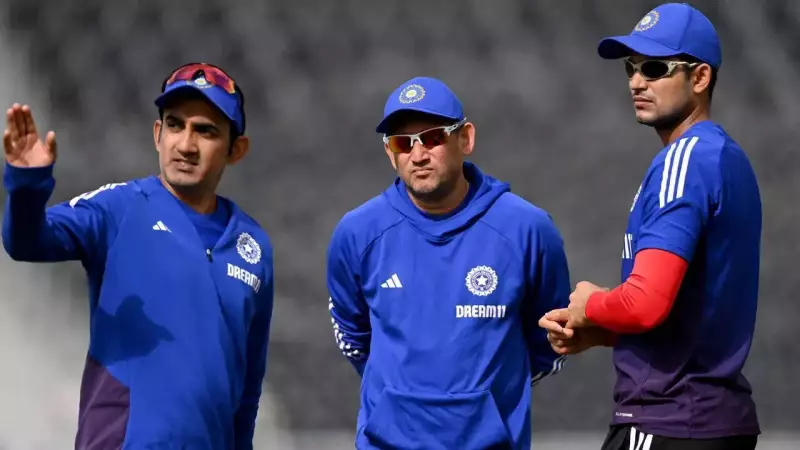
Chief Selector's Domestic Absence Raises Eyebrows
Ajit Agarkar, the chief selector of the Indian cricket team, has become a familiar sight during net sessions across international venues, often seen in the team's training kit and Cloudmonster joggers. His presence is particularly notable during overseas tours, where he divides his time between monitoring squad performances, golf courses, and exploring local attractions.
From walking along Birmingham's famous canal stretches during India's England tour to sampling renowned eateries in Australia, Agarkar maintains an active travel schedule. When not engaged with cricket duties, he frequently attends birthday celebrations of close acquaintances at exotic destinations.
The Missing Domestic Connection
However, this extensive travel itinerary has notably excluded India's vast domestic cricket circuit, particularly the Ranji Trophy, which has historically served as the primary feeder system for the national team. Agarkar's appearances at domestic fixtures have been scarce, creating what many perceive as a growing disconnect with the grassroots level of Indian cricket.
The last significant domestic appearance by Agarkar occurred during the 2024 Ranji Trophy fixture between Tamil Nadu and Karnataka in Chennai. This visit proved consequential, as it led to Devdutt Padikkal receiving his maiden Test call-up as replacement for KL Rahul in the home series against England. Padikkal, riding high from his 151-run innings, subsequently made his Test debut.
This single instance raises important questions about how many potential talents might be overlooked due to the chief selector's limited domestic engagement. The current selection pattern over the past 24 months shows several instinct-driven choices, including Dhruv Jurel, Nitish Kumar Reddy, Padikkal, and Sai Sudharsan - all selected despite limited First-Class experience.
Consistent Performers Overlooked
Meanwhile, established domestic performers with substantial First-Class records like Sarfaraz Khan, Abhimanyu Easwaran, Karun Nair, Rajat Patidar, and Baba Indrajith have received inconsistent backing from selectors. Indrajith's case particularly highlights this trend, as he waited years for his India A call-up during the tour preceding the Border-Gavaskar Trophy, only to be subsequently overlooked.
The selection committee under Agarkar's leadership faces criticism for its handling of proven domestic performers. Both Sarfaraz and Abhimanyu were unexpectedly dropped from the setup to accommodate players with minimal First-Class experience but stronger systemic support.
Communication has emerged as another concern during Agarkar's tenure. Unlike previous selection committees that maintained working relationships with the National Cricket Academy, India A, Under-19 setups, and state associations, the current approach appears more detached.
Contradictory Standards
The situation becomes particularly intriguing given the strict stance taken against players skipping domestic cricket. Shreyas Iyer and Ishan Kishan faced central contract suspensions for not representing their state teams, while pressure was applied on Hardik Pandya to prove himself for Baroda.
Even established stars like Rohit Sharma and Virat Kohli were compelled to play Ranji Trophy matches, though these appearances seemed perfunctory given India's subsequent focus on white-ball cricket and the Champions Trophy preparation.
During the last 12 months, Agarkar has traveled extensively overseas, including multiple trips to Australia and Dubai, often accompanied by fellow selector SS Das. Notably, one such tour during a white-ball series in Australia coincided with the Ranji Trophy season back home, raising questions about priority allocation.
This pattern isn't new for Agarkar. During his previous role as Mumbai's chief selector, he faced similar criticism for insufficient local game attendance and questionable selection decisions, eventually leading to his resignation.
When questioned about the chief selector's domestic absence, a senior BCCI official downplayed concerns, stating that "every score comes on the app." This response has sparked further debate about whether digital tools can adequately replace ground-level talent scouting in cricket selection.
As Indian cricket seeks to strengthen its talent pipeline, the questions surrounding Agarkar's domestic engagement continue to grow louder, demanding answers through concrete action rather than mere explanation.