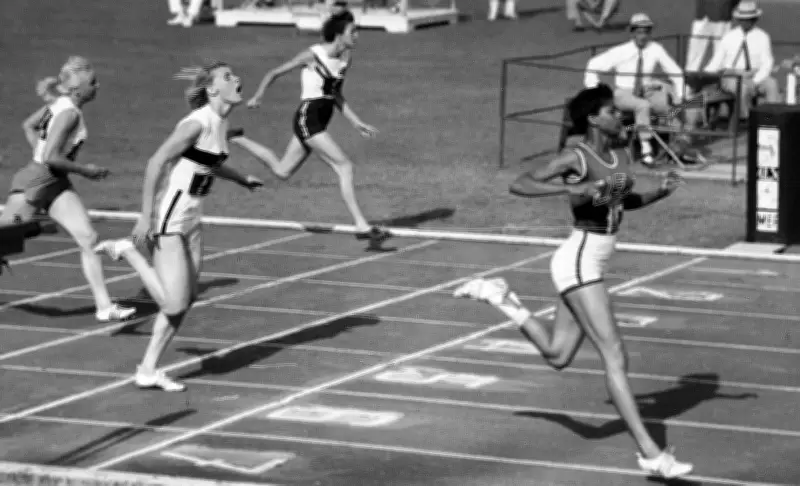
From Crippling Illness to Olympic Glory: The Wilma Rudolph Story
Long before she was celebrated as the fastest woman on the planet, Wilma Rudolph was a child whose future mobility was doubted by medical professionals. Born in 1940 near Clarksville, Tennessee, she entered a world of poverty and racial segregation as one of 22 siblings in a large, struggling family.
A Childhood Defined by Struggle and Resilience
As a young girl, Rudolph faced a daunting series of health challenges that would have broken many spirits. She battled pneumonia, scarlet fever, and most significantly, polio, which left her dependent on a leg brace and orthopedic shoe for years. Her family made arduous journeys to Nashville for specialized treatment, navigating a difficult path toward recovery that seemed anything but certain.
This slow, determined journey back to basic mobility would become the foundational chapter of a life story that would later seem almost miraculous in its trajectory from disability to world-class athletic achievement.

The Remarkable Physical Transformation
By age 12, through sheer determination and relentless effort, Rudolph had progressed to walking without her leg brace. Her high school years revealed not just recovery but explosive athletic talent. She emerged as a standout basketball player and runner in Clarksville, catching the attention of a Tennessee State University track coach at just 14 years old.
Rudolph later attended Tennessee State University, where she honed her sprinting abilities with such dedication that the girl once told she might never walk properly transformed into one of America's most promising young track stars. Her Olympic debut came at the 1956 Melbourne Games when she was just 16, where she won a bronze medal in the 4x100 meter relay—a modest achievement that signaled greater things to come.
Historic Triumph at the 1960 Rome Olympics
Four years later, at the 1960 Rome Olympics, Rudolph achieved what would become legendary status in athletic history. She captured gold medals in the 100 meters, 200 meters, and 4x100 meter relay, breaking three world records in the process according to official Olympic records.
Historical sources including Britannica and Olympic archives recognize her as the first American woman to win three track-and-field gold medals in a single Olympic Games. Her victories were notable not just for their quantity but for their quality—she competed with remarkable composure, grace, and a seemingly effortless command of speed that earned her the nickname "The Black Gazelle" from admiring journalists.
Symbolism Beyond the Track
Rudolph's Olympic success carried profound significance extending far beyond athletic achievement. At a time when Black women faced systemic barriers to visibility, respect, and equal participation in sports and public life, she claimed center stage on the world's biggest platform and refused to be diminished.
Institutions like the Smithsonian and National Museum of African American History and Culture have contextualized her accomplishments as part of a broader narrative about Black athletic excellence and visibility in the modern Olympic movement. Rudolph became more than a champion—she evolved into a symbol of recovery, Black womanhood, and the extraordinary power required to transform a body marked by illness into one that commanded global attention.
Courageous Stand Against Segregation
When Rudolph returned to Clarksville after her Olympic triumph, she faced another test of moral courage. According to Britannica, when her hometown planned a welcome-home parade, she refused to participate unless Black and white residents could attend together without segregation.
This principled stance transformed the event into Clarksville's first integrated public gathering of its kind. This seemingly small moment revealed Rudolph's understanding that athletic medals meant little if human dignity remained divided. Her position made clear that her concept of victory extended beyond sports—she would not accept celebration on unequal terms.

Life After Competitive Running
Rudolph retired from competitive running in 1962, transitioning to a life dedicated to education, coaching, and public service. She completed her degree and worked as both a teacher and track coach, later serving as a sports commentator while continuing to mentor young athletes.
Even in retirement, she remained committed to the principle that talent requires structure, guidance, and opportunity to flourish. Her story didn't conclude with her final race but expanded into a public life defined by example and mentorship. When she passed away in 1994 at age 54, she left behind more than records—she established a template for resilience that remains powerful precisely because it was never polished into mere mythology but was forged through pain, discipline, and an almost impossible refusal to surrender to limitations.
Enduring Legacy and Inspiration
Wilma Rudolph's life continues to resonate because it embodies multiple profound truths simultaneously: that illness can break a body without breaking a spirit, that talent often emerges from struggle, and that greatness rarely follows a straight, predictable path. She didn't merely overcome polio—she transcended the narrow narratives others had written for her, and in doing so, she expanded possibilities for everyone who followed.
Her journey from childhood disability to Olympic immortality, combined with her principled stand against segregation, creates a legacy that speaks to physical triumph, social courage, and the transformative power of human will—a story that continues to inspire generations long after her record-breaking performances.