Odisha's Tribal Girls Forge a Rugby Revolution in Mayurbhanj
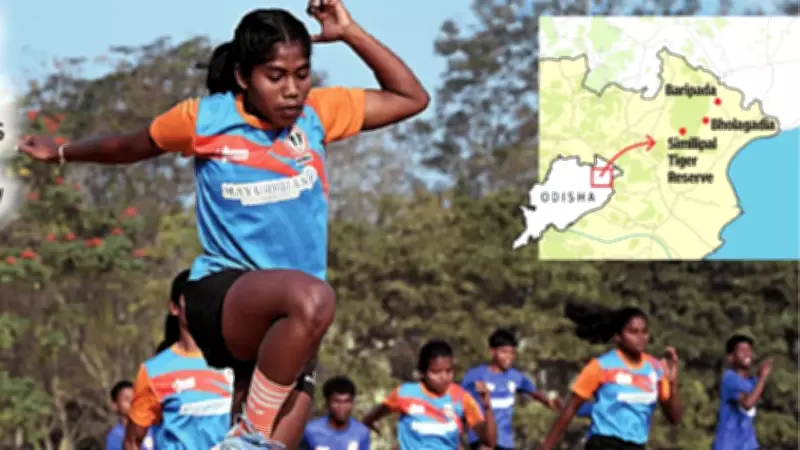
In the remote village of Bholagadia, nestled on the fringes of the Similipal Tiger Reserve in Odisha's Mayurbhanj district, a remarkable transformation is underway. Here, where child marriage remains prevalent and resources are scarce, a group of tribal girls is shattering stereotypes and carving out a bold new path through the sport of rugby. Initially met with reluctance, their families and communities have now become their staunchest supporters, pooling resources to fuel these young athletes' dreams.
From Reluctance to Pride: A Community's Journey
Bholagadia, known for its proximity to the only abode of the black tiger, has quietly evolved into a breeding ground for a brave band of youngsters. These players are not only making a name for themselves but also putting Mayurbhanj on India's rugby map. The story is led by determined girls, but it is the entire community that has fostered their success, playing a crucial supporting role in this grassroots sporting revolution.
Old residents ignited the initial spark, while the generosity of villagers and gram panchayats sustained the effort. Local patrons provided encouragement, and pride in the youngsters' achievements has turned a small initiative into a full-blown movement. However, like all great stories, this one began with significant hurdles.

Personal Triumphs: Arati and Parbati's Stories
On a late afternoon, about 30 boys and girls train at Bholagadia's modest arena, framed by forests and rolling hills. Commanding the field with quiet authority is Arati Murmu, 21. Among the players, twenty are tribal girls who sprint, pass, and tackle with confidence that often surpasses their male counterparts. Arati first picked up a rugby ball at age 11, unaware it would define her life. At 17, facing pressure to marry, she fled home and found refuge at the rugby training centre. Today, she holds two national gold medals.
A few kilometres away in Baripada town, Parbati Hansdah, 20, spends her evenings at Mayurbhanj Law College's playground, coaching juniors in crisp passing and safe tackling techniques. Introduced to rugby in school, she faced stiff resistance when she chose to pursue the sport after class 10. "I asked my parents to give me just one chance. They agreed, but only for a year. If I failed, I'd have to get married," Parbati recalls. She did not fail, having since represented Odisha and India at numerous meets, collecting four gold and two silver medals.
Overcoming Cultural Barriers
Convincing parents was no easy task in a region where early marriage is still practised. "Parents worry more about marrying off their daughters before 18 than allowing them to play a game like rugby, where injuries are common. They would ask us, 'Who will marry them if they break their hands and legs?'. Our real roadblock was not finding fit girls, but counselling their parents. It took a lot of persuasion," says J Sushil Hembram of the Mayurbhanj District Rugby Football Association (MDRFA).
In 2019, Hembram, along with Sunaram Kisku and Dibyaranjan Das—former rugby players from local tribal communities—decided to bring the sport to their villages. Inspired by their experiences at the Kalinga Institute of Social Sciences in Bhubaneswar, where structured training turned raw talent into national-level players, they returned to Mayurbhanj with a simple yet ambitious goal: identify promising tribal youth and introduce them to rugby.
Building Foundations: Academies and Community Support
Das established the Future Star Sports Academy in Baripada, while Hembram and Kisku set up the MDRFA in Bholagadia. They scouted schools across Mayurbhanj, focusing on children aged 8-17 from tribes like Santal, Munda, and Ho, many from families dependent on marginal farming or daily-wage labour. Some are orphans or raised by single mothers struggling to make ends meet. "On the field, our hardships fade into the background, replaced by the will to build a better future through this sport," said Parbati.

Starting with just 5-10 trainees each, the academies now boast over 100 youths who have played at the national level, with many more in training—most of them tribal girls. Arati, Parbati, and Sandhyarani Tudu have represented India internationally. Both centres provide free food, accommodation, and training, with trainees continuing their education at nearby government schools or through distance learning.
Empowerment and Recognition
Arati's father, an autorickshaw driver with unemployed sons, once considered early marriage for her. Recently, she returned home with cheques of Rs 5 lakh and Rs 6 lakh from the Odisha government for her gold medals at national games, placing them in his hands. "The moment was empowering in the truest sense," she says. Her father now sees how rugby has brought recognition and financial support to the family.
Parbati adds, "When I decided to play rugby, my parents were reluctant; wearing shorts and playing a sport considered manly was looked down upon. But when I played for Odisha and India and won gold, my father was the proudest. He now tells everyone to allow their daughters to take up the sport."
Sustained by Community Efforts
What stands out in Mayurbhanj's rugby revolution is its sustenance by the local community, not government support. In a resource-limited region, villagers donate rice, vegetables, and pulses monthly to ensure nutritious food for trainees. "There are panchayat meetings every fortnight. Whenever there is a shortage, we place a list of groceries that are needed, and villagers send everything to our centre," said Hembram.
During surplus harvests, a significant portion of produce goes directly to the training centre, with the rest sold in local markets. Support also comes from migrated youths who have become professionals, noted Baba Dhalaram Hansdah, chief adviser of the MDRFA. The Future Star Sports Academy benefits from well-wishers and the Mayurbhanj Foundation, established by erstwhile royals, which hosted the first-ever Maharaja 7s Rugby Tournament last year, deepening community ownership.
Historical Context and Future Challenges
Sport has long been part of Mayurbhanj's DNA, from traditional warrior disciplines to royal patronage of athletics. "What's powerful is that the same villages that were producing athletes a century ago continue to do so today," said Akshita M Bhanj Deo, a member of the Mayurbhanj royal family.
Today, Mayurbhanj sends the highest number of players to Indian rugby, predominantly girls. Some have received job offers from government and private organisations, but challenges persist. Nutrition remains a top concern, as community donations ensure three meals but not balanced diets. "Athletes need wholesome, nutrient-rich food for rigorous training. That can only come from a proper dietary plan," said Kisku.
Infrastructure is another hurdle, with a lack of quality playgrounds and training facilities hindering high-level practice. Despite India's low rankings in world rugby—women at No. 56, men at No. 86—the girls of Mayurbhanj remain undeterred, dreaming big and proving that no obstacle is too high to overcome.