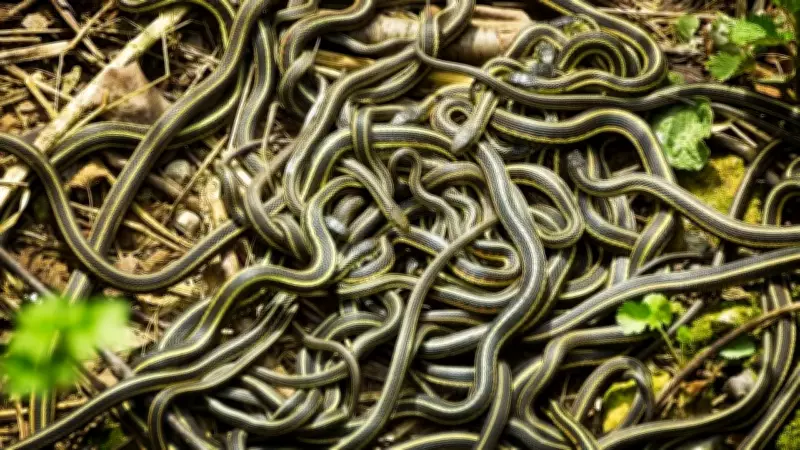
Many wildlife spectacles focus on large animals, migratory birds, or marine creatures. However, one of the most astonishing natural phenomena occurs underground, involving thousands of snakes.
The Narcisse Snake Dens: A Geological Wonder
Each spring in Manitoba, Canada, the Narcisse Snake Dens come alive as tens of thousands of red-sided garter snakes emerge from hibernation. Located approximately 130 kilometers from Winnipeg, near the center of Manitoba's Interlake region, these dens are not a man-made tourist attraction but a unique geological formation shaped by climate and snake behavior. Over millennia, water erosion created underground limestone caverns and fissures that extend below the frost line, maintaining temperatures above freezing even during Manitoba's harsh winters. This natural shelter allows thousands of snakes to survive the cold.
The Spring Emergence
The phenomenon begins in late April to early May, when snakes emerge in droves after months underground. Visitors during peak activity witness thousands of snakes lying on the ground near den entrances. The primary driver of this congregation is reproduction. Males emerge first and gather at den entrances, awaiting females. When a female surfaces, dozens of males form a "mating ball" around her, sometimes comprising over a hundred individuals competing to mate. This spectacle has become iconic at Narcisse and is widely photographed.

Astounding Numbers and Safety
The sheer number of snakes is staggering, with estimates ranging from 70,000 to over 100,000 individuals. Despite their abundance, the red-sided garter snake, a subspecies of the common garter snake, poses no danger to humans. These snakes are focused on finding mates and are not aggressive toward visitors. The event is celebrated for its scientific significance rather than any threat.
Wildlife Tourism and Conservation
The Narcisse Snake Dens have become a major wildlife tourism destination. Manitoba has developed visitor infrastructure, including viewing platforms and a self-guided interpretive trail connecting four active dens. Warm, sunny weather offers the best viewing conditions, as snakes become more active. The mating period lasts up to three weeks before snakes migrate to nearby areas for the summer.
Conservation efforts have also been successful. Thousands of snakes were previously killed while crossing roads during migration. To address this, wildlife crossings—such as tunnels under roads and fences—were built to ensure safe passage. This initiative has helped protect one of the world's most remarkable reptile phenomena.
Unique Appeal
While wildlife spectacles often involve the Great Migration in Africa, monarch butterfly migrations, or seabird colonies, the Narcisse Snake Dens stand out because they feature typically elusive creatures. Snakes, usually secretive, become the stars of a breathtaking natural show.