Pittsburgh Steelers Confront Pivotal Offseason Decisions for 2026 Campaign
As the Pittsburgh Steelers embark on their 2026 offseason preparations, the franchise stands at a critical crossroads with significant roster decisions looming on the horizon. The organization faces particularly pressing needs at two offensive skill positions that could dramatically shape their fortunes for the upcoming season and beyond.
Quarterback Uncertainty Creates Depth Chart Concerns
The quarterback position presents immediate challenges for Steelers management, with considerable uncertainty surrounding veteran signal-caller Aaron Rodgers' potential return to the lineup. Should Rodgers decide to move on from Pittsburgh, the team's depth chart appears alarmingly thin, leaving Will Howard and Mason Rudolph as the only established options currently under contract. This quarterback dilemma represents one of the most significant personnel questions the Steelers must address in the coming months.
Wide Receiver Room Demands Immediate Attention
Meanwhile, the wide receiver corps presents its own complex set of challenges following a disappointing 2025 campaign. While DK Metcalf led the receiving group statistically, the entire unit underperformed relative to previous seasons, with Metcalf himself failing to fully meet the lofty expectations placed upon him. The Steelers now face a glaring need for a complementary playmaker who can alleviate pressure on their star receiver and provide quarterback stability regardless of who takes snaps under center.

Draft Prospect Denzel Boston Emerges as Potential Solution
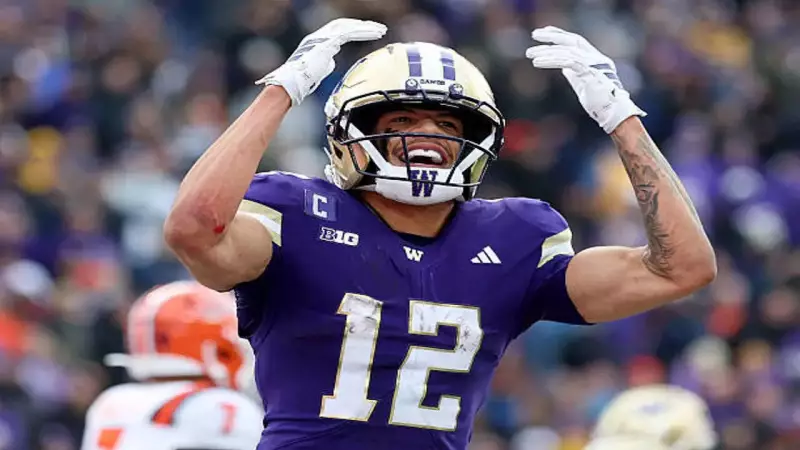
Early mock drafts have already begun speculating about Pittsburgh's approach to addressing their receiver deficiencies, with NFL.com analyst Daniel Jeremiah suggesting the Steelers could select Washington wideout Denzel Boston with the No. 21 overall pick. "The Steelers must find someone to complement DK Metcalf," Jeremiah wrote in his analysis. "Boston is another big, physical receiver to play opposite the two-time Pro Bowler."
Boston's collegiate profile reveals several attributes that could benefit Pittsburgh's offense immediately:
- Impressive size and physicality for contested catch situations
- Reliable hands and consistent performance between the 20-yard lines
- Solid route-running fundamentals, particularly on intermediate patterns
- Red zone threat capability with his frame and catching radius
These qualities could provide the Steelers' receiving group with the boost it has desperately lacked in recent seasons, offering quarterback stability regardless of who ultimately wins the starting job.
Prospect Analysis Reveals Both Strengths and Limitations
While Boston presents an intriguing option for Pittsburgh's first-round selection, scouts have identified certain limitations in his game that warrant consideration:
- He can struggle to create consistent separation due to lacking elite-level speed
- His route-running, while fundamentally sound, doesn't rank among the draft's elite prospects
- He may not provide the deep-play vertical threat the Steelers' offense has sometimes lacked
Despite these concerns, Boston's size, strength, and reliable hands could bring much-needed consistency to Pittsburgh's passing attack. His presence alongside Metcalf would give the offense multiple ways to attack defenses while providing their quarterback with dependable targets in crucial situations.
Strategic Implications of a First-Round Receiver Selection
Selecting a wide receiver in the first round would send a clear message that the Steelers organization is serious about addressing their offensive deficiencies. Boston's particular skill set could offer immediate contributions while simultaneously providing long-term flexibility for offensive coordinator planning.
If Pittsburgh ultimately selects Boston or a similar receiver prospect in the 2026 draft, it would represent a substantial step toward offensive improvement. Such a move could yield benefits in multiple areas:

- Immediate impact as a complementary weapon alongside DK Metcalf
- Improved offensive balance and schematic flexibility
- Reduced pressure on the quarterback position through reliable targets
- Long-term building block for the Steelers' offensive identity
The coming months will reveal how aggressively Pittsburgh addresses these roster concerns, but the decisions made during this offseason could reverberate throughout the 2026 campaign and beyond. With proper evaluation and strategic planning, the Steelers have an opportunity to transform offensive weaknesses into competitive strengths as they prepare for the challenges ahead.