Spurs vs Pistons: Key Injuries and Rotation Shifts Ahead of High-Stakes Clash
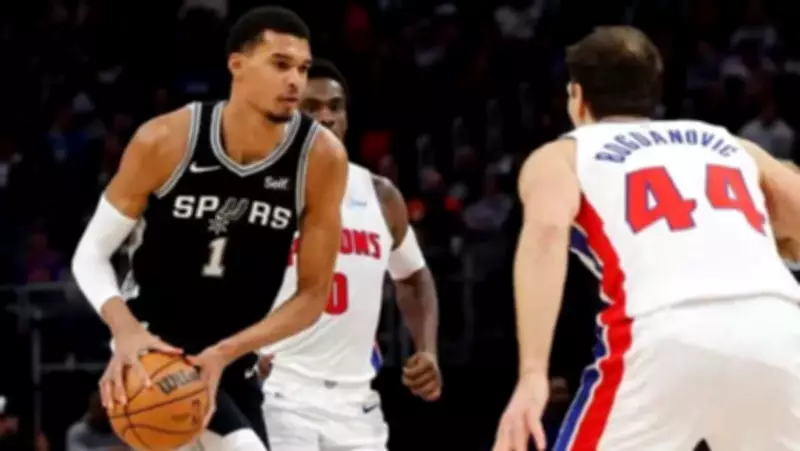
The San Antonio Spurs and Detroit Pistons are set to collide on February 23, 2026, in a matchup that pits two of the NBA's top teams against each other. Both squads are near the summit of their respective conferences, promising a thrilling contest on paper. However, several key absences on both sides could significantly influence rotations and playing minutes, adding an extra layer of intrigue to this highly anticipated game.
San Antonio Spurs Injury Report and Rotation Outlook
The Spurs will be without center Mason Plumlee, who is sidelined for reconditioning, and David Jones Garcia, out for the season following ankle surgery. Additionally, Lindy Waters III is listed as questionable due to a knee issue, potentially limiting his availability. Players like Harrison Ingram and Stanley Umude are not part of the regular rotation and are expected to have minimal impact.
The core group remains intact, featuring stars such as Victor Wembanyama, De'Aaron Fox, Stephon Castle, Devin Vassell, Keldon Johnson, Harrison Barnes, Julian Champagnie, Kelly Olynyk, and Luke Kornet. The typical starting lineup includes Fox and Castle in the backcourt, Vassell on the wing, Barnes or Johnson at forward, and Wembanyama anchoring the center position.

With Plumlee unavailable and Waters uncertain, bench players like Champagnie, Olynyk, Kornet, Dylan Harper, and Jordan McLaughlin are likely to see increased minutes. This adjustment could test the Spurs' depth and flexibility, especially in managing frontcourt matchups.
Detroit Pistons Injury Report and Rotation Outlook
Detroit will miss Isaiah Stewart due to suspension, while Wendell Moore Jr. is not part of the rotation for this contest. Isaac Jones is listed as questionable, adding to the uncertainty. The primary lineup remains stable, with Cade Cunningham, Ausar Thompson, Tobias Harris, Duncan Robinson, and Jalen Duren expected to start.
The bench unit includes Ronald Holland II, Paul Reed, Caris LeVert, Marcus Sasser, Daniss Jenkins, and Javonte Green. In Stewart's absence, the Pistons will rely more heavily on Duren and Reed in the frontcourt. They may also experiment with smaller lineups, utilizing Harris or Thompson at power forward to maintain defensive intensity and offensive spacing.
Records, Form, and Playing Styles
San Antonio enters the game with a strong 40–16 overall record and an 18–10 mark on the road, positioning them second in the Western Conference. They average 118.0 points per game, playing at a fast pace with excellent ball movement and a high volume of three-point attempts. Defensively, they depend heavily on Wembanyama's rim protection, holding opponents to 112.2 points per game and a 45.6% field goal percentage.
Detroit boasts an impressive 42–13 record, including a 21–6 home record, leading the Eastern Conference. They have won five consecutive games, showcasing their dominance. Offensively, they score 117.4 points per game but employ a more controlled style. Defensively, they are elite, allowing only 109.3 points per game with a 44.1% opponent field goal percentage, relying on physicality, rebounding, and forcing turnovers.
Key Players and Matchup Focus
Victor Wembanyama leads the Spurs with averages of 24.0 points, 10.9 rebounds, and 2.7 blocks per game, making his presence in the paint crucial. De'Aaron Fox contributes 16.7 points and 6.8 assists, while Stephon Castle and Keldon Johnson provide valuable support on both ends of the floor.
For the Pistons, Cade Cunningham averages 19.9 points and 8.5 assists, driving the offense with his playmaking. Jalen Duren handles interior duties, Duncan Robinson offers sharpshooting, and Ausar Thompson adds defensive versatility.
The key areas to watch include the battle in the paint, where Wembanyama's matchup with Duren will be pivotal, especially with Stewart out. Perimeter shooting could dictate spacing and offensive flow, while the duel between Fox and Cunningham will shape the game's tempo and playmaking dynamics.