Sherrone Moore's Legal Saga Concludes with Probation, Not Prison
The criminal case against former University of Michigan football coach Sherrone Moore reached its legal conclusion on Tuesday, though the broader implications continue to reverberate throughout college athletics. Once entrusted with leading one of the most prominent programs in college football, Moore avoided incarceration after pleading no contest to misdemeanor charges stemming from a volatile confrontation with a former staff member.
Judge's Ruling: Probation Over Prison with Stern Warning
An Ann Arbor judge delivered a sentence of 18 months' probation, significant fines, and strict behavioral conditions. While this ruling officially closes the criminal proceedings, it leaves unresolved questions about institutional accountability, oversight mechanisms within athletic departments, and how rapidly a promising coaching career can unravel.
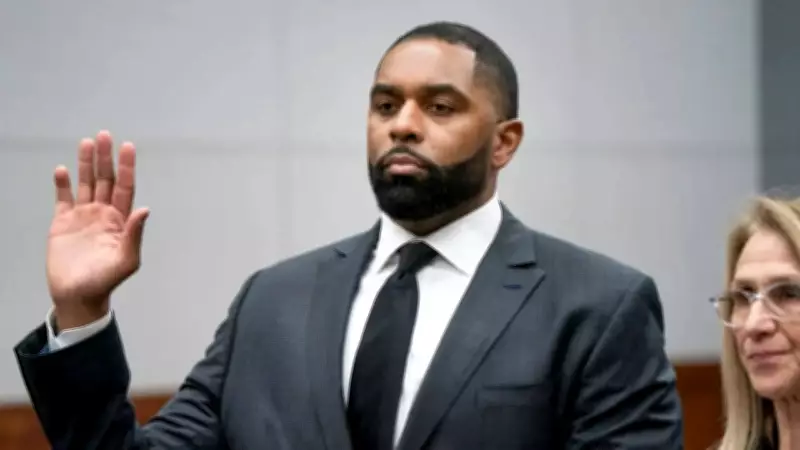
Judge Cedric Simpson emphasized that the outcome should not be interpreted as an endorsement of Moore's conduct, but rather as a measured decision based on the complete evidentiary record. "I don't believe, when I look at the entirety of this situation, that incarceration should be appropriate," Simpson stated during the hearing, while issuing a clear warning: "should there be a violation, all bets are off."

Legal Context and Victim's Perspective
The court acknowledged that prosecutors had dropped more serious charges after determining they did not fully align with the available evidence. Judge Simpson also referenced the communication history between Moore and former staffer Paige Shiver, including access she had previously granted him to her apartment. This context, while not excusing the incident, influenced how the case was ultimately prosecuted.
Despite these considerations, the judge maintained a firm stance regarding Moore's behavior. "Frankly, Mr. Moore, you had no right to do what you did," Simpson declared. "I know she was placed in fear. It was a traumatic experience for you—it was certainly a traumatic experience for her—but you had no right to spread your pain to her."
Shiver, who did not attend the hearing, released a statement that challenged the legal framing of the incident. "He broke into my apartment, crying, yelling, enraged, and came at me with knives. I was threatened, and I feared for my life," she wrote. She added that the sentence "does not reflect the harm done to me."
Career Consequences and Institutional Scrutiny
For Moore, the legal penalties represent only one dimension of the fallout. His dismissal from the University of Michigan in December had already severed his immediate path in major college football. Previously serving as offensive coordinator under Jim Harbaugh during a national championship run, Moore briefly assumed the head coaching position, compiling a 16-8 record. That upward trajectory has now been replaced by mandated counseling, behavioral restrictions, and a permanent public record.
During the hearing, Moore maintained a restrained demeanor, thanking his support system and stating, "I've taken this process very seriously." His attorney highlighted Moore's engagement in therapy and renewed focus on family, framing the incident as a breaking point rather than a defining characteristic.
Unusual Focus on Spousal Role
The proceedings repeatedly returned to the actions of Moore's wife, Kelli Moore, whose conduct on the day of the incident drew significant attention from the bench. Judge Simpson made this point explicitly: "The person who is saving you from the full wrath of this court is the person who you betrayed." He later added, "I am amazed by you, Ms. Moore… If we had more people like you in the world, I may be out of a job, but the world would be a better place."
For the University of Michigan, this case arrives amid heightened scrutiny of its athletic department culture. The institution has already commissioned external reviews following multiple controversies, indicating concern that this incident may not be isolated. Moore's story now becomes part of that larger institutional narrative—while his coaching record remains intact, it is no longer the primary focus of his public profile.