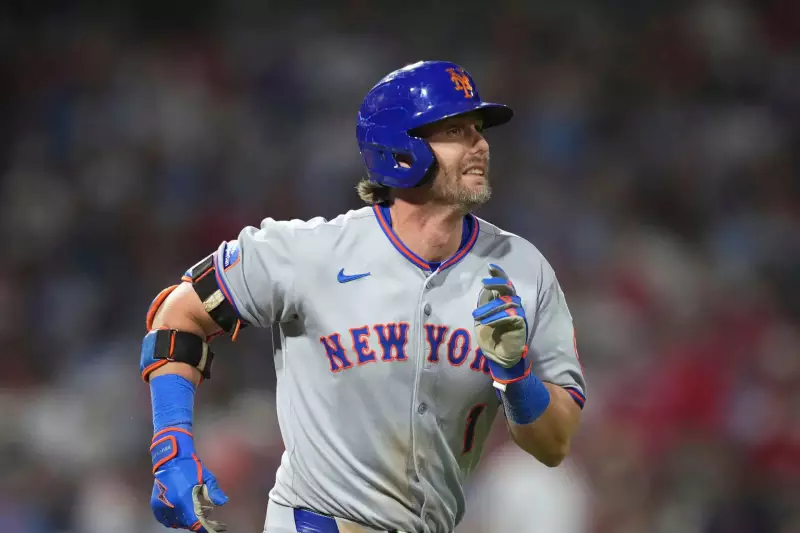
In a strategic shift following a major franchise-altering trade, the New York Mets have moved swiftly to address a gap in their outfield. The team has reportedly agreed to a one-year contract with veteran free agent Max Kepler, valued at approximately $7.6 million. This move comes directly on the heels of the Mets trading away longtime cornerstone Brandon Nimmo to the Texas Rangers.
The Nimmo Trade That Reshaped the Mets' Roster
The catalyst for this change was a significant one-for-one swap with the Texas Rangers. The Mets sent outfielder Brandon Nimmo to Texas in exchange for star second baseman Marcus Semien. To facilitate the deal, Nimmo agreed to waive his full no-trade clause, ending his eight-year tenure in New York that was defined by a massive $162 million contract.
Despite being productive in the 2025 season—playing 143 games with a .261 average, 23 home runs, and 82 RBIs—Nimmo became part of a trade designed to solidify the Mets' infield and rebalance their payroll. While Semien now firmly occupies second base, the transaction created an immediate vacancy in left field, prompting the search for a cost-effective replacement.

Why Max Kepler Emerged as the Practical Solution
The Mets' search for a short-term outfield solution led them to 32-year-old Max Kepler. The German-born player is coming off a one-year, $10 million stint with the Philadelphia Phillies, a season hampered by knee issues that saw his offensive numbers decline to a .216/.300/.391 slash line with 19 homers and 52 RBIs over 127 games.
However, the Mets' front office sees clear value beyond the surface stats. Kepler is still regarded as one of the league's premier defensive outfielders, with his throwing arm ranking among the top five in baseball in 2025. He provides reliable corner outfield defense and left-handed power, particularly against right-handed pitching. Crucially, a short-term deal does not block the path for top prospect Carson Benge, who is anticipated to challenge for a major league spot in the near future.
Analyzing the Gains and Inherent Risks
This acquisition is a calculated move by the Mets. On the positive side, Kepler brings:
- Elite defensive reliability in the corner outfield spots.
- A power bat from the left side at a fraction of Nimmo's cost.
- Significant payroll flexibility, keeping the team under the luxury tax threshold and freeing up resources for pitching upgrades.
The risks, however, are equally clear. Kepler is entering his mid-30s and is coming off a down year both offensively and health-wise. Furthermore, he does not address the team's longer-term question mark in center field, leaving that position to be filled from within the existing roster. The move is a bridge, not a permanent solution.
In essence, the Mets have pivoted from a long-term, high-cost commitment in Nimmo to a short-term, value-oriented deal with Kepler. This allows them to remain competitive in the immediate term, maintain crucial financial flexibility, and keep their future options wide open as they continue to reshape the team's identity.