The National Football League has imposed significant financial penalties on two San Francisco 49ers players following their disappointing divisional-round playoff exit against the Seattle Seahawks. This disciplinary action adds another layer of frustration to what was already a brutal weekend for the franchise, turning a forgettable postseason performance into an expensive lesson in maintaining composure during high-stakes games.
NFL Issues Fines After Seahawks Rout 49ers
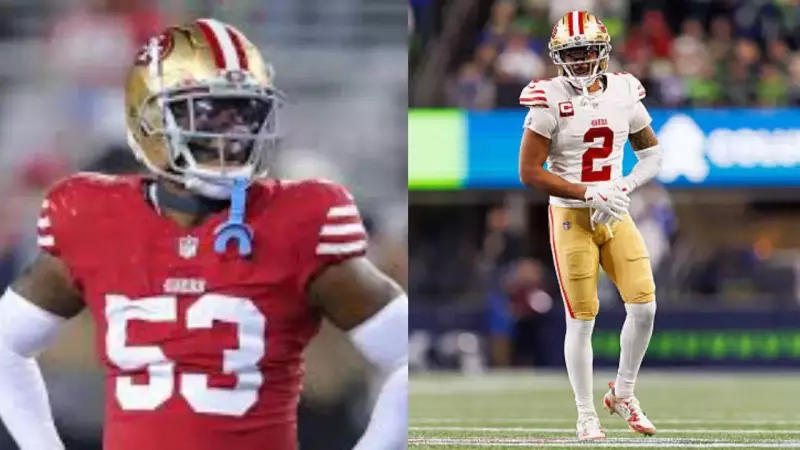
The punishment stems from a game that the 49ers organization would undoubtedly prefer to erase from memory. The Seattle Seahawks dominated from the opening kickoff, cruising to a decisive 41–6 victory that exposed San Francisco's vulnerabilities on both offense and defense. According to official reports, the NFL released its weekly fines summary on January 24, confirming that linebacker Dee Winters and cornerback Deommodore Lenoir were each penalized for separate on-field violations during the third quarter of the lopsided contest.
Specific Violations and Financial Penalties
Dee Winters received a fine of $5,907 for executing what the league terms a "hip-drop tackle" at the 4:01 mark of the third quarter. The NFL has made this technique a particular point of emphasis in recent seasons, viewing it as a significant safety risk that can trap ball carriers' legs beneath a defender's weight. According to official NFL guidelines, a hip-drop tackle occurs when a player "grabs the runner with one or both hands or wraps the runner with both arms" and then "unweights himself by swivelling and dropping his hips and/or lower body, landing on and/or trapping the runner's leg(s) at or below the knee."
Deommodore Lenoir faced a substantially steeper financial penalty of $20,944 for using his helmet to head-butt Seahawks wide receiver Jaxson Smith-Njigba at the 10:05 mark of the same quarter. This violation represents a clear breach of player safety protocols that the league has been working to enforce more rigorously in recent years.
Player Performance Context and Post-Game Reactions
Interestingly, these fines came despite relatively productive individual performances from both players during the game. Dee Winters actually led the 49ers defense with nine total tackles, adding three tackles for loss, recording a quarterback hit, and allowing just 26 yards on three receptions in coverage. Deommodore Lenoir had a statistically solid day in coverage as well, surrendering only one catch for four yards on two targets according to Pro Football Focus analytics.
After the game, Lenoir reflected on the team's performance, stating, "To have those guys, [it would have been] a totally different game. But I mean we can't make no excuses. We had enough guys in here to get the job done." This acknowledgment of responsibility contrasts with the lack of discipline demonstrated during the critical moments that resulted in the fines.
Broader Implications for the 49ers Franchise
The financial penalties symbolize more than just individual errors—they represent a broader loss of control during a crucial playoff game. The 49ers managed only 236 total yards of offense while committing three costly turnovers. Quarterback Brock Purdy threw for just 140 yards with an interception, while star running back Christian McCaffrey was effectively contained throughout the night by Seattle's defense.
For the San Francisco 49ers organization, the NFL's disciplinary decision effectively closes the book on a season that ended in dramatic collapse. While the fines themselves won't alter the final score or change the playoff outcome, they serve as a stark reminder of how slim the margins become during postseason football. The incident underscores how quickly frustration can translate into expensive consequences when professional discipline begins to slip during high-pressure situations.
The league's action reinforces the ongoing emphasis on player safety and proper technique, particularly as the NFL continues to address concerns about dangerous tackling methods and unnecessary physical confrontations that extend beyond normal gameplay. For the 49ers, this represents both a financial setback and a learning opportunity as they prepare for offseason evaluations and look toward rebuilding for the next campaign.