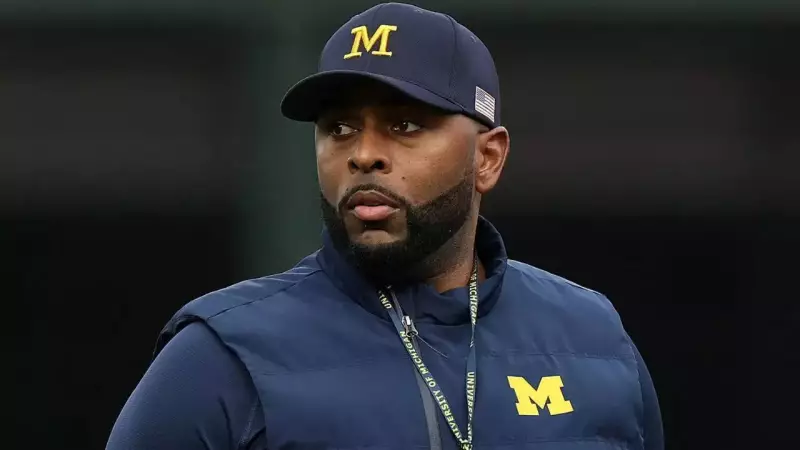
The world of college football rarely views a single mistake in isolation. When the University of Michigan dismissed Sherrone Moore from his role, the repercussions echoed far beyond the confines of one program or a single season. This event has forced the sport to reopen a painful and familiar dialogue about race, opportunity, and the starkly different standards applied to failure based on the colour of the coach holding the clipboard.
A Stark Picture of Representation and Double Standards
The landscape at the highest levels of college football paints a troubling picture. At the beginning of the 2025 season, the sport's two most powerful conferences, the Big Ten and the SEC, employed just four Black head coaches combined. Merely four months later, only one of those four remained in his position. Moore's fall from grace transformed from a personal scandal into a potent symbol for many, highlighting just how fragile and reversible progress in racial equity can be.
Former San Jose State coach Fitz Hill articulated the core issue with stark clarity. He explained that Black coaches are frequently judged as a collective group, while their white counterparts are evaluated on individual merit. "That's the difference," Hill stated, pointing to a deep-seated cognitive bias where minorities are instinctively grouped together. He was quick to add that this widespread perception does not equate to a fair system.

Statistical data underscores this grave concern. Across the 136 Football Bowl Subdivision (FBS) programs, a mere 14 Black head coaches remain employed. This figure is shockingly low considering that nearly half of all FBS players are Black. The situation in the SEC is particularly glaring, as the conference has not made a permanent hire of a Black head coach since 2020. In contrast, the coaching carousel for white coaches often includes survival, rehabilitation, and multiple high-profile chances despite firings or scandals.
The Ripple Effect and the Scarcity of Second Chances
Sherrone Moore's situation has also triggered comparisons that many within the sport find deeply unfair. Former NFL player Ryan Clark spoke to the broader, community-wide impact of such a high-profile failure. Clark emphasized that Moore's setback doesn't just affect his own career but has consequences for an entire community of aspiring coaches. He suggested that had Moore succeeded, the next 'Sherrone Moore' would have benefited from a favourable comparison during future interview processes.
Historical precedent shows how exceptionally rare second chances are for Black coaches at the pinnacle of college football. Only a handful, like Mike Locksley and James Franklin, have managed to secure another opportunity at a premier program after being fired. Meanwhile, white coaches such as Lane Kiffin have demonstrated a well-trodden path to career rebuilding, often with relative ease and swiftness.
A Call for Systemic Change and Fair Evaluation
Experts fear the current climate could lead to regression rather than improvement. Richard Lapchick of the Institute for Sport and Social Justice expressed his apprehension, noting that in an environment where Diversity, Equity, and Inclusion (DEI) efforts are being sidelined, the situation for minority coaches is likely to worsen.
The path forward, as advocated by many analysts and insiders, must begin with genuine access. This requires broader candidate pools, patient leadership from athletic directors, and fundamentally fair evaluation processes. Fitz Hill once posed a provocative and revealing question: "What would have happened if Nick Saban would have been born Black?" This query continues to loom over college football, unanswered and growing more urgent with each passing season and each dismissed Black coach.