Congress Launches Fierce Attack on Modi Government Over US 'Permission' Remark
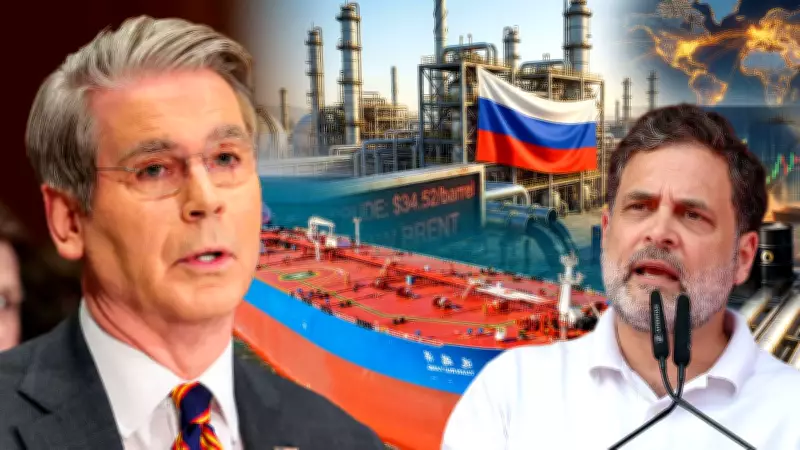
The political landscape in India has been ignited by a single word from Washington. US Treasury Secretary Scott Bessent's recent statement that the United States granted India "permission" to purchase stranded Russian oil has triggered a major controversy, with the opposition Congress party launching a scathing attack on Prime Minister Narendra Modi's government.
The Diplomatic Spark That Lit the Fire
Earlier this week, the United States announced a temporary waiver allowing India to acquire Russian oil that was already stranded on ships at sea. This move was described by US officials as a short-term measure to stabilize global oil markets amid rising tensions involving Iran and disruptions near the strategic Strait of Hormuz.
However, it was Treasury Secretary Scott Bessent's choice of language that has created diplomatic waves. His remark that Washington had given India "permission" for this transaction has been interpreted by Indian opposition leaders as deeply problematic and indicative of unequal power dynamics.

Congress's 'Humiliation' Allegation Against Modi
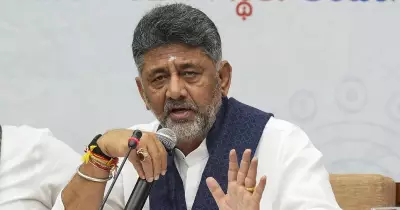
The Congress party has seized upon Bessent's comment to accuse the Modi government of diplomatic weakness and what they term as "national humiliation." Senior opposition leaders have argued that a sovereign nation of 1.4 billion people should not appear to be waiting for approval from another country to meet its fundamental energy requirements.
"This is not just about oil," declared one Congress spokesperson. "This is about India's dignity on the world stage. The language used by the US Treasury Secretary suggests a subordinate relationship that is unacceptable for a nation of our stature and aspirations."
The opposition has particularly criticized Prime Minister Modi's silence in response to Bessent's remark, questioning why the Indian government has not issued a stronger rebuttal to what they perceive as condescending language from a foreign official.
Broader Implications for India's Strategic Autonomy
Beyond the immediate political controversy, Bessent's comment has sparked a wider debate about India's strategic autonomy and positioning in global geopolitics. Analysts note that the incident touches upon several sensitive issues:
- Sovereignty concerns in international relations
- Energy security for the world's most populous nation
- Diplomatic language and power dynamics between nations
- Strategic balancing between major global powers
The timing of this controversy is particularly significant given ongoing global tensions and India's delicate position navigating relationships with multiple world powers simultaneously.
US Perspective and Global Context
From the American perspective, the waiver represents a pragmatic approach to global energy markets. US officials have emphasized that this is a temporary measure designed to prevent further disruption to oil supplies during a period of heightened geopolitical tension.
However, the diplomatic language used has clearly struck a nerve in Indian political circles, where sensitivity to perceived slights or unequal treatment remains high. This incident highlights how even routine diplomatic exchanges can become politically charged in an election season.
The controversy comes at a time when India is carefully balancing its energy needs with its diplomatic relationships, particularly as global power dynamics continue to shift and evolve in unpredictable ways.