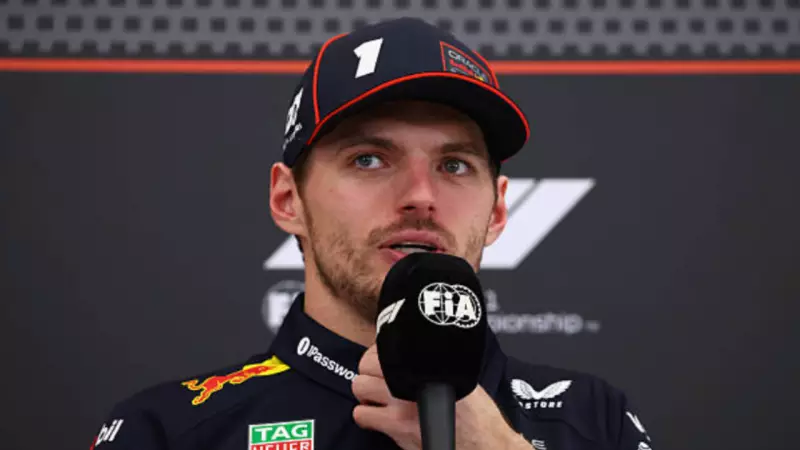
In the high-octane world of Formula 1, Max Verstappen stands out not just for his aggressive driving and strategic brilliance, but for the formidable physical machine he has honed. His success is a complex equation where mental fortitude meets extreme physical conditioning, a non-negotiable requirement in modern motorsport's gruelling environment.
The Blueprint of a Champion: Verstappen's Vital Statistics
Max Verstappen's physical profile is engineered for the precise demands of a Formula 1 cockpit. He stands at 5 feet 11 inches (1.80 meters), a height that is typical among today's drivers. This stature allows him to fit optimally into the confined space of his car, ensuring perfect ergonomics for posture, seat placement, and pedal control.
Perhaps even more critical is his weight, maintained between 72 to 74 kilograms. This represents a lean, powerful, and highly efficient athletic build. In F1, where every gram counts towards the strict overall car weight limit, a driver's physique must be strong yet minimal. Verstappen's weight management is a direct performance advantage, showcasing a body stripped of any unnecessary mass.

Beyond the Numbers: The Gruelling Regime Behind the Wheel
The raw stats only tell part of the story. What truly defines Verstappen's edge is how he conditions his body to withstand the sport's brutal forces. Inside the cockpit, drivers face searing heat, sustained G-forces during cornering, and the immense physical load of steering a car at over 300 km/h.
Verstappen's training is meticulously crafted to meet these challenges head-on. His regimen prioritises:
- Core Strength & Neck Stability: Essential to brace against violent G-forces and maintain control.
- Cardiovascular Endurance: To perform at peak for two hours in a high-stress, high-temperature environment.
- Lightning-Fast Reflexes: Crucial for the split-second decisions that define race-winning overtakes or defensive moves.
This physical discipline is inseparable from his psychological calmness. The ability to remain sharp, responsive, and clear-headed throughout a Grand Prix is a testament to a fitness level that supports mental acuity under extreme duress.
The Modern F1 Athlete: Where Physics Meets Physiology
Max Verstappen's physical profile is a perfect case study in the evolution of the Formula 1 driver. No longer just daring racers, they are now among the world's most finely-tuned athletes, where precision, control, and conditioning are as vital as raw speed and strategy.
His lean, muscular build is the foundation for his driving style—both violently aggressive and clinically methodical. It provides the endurance to push relentlessly from lights out to the chequered flag and the strength to manhandle a car at the limit. This synergy of mind and body cements his reputation as one of the most formidable and consistent competitors on the grid, turning his physical readiness into a weapon of domination.
The story of Verstappen's success is written in every lap, but it is authored in the gym and the nutritionist's office. His commitment to physical excellence underscores a central truth in contemporary F1: to master the machine, a driver must first master himself.