IOA Confronts Major Hurdles in Finalizing Asian Games Contingent
The Indian Olympic Association (IOA) is navigating a complex and turbulent period as it attempts to finalize the athletes' contingent for the upcoming Asian Games in Japan. This process is being severely hampered by a confluence of internal disputes, ongoing legal and administrative proceedings, and the absence of a unified national structure that is critically affecting the operations of several key national sports federations.
Widespread Administrative and Legal Challenges
The IOA is actively working to resolve these pressing issues on a priority basis to safeguard the interests of athletes, yet significant selection challenges persist across multiple sports. The situation has escalated to the point where the participation of Indian teams in prestigious events like the Asian Games is now under a cloud of uncertainty.
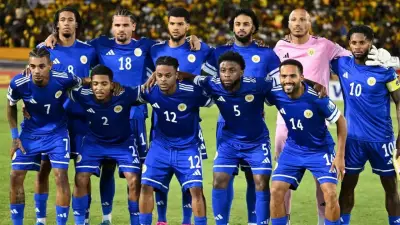
Football: India's men's and women's football teams face the real possibility of not traveling to Aichi-Nagoya for the Asian Games. This is due to the IOA adhering to the sports ministry's stringent rule, which permits only teams ranked within the top-8 in Asia (and individuals ranked top-6) to participate. Currently, India's men's team is ranked 27th in Asia (141st globally), while the women's team holds the 12th position in Asia (67th worldwide), placing them outside the eligibility criteria.

Disputed Federations and Court Interventions
Handball: The sport is embroiled in a factional conflict between the Handball Association of India and the Handball Federation of India, neither of which is officially recognized. A recent court ruling has discouraged the IOA from forming an ad-hoc body, instead instructing the executive committee to recognize the faction that meets its established criteria, further complicating the selection process.
Volleyball: In a more positive development, the newly-elected Volleyball Federation of India has received provisional recognition from the IOA. This follows the global body FIVB granting provisional recognition to the VFI's interim body for a six-month period. This interim panel will be responsible for handling the Asian Games selections.
Table Tennis: The Table Tennis Federation of India is experiencing internal turmoil following the removal of secretary Kamlesh Mehta by the Meghna Ahlawat-led governing body. The dispute has escalated to the courts, and reaching a resolution is likely to cause delays in finalizing the Asian Games team selection.
Taekwondo: The situation is particularly dire here, as neither the Taekwondo Federation of India nor India Taekwondo is recognized by the sports ministry or the IOA, despite India Taekwondo holding international recognition. With court cases ongoing, the IOA and the Sports Authority of India (SAI) will jointly oversee the selection process.
Election Stalls and Ad-Hoc Governance
Gymnastics: Elections for the Gymnastics Federation of India (GFI) remain stalled following a 2023 Delhi High Court stay order, issued for violations of the national sports code. Consequently, selections for the Asian Games will be supervised directly by the IOA and SAI.
Karate: This sport is currently under an IOA ad-hoc body rule. Multiple groups—including the All India Karate-Do Federation, Karate Association of India, Karate India Organisation, Karate India, and the Karate Federation of India—all claim authority, yet none are officially recognized. This has created significant confusion over which entity holds the valid voice for the sport.
Golf: Rival factions within the Indian Golf Union (IGU) are engaged in a squabble over the validity of Asian Games entries. While one faction is recognized by the sports ministry and the IGU, the other finds support from the IOA. The case is pending in court, leaving eligible golfers in a state of limbo as they await clarity on their participation.

Provisional Recognitions and Judicial Oversight
Boxing: The Boxing Federation of India was granted provisional recognition by the ministry until the WBC Finals last November. However, election disputes surrounding Ajay Singh's bid for a third term continue to disrupt the body's normal functioning. The Himachal Pradesh Boxing Association has challenged the fairness of these elections in court, adding another layer of legal complexity.
Equestrian: The Equestrian Federation of India has now come under the ad-hoc body rule this week. The IOA has informed the court bench about the formation of this panel within the next three days. This ad-hoc committee will be tasked with managing the federation's operations, selecting the Asian Games team, and conducting elections at the earliest opportunity.
Judo: The Judo Federation of India is currently being run by a Delhi High Court-appointed administrator, Justice (retd) Pankaj Naqvi. He will conduct trials in consultation with SAI and will be responsible for selecting the Asian Games team, ensuring a measure of stability amid the broader administrative chaos.
The cumulative impact of these disputes across 11 national sports federations presents a formidable challenge for the IOA. The association's ability to navigate this labyrinth of legal and administrative hurdles will be crucial in ensuring that India fields a strong and legitimate contingent at the Asian Games, protecting the aspirations and careers of its athletes.