Beyond the Glamour: The Real, Emotional World of Indian Polo
Often viewed through a lens of luxury, polo conjures images of large sunny hats, immaculate dressing, and elite crowds gathering on bright afternoons for a sport associated with the haute gentry. However, this perception barely scratches the surface of what the game truly entails.
The Unglamorous Reality Behind the Scenes
"But the game is much more than that," points out Arjuna Awardee Simran Singh Shergill, a celebrated name in the Indian polo circuit. "Everyone sees the cool bits on Sundays, the glamorous side. But it is a very nonglamorous life. It is real, emotional, and extremely hands-on, especially when it comes to the horses. It is also very regimented."
Shergill, who meets us at the Jindal Estate in Noida where he has been a regular for decades, elaborates on the daily rigor. "We keep tabs on the horses every day, the way you would take attendance of kids in a school," he says, highlighting the meticulous care involved.

Playing With Horses, Not On Them
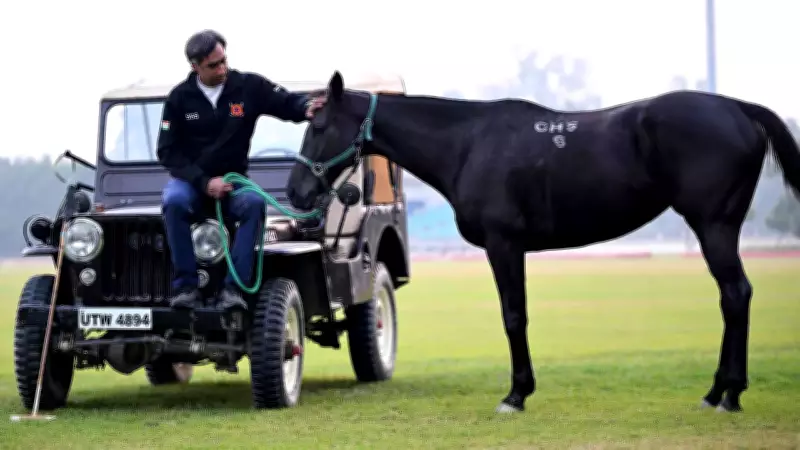
Riding in his left-hand Jeep, Shergill introduces us to Chingari, a black mare and one of his favorites, known in polo circles for her robust temperament. He walks us through the stables, explaining the ecosystem that exists behind the scenes.
"We care very deeply about our horses," Shergill emphasizes. "For anyone who rides or plays polo, horses are not equipment – you don't play on them, you play with them. People in this sport are fond of animals, and they understand that for horses to perform well, they need to feel well."
He notes that horses, much like humans, respond to their physical and emotional environment. "When you put a good horse against another, they will try to outrun each other. But for them to be good athletes, they need to be feeling good inside. If a horse is unhappy or uncomfortable, it will never play well."
Monitoring Every Aspect of a Horse's Life
Every detail of a horse's life is closely monitored. "Some horses play better when they are rested, some need work the day before. Some enjoy being out in paddocks, others don't get along with other horses and have to be kept in their boxes," Shergill explains.
Each player typically has around eight horses in their string. "You'll usually have one or two favorites. And when the game is tight, in the last chukker, you take out that horse you trust to win the game," he adds.
Chingari: A Horse That Thrives Under Pressure
Asked about his favorite horse, Shergill proudly showcases Chingari. "I have a black mare – Chingari – that belongs to Naveen Jindal sir. She has won us many tournaments. We bought her as a young horse and trained her here. She started well but had a slightly hot temperament. So we decided to breed her, which helped calm her down."
He recalls how she evolved into a dependable tournament horse. "During the off-season in 2021, I rode her through the summer months, and no one else did. When the polo season came, and I was short of horses for Jaipur, I took her along. The more pressure she played under, the better she became. Most horses don't respond well under pressure, but this one thrived."
Due to her power and speed, Chingari helped Shergill score several crucial goals. "There were many occasions when I scored in the last chukker on that horse, and she became quite famous," he says.
The Unsung Army Behind the Sport
Shergill stresses that polo is sustained by an entire ecosystem of professionals. "The grooms, vets, farriers – there's a whole army behind the scenes. Everyone sees the glamour on Sundays, but it is a very real, emotional, and disciplined life," he states.
Reflecting on his journey, Shergill shares, "My father was in the Army, and when he was posted elsewhere, I stopped playing for a while. I returned to the sport at the Jindal Estate after finishing college, when I was around 18 or 19. I am 42 now. The same groom has been with me all these years, and that matters a lot."
A Community Mourns a Loss
The polo community recently faced a significant loss with the passing of industrialist and polo patron Sunjay Kapur, who suffered a heart attack in June last year while playing polo in Surrey, UK.

"Sunjay's death is a big loss for the polo community," Shergill says solemnly. "I met Sunjay when he had just started playing polo. He started late but was a very good sportsperson and extremely nice to everyone around him. He was approachable and regarded as a friend by those who played with him."
He adds, "We played and won many tournaments together, and I travelled with him to Dubai and the US to play. His passing is not just a personal loss – it is a big loss for the entire polo community, and for everyone who knew him."
Through Shergill's insights, it becomes clear that polo in India is far more than a Sunday spectacle. It is a world built on deep emotional bonds, rigorous discipline, and a collaborative spirit that extends well beyond the field.