The Frozen Discovery That Deepened a Fourteen-Year Mystery
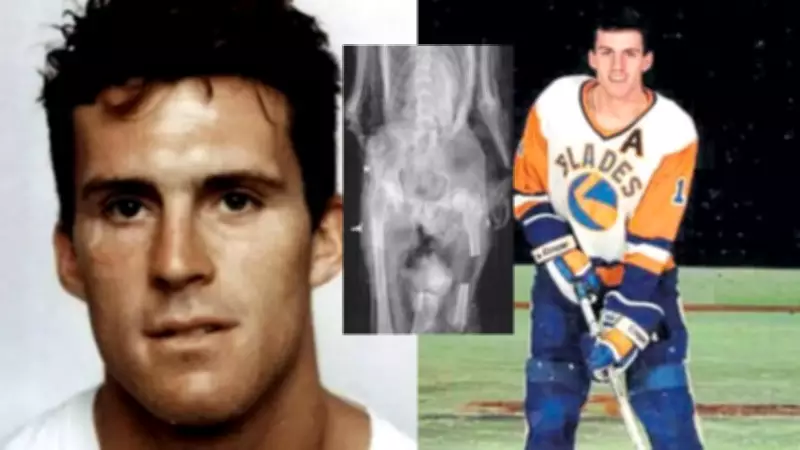
When the frozen remains of Canadian ice hockey player Duncan MacPherson were recovered from an Austrian glacier in 2003, fourteen years after his sudden disappearance in 1989, the grim find only intensified the haunting mystery that had tormented his family for over a decade. The case took on an additional layer of intrigue due to MacPherson's own claims, made in the years before he vanished, that he had been approached by the CIA to work as a spy.
A Promising Career Cut Short
According to reports from The Courier, the 23-year-old MacPherson disappeared in August 1989, just days before he was scheduled to travel to Scotland to sign with Dundee's Tayside Tigers as a player-coach. Growing up in Saskatoon, he had been drafted by the New York Islanders in 1984, though he never played a game in the NHL. After his contract with the Islanders expired in 1989, he agreed to join the Tayside Tigers, but first stopped in Austria for a snowboarding holiday.
He was last seen on August 9, 1989, on the Stubaier Glacier in the South Tyrol region. Days passed with no contact from him. A car parked at the glacier's base was eventually traced to a friend in Nuremberg who had loaned it to MacPherson. With limited assistance from Austrian police or the Canadian consular service, the MacPherson family took matters into their own hands, printing 2,500 missing-person posters in multiple languages and distributing them across four countries.

The CIA Recruitment Claims and a Frustrating Search
Complicating the search efforts were MacPherson's earlier assertions that the CIA had attempted to recruit him as a spy. These claims left his family uncertain about what to believe regarding his sudden disappearance, adding a shadowy dimension to an already perplexing situation.
In 1994, hopes were briefly reignited when an amnesiac man in Austria was suspected of being MacPherson, but the identification ultimately proved incorrect. The breakthrough finally came in the summer of 2003, when an employee operating a snow-grooming machine discovered human remains buried beneath melting snow and ice on a popular ski run in Neustift.
Conflicting Theories and Legal Battles
Austrian officials concluded that MacPherson had died after falling into a crevasse. However, a Canadian forensic anthropologist later disputed this explanation, arguing that it did not account for the pattern of his injuries, which included multiple broken bones and a crushed leg. The anthropologist suggested a possible encounter with heavy machinery as an alternative cause.
MacPherson's family alleged that Austrian authorities took active steps to prevent the truth from emerging, an accusation that the authorities firmly denied. They maintained that they had done everything possible to determine what happened in what they described as a very difficult investigation.
The dispute escalated all the way to the European Court of Human Rights in Strasbourg. MacPherson's parents argued that their son's right to life had been violated and that they had been denied an effective remedy. In its ruling, the court determined that the Austrian authorities had done everything that could reasonably have been expected of them under the circumstances.
A Lingering Enigma in Hockey History
For Dundee hockey supporters, the case remains one of the sport's most unsettling chapters. As fan George Carr told The Courier, "It definitely is a strange scenario and leaves a question mark over his disappearance. MacPherson going missing must rank as one of the most unusual episodes in the history of ice hockey in Dundee."
The discovery of Duncan MacPherson's body after fourteen years provided a tragic resolution to his physical whereabouts, but the circumstances surrounding his death, compounded by his own spy recruitment claims, continue to fuel speculation and mystery, leaving an indelible mark on both his family and the hockey community.