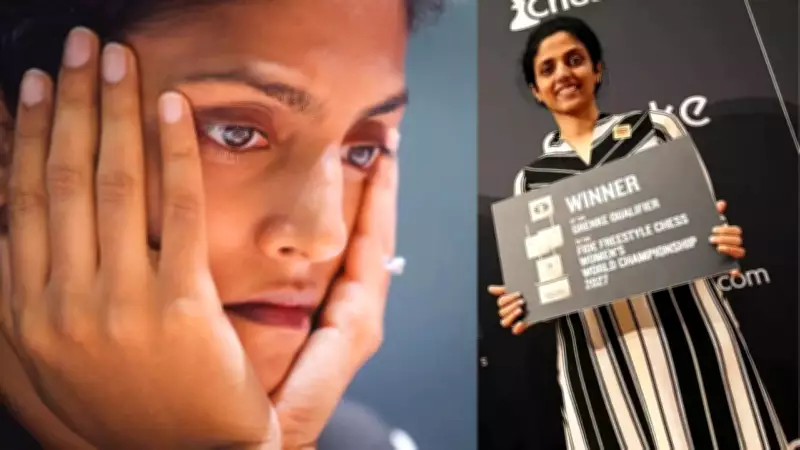
Harika Dronavalli Charts a New Path in Freestyle Chess
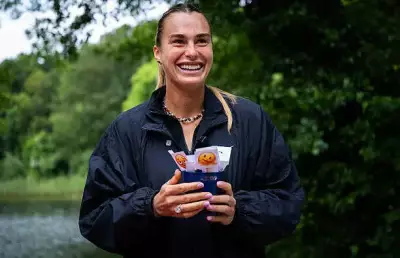
While many Indian chess players focus on traditional World Championship cycles, Grandmaster Harika Dronavalli has taken a distinct route to success. At 35, she stands as one of only four Indian women to hold the GM title, and she recently qualified for the inaugural FIDE Women's Freestyle Chess World Championship, set for next year. This achievement highlights her versatility and pioneering spirit in the evolving chess landscape.
Triumph at the Grenke Freestyle Open
Just a week ago, at the bustling Grenke Chess Festival in Karlsruhe, Germany, Harika clinched the top women's prize at the Grenke Freestyle Open. This victory made her the first Indian to secure a spot in a format that eliminates the reliance on opening theory, demanding pure intuition and skill. Freestyle Chess, or Chess960, randomizes the starting positions of pieces, challenging players to think on their feet without pre-memorized strategies.
"It was amazing, especially because it was my first freestyle tournament," Harika shared in an exclusive interview. "I went with a blank state of mind, ready to accept whatever came my way. It's been a sweet surprise that it went really well, and now I'm seeing chess in a different light." Her approach contrasted with many elite GMs who find the lack of control daunting, showcasing her adaptability and mental fortitude.

Impressive Performances Against Top Competitors
The Grenke Open served as a rigorous test against some of the world's best minds. Harika's run included a stunning victory over American GM Awonder Liang and a high-quality draw against legendary player Levon Aronian, renowned for his freestyle prowess. These results not only boosted her confidence but also reminded her of her capabilities after a period of reduced tournament play.
"Since COVID, I didn't play too many open tournaments or face extremely high-rated players," Harika admitted. "This was a good reminder and confidence booster. Beating Liang and holding my own against Aronian felt like I'm back to what I always used to do." Her success is particularly notable given her recent focus on motherhood, which had limited her appearances in open sections where men and women compete together.
Overcoming Travel Challenges and Embracing Chaos
Harika's journey to Germany was fraught with uncertainties, reminiscent of her solo travel days in youth. Geopolitical tensions in the Middle East caused flight cancellations, forcing her to navigate delays and missed connections. She booked a ticket with Qatar Airways long in advance but faced last-minute disruptions.
"I went one day early to ensure I could reach Germany despite the issues," she recalled. "I had to take a train from Frankfurt, missed timings, and dealt with delays, spending six to seven hours traveling at midnight. It was chaotic, but I enjoyed it—it reminded me of my childhood and felt like a fun challenge." This resilience underscored her determination and ability to thrive under pressure.
Navigating the Massive Grenke Open
The Grenke Open is the world's largest open chess tournament, with over 3,000 participants creating a vibrant, noisy atmosphere. Harika compared it to her World Youth days, appreciating the sight of so many chess enthusiasts. Despite the distractions, she maintained focus during games.
"Once the game starts, I zone out completely from everything around me," she explained. "The large gathering didn't affect my play on the board." This concentration was crucial given the demanding schedule of two games per day, a format she hadn't experienced in years, further highlighting her endurance and strategic mindset.
Reigniting Passion for Open Tournaments
After becoming a mother, Harika's tournament schedule became more selective, with her last open event in 2024 in Sharjah. Many assumed this shift was a strategic choice, but she clarified it was due to life circumstances rather than a conscious decision.

"It wasn't a planned gap. I like playing in the open section, but preferences changed after motherhood," Harika said. "However, my success in Germany has reignited that fire. I realize it's been a while since I played open tournaments, and I'm open to returning to strong ones this year." This renewed enthusiasm signals a potential comeback to more competitive arenas.
Mastering Chess960 with Instinct and Experience
Freestyle Chess, with its 960 possible starting positions, can intimidate even seasoned players. Harika, in her debut, relied on her deep chess understanding rather than specific tips.
"I don't have tips as such," she laughed. "After 26 years as a professional chess player, my subconscious knowledge guides me. It's not as hard as it seems—focus on your ideology, trust your instincts, and believe in the work you've put in over the years." This philosophy allowed her to excel without prior experience in the format, demonstrating her innate talent and adaptability.
Pioneering the Future of Women's Freestyle Chess
Harika now joins a formidable field for the inaugural FIDE Women's Freestyle World Championship, alongside players like Bibisara Assaubayeva and Dinara Wagner. She welcomes this development as a step forward for women in chess.
"It's nice that they started this for women now," Harika noted. "Freestyle had become common for men, but women were neglected. A serious World Championship motivates us to focus on this format and push boundaries." Her participation not only marks a personal milestone but also inspires future generations of female chess players to explore innovative formats.