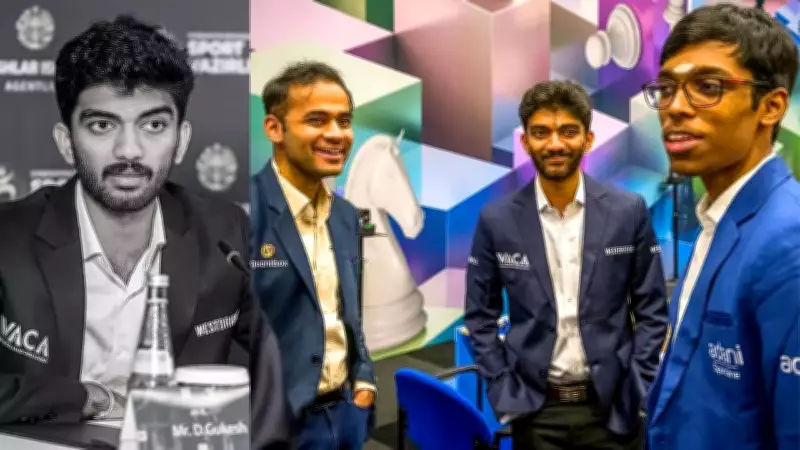
Gukesh's Raw Apology Exposes Pressure on India's Chess Stars
In a rare and emotional moment at the Prague Masters, Grandmaster Gukesh Dommaraju paused to apologize to his fans. "I really appreciate all the fans coming here every day. But I want to apologize to them," said the youngest-ever world chess champion. "This tournament has been tough for me, and on some days I just want to be left alone. I generally make sure to give autographs and photographs after the game, but I haven't been in a great mood here."
India's Golden Phase Faces Alarming Dip
This vulnerable admission from a champion who has navigated the world title for less than 24 months struck a chord across the chess world. It came at a concerning time for Indian chess, which has enjoyed remarkable success in recent years but now faces a significant downturn at the elite level.
The first FIDE rating list of 2026 in January featured three Indian grandmasters in the top 10: Arjun Erigaisi, Rameshbabu Praggnanandhaa, and Gukesh. Just two months later, the scenario changed dramatically. By March, Erigaisi and Praggnanandhaa had slipped out of the top 10, while Gukesh occupied the precarious 10th spot. His difficult run in Prague, with only one win in ten rounds, threatened further rating losses.

Experts Sound Alarm Bells
With the chess calendar approaching crucial events like the Candidates Tournament and World Chess Championship, this dip has prompted serious questions. Is this merely temporary fluctuation, or are deeper issues affecting India's brightest talents?
"Of course, it's a matter of concern," veteran Grandmaster Pravin Thipsay told TimesofIndia.com. "When players who were approaching or crossing 2800 suddenly drop by 40 or 50 points, it certainly deserves serious attention."
The Burnout Factor: Too Much Chess
According to Thipsay, the reasons are complex but interconnected. Ironically, one major factor behind the slump could be the sheer volume of chess these young stars are playing.
"The first reason, in my opinion, is that they are simply playing too much," Thipsay explained. "Because they have become very strong, they receive a lot of invitations. Naturally, they end up playing far more tournaments than most players usually do."
He continued, "Top players often receive appearance fees that can be higher than the prize money itself. Earlier, they played mainly for prizes. Now, the starting money becomes a major factor. Financially, it can be difficult to refuse invitations."
Relationships with organizers also play a role. "Many organizers supported these players when they started out in their careers. Naturally, players feel obliged to accept those invitations," he added.
Relentless Tournament Schedule
What follows is a relentless tournament schedule encompassing classical tournaments, online events like Titled Tuesdays and Freestyle Friday, and various team competitions. Grandmaster Shyam Sundar M, whose coaching has produced multiple Indian GMs, echoes this concern about modern scheduling.
"The top 10 fluctuates frequently, not just for Indians," Shyam Sundar noted. "Players today compete in classical tournaments, rapid, blitz, Chess960 team events and many other competitions. Without enough breaks, it's natural that results will fluctuate."
The consequence, he explains, is that players often arrive at the most important tournaments not fully refreshed or at their peak performance level.
Stardom and Distractions
Another significant factor lies in the unique celebrity status Indian chess players enjoy at home. "The social status of Indian players today is much higher than what players like Nodirbek Abdusattorov, Alireza Firouzja or Fabiano Caruana experience in their countries," Thipsay observed.
In India, chess stars have become genuine celebrities. A recent FIDE social media post comparing Instagram follower counts of Candidates Tournament participants revealed that two of the top three were Indians.
"They receive huge media attention, encouragement, and financial offers," Thipsay added. "Endorsements and brand collaborations bring good money, but they also take a lot of your time and mental energy. Financial rewards outside chess can become a distraction and may hamper concentration."

The Closed Circuit Problem
Modern tournament structure presents another challenge. Today's leading players often compete repeatedly against the same small group of elite opponents in closed events.
"Since the days of Garry Kasparov, the top players have mostly played among themselves in elite events," Thipsay stated. "Even Anatoly Karpov played many open tournaments against ordinary players. That tradition has largely disappeared."
This creates a tight competitive ecosystem where preparation becomes about anticipating specific opponents rather than developing new ideas. "When you play the same opponents repeatedly, you become very familiar with their styles. Preparation becomes about guessing what your opponent will play rather than discovering new ideas," Thipsay explained.
In contrast, open tournaments force players to think independently and creatively. "When these players rose rapidly in 2022 and 2023, they were playing many Swiss tournaments. You faced unknown opponents, unpredictable positions, and that sharpened their creativity. New strategic ideas won't come to you if you are playing the same players, again and again. So that's very serious."
The Engine Era Dilemma
According to Thipsay, the overwhelming role of computer preparation has subtly changed how players think. "Today, many players buy enormous amounts of prepared material from analysts or trainers. Often, these analysts are not strong players themselves; they simply run engines and provide computer suggestions," he revealed.
"A human process is different. You understand the position, identify strategic ideas, analyse tactics, and then reach a logical decision. With engine preparation, you are given the move, but you may not understand why it works."
He cites a famous remark by José Raúl Capablanca: "Almost 100 years ago, Capablanca once said: 'The best way to win is the easiest way.' But the easiest path is different for every player." When players follow computer lines that don't suit their natural style, problems inevitably emerge.
Losing Natural Strengths
Thipsay feels the Indian trio's distinctive styles have slightly faded in recent months. "Praggnanandhaa was once one of the most dangerous attacking players, but he isn't getting many attacking positions now. Gukesh was phenomenal defensively, as his accuracy in events like the Olympiad was extraordinary."
He believes opponents have adapted their strategies. "Rivals are preparing specific strategies to complicate games. Meanwhile, Arjun and Gukesh have lost some accuracy, and Praggnanandhaa some initiative."
Reasons for Optimism
Despite these challenges, experts remain optimistic about India's chess future. "If these players return to playing their natural games and perhaps include more open tournaments, the situation can change quickly," Thipsay added.
Shyam Sundar cautions against reading too much into short-term dips. "Sometimes players experiment with their games as well," he noted. "For example, Gukesh himself has spoken about trying new things after becoming world champion. When players experiment, results can suffer temporarily even though the quality of chess remains strong."
"When players are competing across formats and experimenting with ideas, you will naturally see ups and downs in results. But that doesn't mean the players have suddenly become weaker," Shyam Sundar emphasized.
Indian Chess Structure: Individual Triumphs vs. Systematic Development
Beyond individual performance, the structure of Indian chess itself raises important questions. "Indian chess has always been very individualistic. None of these champions has been created by a system," Thipsay admitted.
Unlike the Soviet model that produced legends like Mikhail Tal and Kasparov, India's success stories often emerge from personal and family effort. "Parents sacrifice careers, invest time and resources, and players build themselves through sheer dedication," the 66-year-old GM explained. "Just because three players reach the top 10 today does not mean we will automatically produce three more in ten years."
This model makes sustained dominance challenging. As Thipsay pointed out, "Out of millions who play online chess, only about 36,000 players in India are registered for AICF over-the-board tournaments."
For now, India's chess revolution continues to be powered by extraordinary individuals. Whether it can evolve into a system capable of producing champions generation after generation remains the bigger challenge still to be conquered.