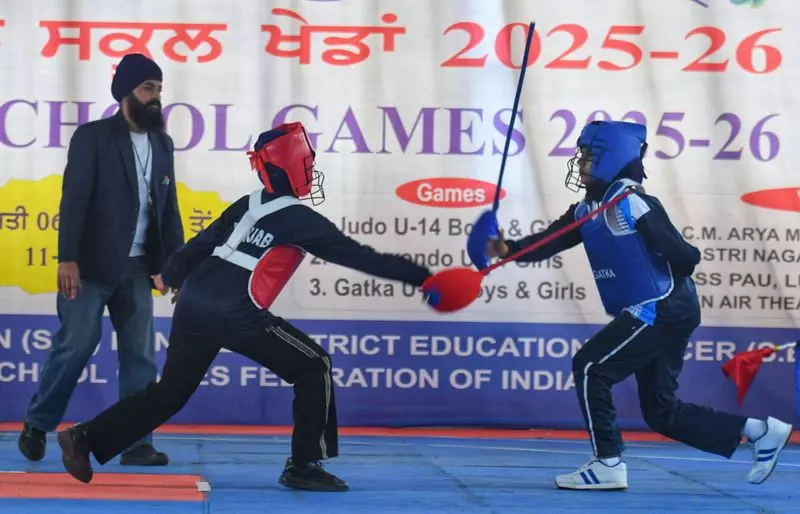
In a significant move to preserve and promote a key part of Punjab's heritage, practitioners of the traditional Sikh martial art of gatka are calling for its wider adoption in educational institutions across Ludhiana. Their primary demand is directed at schools affiliated with the Central Board of Secondary Education (CBSE) and the Indian Certificate of Secondary Education (ICSE), urging them to formally include gatka in their sports curriculum.
The Core Demand for Broader Recognition
The appeal was formally presented by members of the Gatka Federation of India during a recent meeting with the Deputy Commissioner of Ludhiana, Surabhi Malik. The practitioners highlighted a existing disparity: while the Punjab School Education Board (PSEB) has already integrated gatka into its syllabus, the same is not true for schools operating under the CBSE and ICSE boards. This omission, they argue, sidelines students in these schools from learning and competing in their own cultural martial art.
The federation's representatives, including Gurmeet Singh and Balkar Singh, emphasized that gatka is not merely a sport but an intrinsic element of Sikh tradition and history. They pointed out that the art form, which involves skilled swordsmanship and spiritual discipline, deserves a platform equal to other martial arts like karate or taekwondo, which are commonly offered in schools nationwide.

Beyond Sport: Preserving Culture and Building Character
The push for inclusion is driven by more than just athletic considerations. Proponents believe that teaching gatka in schools serves a dual purpose. Firstly, it acts as a living bridge for the younger generation to connect with their rich cultural past and the valorous history of the Sikh Gurus and warriors. Secondly, the rigorous training involved in gatka instills essential life values.
"It teaches discipline, focus, and self-defense," explained one practitioner. The structured practice, which includes learning various footwork patterns (called *paurta*) and weapon techniques, is seen as an excellent tool for physical fitness and mental fortitude. By introducing it in CBSE and ICSE schools, a much larger cohort of students, regardless of their educational board, would have the opportunity to benefit from this holistic discipline.
Official Response and Future Steps
The Deputy Commissioner, Surabhi Malik, has responded positively to the representation. She has assured the gatka delegation that their request will be forwarded to the relevant educational authorities for serious consideration. This official channel could pave the way for discussions with the governing bodies of the CBSE and ICSE to explore the logistical and formal steps needed to incorporate gatka as a recognized sport.
The community's effort underscores a growing movement to secure institutional recognition for indigenous Indian sports. Success in Ludhiana could set a precedent for other districts in Punjab and across North India, where gatka is practiced. It represents a crucial step in ensuring that traditional knowledge systems are not lost but are instead revitalized within the modern educational framework, allowing heritage to thrive in contemporary settings.