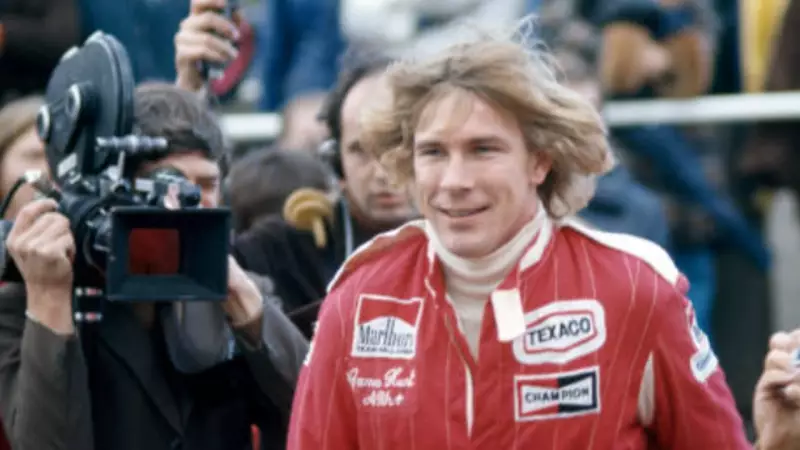
The name James Hunt is synonymous with Formula 1's golden era of rebellion and raw talent. Remembered as the 1976 world champion who lived as fast as he drove, Hunt's legacy is one of fearless glory. Yet, behind the powerful reputation of the charismatic racer lies a quieter, more personal story—that of his son, Freddie Hunt, and a life shaped entirely by a father's towering absence and even greater legend.
A Legacy Born from Loss: Freddie Hunt's Early Years
Freddie Hunt entered the world in 1992, a year marked by profound personal tragedy. His father, the iconic James Hunt, had died suddenly from a heart attack at the age of 45 just months before Freddie's birth. This meant the young boy would never know his father in person. Instead, his understanding of James Hunt was pieced together from historic race videos, public archives, and the world-famous fame of the man who clinched the 1976 F1 World Championship.
Contrary to assumptions of a glamorous upbringing, Freddie's life was not defined by the glitter of his father's podium finishes. The absence of a paternal figure was a profound experience, and his identity was inevitably cast against the colossal shadow of "Hunt." In the world of motorsport, the surname carried immense weight and expectation. From a young age, Freddie was aware that he would constantly be measured against his father's legendary status.

However, Freddie's approach has been one of nuanced understanding rather than mere hero worship. He has often spoken with great passion about his father's human experience, looking beyond the racetrack success to comprehend the man himself. This search for a complete picture, rather than just the champion's caricature, has been central to his journey.
Forging His Own Path: Vintage Racing and Business Ventures
As an adult, Freddie Hunt has navigated his connection to the racing world on his own terms. He has actively participated in motor sports, with a focus on vintage racing. His involvement includes competing in vintage touring car and vintage endurance racing events. For Freddie, this engagement is less about cut-throat competition and more about honouring a legacy and connecting with his father's era in a tangible, respectful way.
Beyond the racetrack, Freddie has also explored the worlds of finance and business, carving a professional niche that allows him both independence and a subtle homage to his family's narrative. He has been careful to establish his own identity while carrying the Hunt name forward.
Freddie has also become a vocal custodian of his father's true story. He has publicly addressed and often corrected the exaggerated, cartoonish qualities frequently attributed to James Hunt's life in popular media. In doing so, Freddie Hunt positions himself not as a usurper of glory, but as a reinventor and a thoughtful bearer of a complex heritage.
The Weight of a Name and the Pace of a Personal Journey
Freddie Hunt's story is ultimately one about the power of legacy and the universal struggle for personal identity. It is a classic tale of coming of age from the shadow of greatness. He carries the Hunt name not as a burden, but with a conscious, gingerly respect. His life's race is not a frantic sprint to claim a pole position he never chose; it is about pacing his own journey, understanding the past while steering his own future.
Sometimes, the greatest speed is not about being the fastest on the track, but about possessing the clarity to know your own destination. Freddie Hunt's path—through vintage motorsport, business, and the ongoing reinterpretation of his father's life—demonstrates that the most powerful legacy is not just about fame, but about the resilience to define oneself beyond it.