Kyle Dubas's High-Stakes Mission in Pittsburgh
When Kyle Dubas assumed the role of General Manager for the Pittsburgh Penguins in 2023, he stepped into a pressure-cooker environment. The iconic trio of Sidney Crosby, Evgeni Malkin, and Kris Letang remained formidable forces on the ice, but their careers were undeniably in the latter stages. Every roster decision carried immense weight: push too aggressively for immediate victories, and risk depleting future assets; hesitate too long, and the championship window could slam shut forever.
A New Energy Emerges on the Ice
This current NHL season, however, has introduced a palpable shift in the Penguins' dynamics. The team exhibits enhanced speed, superior connectivity, and greater depth across all positions. It is no longer solely reliant on its superstar core. The lineup now boasts reliable support players, swift wingers, and a versatile roster capable of adapting to diverse playing styles. This transformation is largely attributed to Dubas's relentless and strategic roster management.
The Relentless Trade Strategy
Dubas has demonstrated remarkable activity in the trade market, executing an astonishing nineteen transactions within a single calendar year. This is not merely active management; it is a relentless pursuit of improvement. While some deals directly addressed glaring needs such as goaltending or defensive reinforcements, others, like the acquisition of winger Elmer Soderblom, were more nuanced but equally deliberate.

Decoding the Elmer Soderblom Acquisition
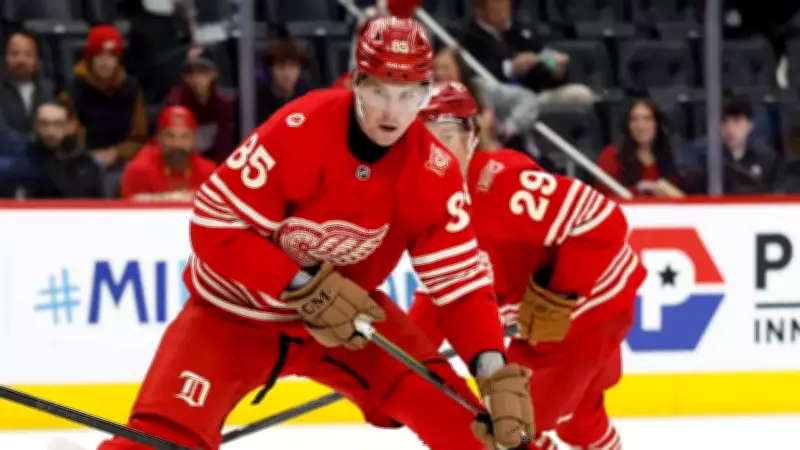
On the surface, the trade appeared straightforward: Pittsburgh sent a 2026 third-round draft pick to the Detroit Red Wings in exchange for the 24-year-old, 6-foot-8 winger. A move that might escape casual notice, it strategically fulfills multiple organizational objectives simultaneously.
Dubas elaborated on the rationale behind targeting Soderblom: "He's a player we identified throughout the year as someone who fits the age group we're trying to bring in. He's under contract this year and next, and then becomes a restricted free agent, so we have team control beyond that. He fits a prototype we don't have in our prospect pool—a very tall player—and his skating has continued to improve over time."
"Detroit's development program has done a good job with him, although they have a deep pool of younger players and high-end picks. He was someone we felt might become available," Dubas continued. "What stands out is his ability to forecheck, disrupt plays, and win pucks back. That's something we've identified as an area to add more of across the lineup. We already have players like Desharnais, Lizotte, and Acciari who do that well, but adding more helps. The key for us is his term and control, and the ability to develop him further."
Identifying a Clear Strategic Pattern
This explanation reveals a deliberate pattern. The acquisition is not merely about adding size; it is about integrating pressure players. Pittsburgh actively seeks forwards who can aggressively pursue loose pucks, force opponent errors, and sustain offensive zone pressure. Soderblom contributes this tenacious edge alongside a consistent physical presence previously lacking in the lineup.
Timing is another critical factor. While the veteran core continues to drive performance, Dubas is systematically incorporating younger players who can evolve into more significant roles. Soderblom is not anticipated to headline a scoring line immediately. He represents a developmental project with a clearly defined purpose within the team's structure.
Assessing the Risk and Reward
The transaction's cost makes the strategic gamble comprehensible. A third-round draft pick holds value but is not considered an indispensable asset. For this moderate price, Pittsburgh obtains a player with a unique physical profile and a clear developmental pathway within their system. Should Soderblom realize his potential, the return on investment could be substantial. If he does not, the associated risk does not jeopardize the franchise's long-term planning.

Threading the Competitive Needle
This methodology exemplifies how Dubas is attempting to navigate the delicate balance between present competitiveness and future sustainability. Moves like the Soderblom trade may not dominate sports headlines, but cumulatively, they often determine whether a team maintains success or declines precipitously once its legendary stars eventually retire.
Dubas's approach is a masterclass in proactive team building, ensuring the Penguins remain contenders today while meticulously constructing the foundation for tomorrow.