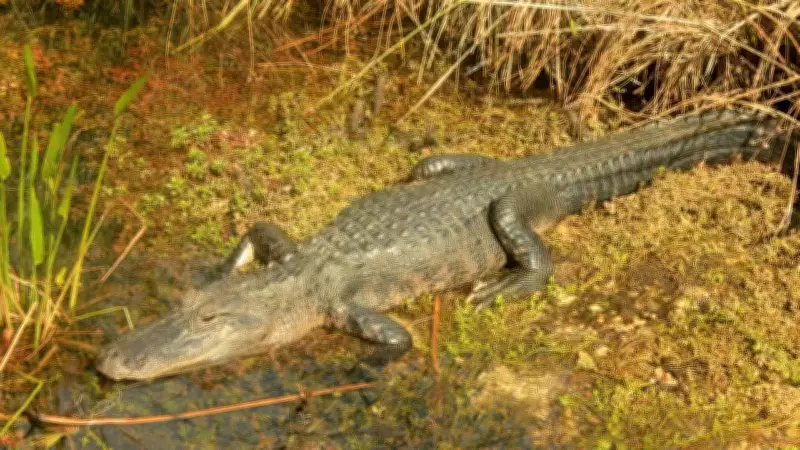
Crocodiles' Clever Hunting Trick: Using Sticks as Bait to Lure Birds
When imagining a crocodile attack, most people envision brute force and sudden underwater strikes. However, recent research has uncovered a chillingly sophisticated hunting strategy that challenges our fundamental understanding of reptile behavior. Instead of relying solely on strength, certain crocodile species have been observed using tools to trap their prey in what appears to be calculated deception.
The Bait-and-Snare Technique
During bird nesting seasons, crocodiles and alligators position themselves motionless in shallow waters with small sticks and twigs carefully balanced on their snouts. These sticks resemble ideal nesting materials to birds actively gathering building supplies. When an unsuspecting bird approaches to collect what appears to be a perfect twig, the reptile executes a lightning-fast lunge, snapping its powerful jaws shut in a devastating motion.
What makes this behavior particularly remarkable is its precise timing. The crocodiles deploy this strategy specifically during peak nesting periods when birds are most focused on gathering materials and potentially less vigilant about predators. This demonstrates not only awareness of other species' seasonal behaviors but also impeccable timing in execution.

Which Species Exhibit This Behavior?
The astonishing discovery was made by zoologist Vladimir Dinets through extensive observation of crocodile behavior. His research confirms this lure behavior occurs in at least two distinct species:
- The American Alligator - Found in southeastern United States
- The Mugger Crocodile - Native to the Indian subcontinent
Both species have been documented using sticks as bait primarily during the nesting seasons of water birds like egrets and herons. This geographical spread suggests the behavior might be more widespread than initially thought.
Why This Discovery Matters
Traditionally, crocodiles were considered reactive hunters that simply ambushed whatever prey happened to wander within striking distance. Dinets' observations fundamentally challenge this perception by revealing:
- Tool Use - This represents the first recorded instance of reptiles using objects as hunting tools
- Strategic Planning - The behavior shows anticipation of prey behavior rather than mere reaction
- Environmental Awareness - Crocodiles demonstrate understanding of seasonal patterns in their ecosystem
The implications extend beyond hunting techniques to suggest cognitive abilities previously unrecognized in these ancient reptiles.
Vulnerable Birds and Crocodile Intelligence
Birds collecting nesting materials near water bodies face particular danger during breeding seasons. Their intense focus on nest construction makes them vulnerable to the crocodiles' deceptive tactics. Even alert birds find the bait irresistible, highlighting the effectiveness of this hunting strategy.
This sophisticated technique reveals several aspects of crocodilian intelligence:
- Awareness of other species' behavioral patterns
- Strategic use of environmental objects as bait
- Extraordinary patience and precise coordination
- Behavioral adaptation beyond basic survival instincts
These findings suggest crocodiles and alligators possess cognitive abilities far more advanced than previously credited to reptiles, with behaviors finely tuned to their specific ecological contexts.