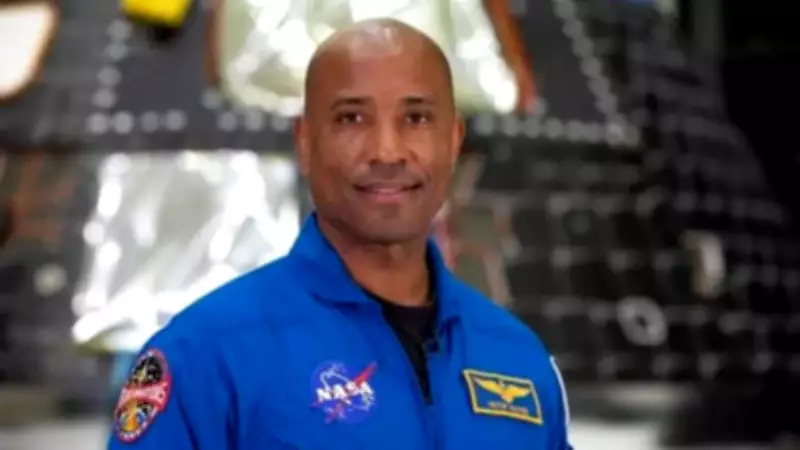
From Football Field to Lunar Orbit: The Unlikely Path of Victor Glover
When the Artemis II rocket ascended from Cape Canaveral, Florida, it initially appeared as a routine space event. However, sports enthusiasts swiftly detected an extraordinary element: astronaut Victor Glover, a former college football player. This revelation captivated online audiences, transforming public perception of the mission into a more relatable and human narrative.
Victor Glover's Dual Legacy: Athletics and Space Exploration
Glover, now 49, is a key member of the four-person crew embarking on a 10-day test flight around the moon. The primary objective is to assess spacecraft safety for humans ahead of a planned lunar landing in 2028. Yet, Glover's background as a defensive back for the Cal Poly Mustangs in the late 1990s, along with his involvement in wrestling, has infused the mission with a unique, down-to-earth appeal. Reflecting on his alma mater, Glover stated in an earlier interview, "This is truly my original launch pad. Cal Poly is the reason that I've been able to do some amazing things."
Historic Milestones and Mission Details
Piloting Artemis II, Glover will become the first Black man to navigate a flight around the moon, a feat he views as part of broader human history. He emphasized, "It's the story of humanity. Not black history, not women's history, but that it becomes human history." The mission involves approximately 25 hours of Earth orbit for system checks, followed by a main engine burn toward the moon. The spacecraft will travel about 4,000 miles beyond the lunar surface before splashing down in the Pacific Ocean, marking the farthest human flight in recent years.

Public Reaction and Cultural Impact
Online reactions to the launch highlighted widespread astonishment at Glover's journey. Social media users praised his transition, with one noting on X, "What a journey. Division I athlete to NASA pilot on a Moon mission is unreal," and another adding, "College athlete to Moon pilot — proof that teamwork, focus, and grind have no limits." Even during a live ESPN broadcast of a girls' softball game, play halted as participants and viewers watched the rocket's ascent, underscoring the mission's cross-cultural resonance.
This blend of sports and space exploration not only enriches the Artemis II story but also inspires broader audiences, demonstrating how diverse backgrounds can converge in groundbreaking achievements.