Anahat Singh: India's Teen Squash Prodigy Ascends to World Elite
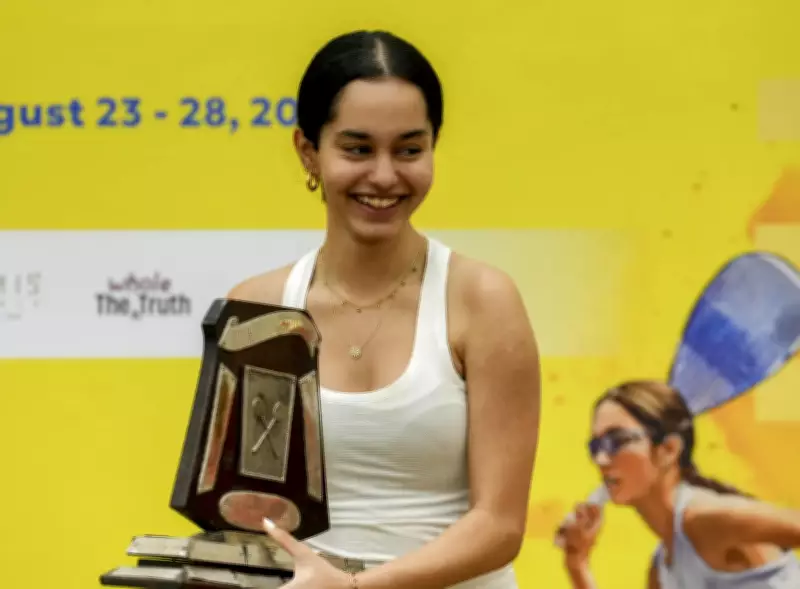
New Delhi: At merely 18 years of age, Anahat Singh has transcended her status as India's most promising squash talent to become its current standard-bearer. A breakthrough year in 2025, followed by a series of emphatic victories in 2026, has catapulted her into the global top 20 rankings. She is now firmly positioned as a legitimate contender for an Olympic medal, with squash set to debut at the Los Angeles 2028 Games.
Exclusive Interview: The Mindset of a Champion in the Making
In this comprehensive conversation, the Delhi native opens up about her meteoric ascent, her evolving mental approach, managing academics on the fly, and the meticulous roadmap leading to Olympic participation.
Q. How do you evaluate your standout 2025 season and strong 2026 start?

A. The season has been exceptionally positive thus far, but a significant portion remains. Securing major wins in prestigious tournaments has been gratifying, and I am pleased with my development. My current emphasis is on continuous improvement, advancing deeper in major competitions, and sustaining this high performance level consistently.
Q. What catalyzed your transition from junior success to becoming India's top-ranked player?
A. The most critical adjustment was adapting to the senior circuit. Initially, I could perform well in a single match but found it challenging to maintain that intensity throughout an entire tournament. Now, I have significantly improved at handling back-to-back demanding matches. Enhanced training rigor, a deeper comprehension of match pace, and building unwavering consistency have been the pivotal factors.
Guidance from a Legend and Tactical Breakthroughs
Q. You are now training with former world No. 1 Gregory Gaultier. How has he influenced your game?
A. The collaboration has been phenomenal. Having been world No. 1, he possesses an intimate understanding of every facet of the professional journey. He knows precisely what is required to ascend the rankings and adeptly addresses both technical and psychological components. We have been working together extensively, spending considerable time in Prague, where Gregory is based, and at tournaments. This deepening partnership is substantially elevating my performance.
Q. Your recent victory over world No. 10 Georgina Kennedy was notable. What tactical approach proved successful?
A. Frankly, by the final, I was utterly exhausted. My coach, Greg, instructed me to simply battle for every point and play with freedom. Having lost to her 3-0 in Canada a few months prior, I analyzed that match thoroughly to avoid repeating errors. The strategy was not excessively complex; it centered more on precise execution and the correct competitive mindset.
Building Belief and Managing the Spotlight
Q. Was there a specific career turning point where you felt prepared for significant victories?
A. The Canadian Open last year served as that pivotal moment. I defeated both a top-20 and a top-10 player in the same tournament. That experience instilled a profound belief that I could not only compete with elite players but also triumph against them in major events.
Q. How do you cope with pressure during matches against higher-ranked opponents?
A. I actually experience less pressure when facing top players. The absence of an expectation to win allows me to play more freely. This mental state often enables me to perform better compared to matches where I am the favored contender.
Q. Breaking into the world's top 20 has brought increased attention. How are you navigating this spotlight?
A. It provides a sense of belonging. I now feel entirely comfortable training alongside top-tier athletes and competing against them. Additionally, it guarantees entry into major tournaments, which is absolutely crucial for ongoing development and progress.
The Olympic Dream: A Calculated Journey to LA 2028
Q. With squash included in the Olympics, and you as a medal prospect for LA28, how are you approaching this monumental goal?

A. The Olympics represent the ultimate objective, but numerous steps precede it. I am adopting a methodical approach, focusing on one tournament at a time. Qualification is exceptionally challenging, with only 16 spots available. Therefore, my immediate priority is to enhance my world ranking to secure a place. Once that is achieved, I can concentrate fully on preparing to compete for a medal.
Q. The qualification pathway appears intricate. How do you plan to navigate it?
A. The process is indeed detailed. Continental events like the Asian Games offer direct qualification, while the remainder is largely based on world rankings, subject to country limits. I believe no player feels entirely assured of qualification, as circumstances can shift rapidly. My focus remains on improving my ranking to minimize any uncertainty.
Q. Some athletes get Olympic-themed tattoos for motivation. Do you have any such plans?
A. I would not opt for a tattoo! However, I maintain constant visual reminders, such as an LA28 poster beside my bed and as my phone wallpaper. It is the first thing I see each morning, serving as a powerful motivator for my training regimen.
Fitness, Balance, and Life Beyond the Court
Q. Fitness seems central to your objectives. How are you enhancing it?
A. I prioritize extensive on-court work—long rallies, sprints, and endurance drills. I have recently incorporated some gym sessions, but stamina remains the paramount focus due to the extended duration and high intensity of professional matches.
Q. Who is Anahat Singh outside the realm of competitive squash?
A. I cherish spending quality time with friends and family, exploring new restaurants, and shopping—especially following a match victory. I also deeply value sleep and enjoy painting whenever my schedule permits.
Q. How do you manage the balance between academic studies and a professional squash career?
A. I maximize study time during travel—on flights, in cars, or during evenings. My school has been incredibly supportive, and my teachers assist me in managing all responsibilities despite my demanding competition schedule.
Q. You will miss the World Championships due to board exams. How difficult is that decision?
A. It is undoubtedly disappointing, but I have no alternative. Academic examinations are critically important. I am training intensively now to allow for complete focus on studies as the exam dates approach.
Q. What are your expectations for the upcoming JSW Indian Open?
A. I am thrilled to compete on home soil. As the top seed, I am feeling confident. Primary competition will come from players like Joshna Chinappa and several Egyptian contenders. The field is strong, but securing victory is extremely important to me, as it offers a substantial boost in ranking points.