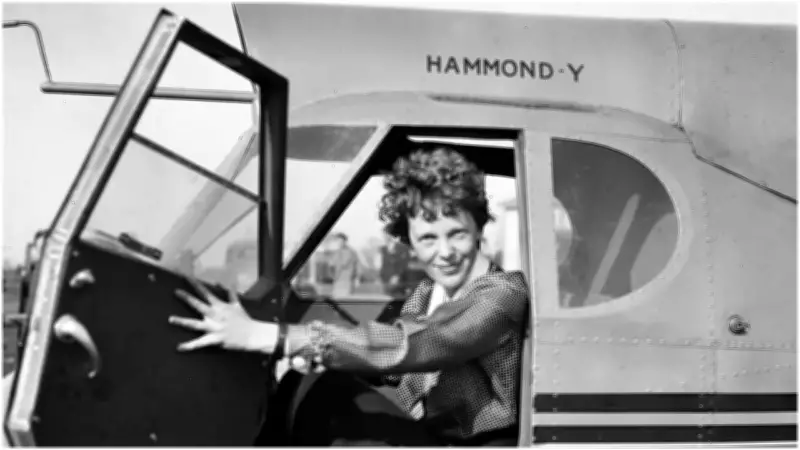
Amelia Earhart: The Trailblazing Aviator Who Defied Limits and Inspired Generations
Amelia Earhart always understood that the sky was not her limit. She dreamed of achieving the impossible and steadfastly refused to be grounded, forever altering the course of aviation history by becoming the first woman to fly solo across the vast Atlantic Ocean. From her groundbreaking role as the world's first prominent female pilot to shattering numerous records before her mysterious disappearance, Amelia Earhart's life remains an extraordinary chapter in the annals of human achievement.
Born to Soar: The Early Years of a Pioneer
Amelia Mary Earhart was born in 1897 in Atchison, Kansas, to a railroad attorney father and a mother from a well-to-do family. From a very young age, she exhibited an adventurous and fiercely independent spirit. While other girls her age were confined to dresses, her progressive mother allowed her to wear pants, a freedom she cherished deeply. As a child, Amelia enjoyed unconventional pastimes like football and fishing, activities that hinted at her future defiance of societal norms.
In 1920, a pivotal moment occurred when Amelia attended an air show in California. This experience ignited an unquenchable passion for aviation, transforming her life's trajectory. Determined to become a pilot, she immediately began taking lessons and rigorous training. Her obsession with flight led her to purchase her first aircraft in 1921—a bright yellow Kinner Airster that she affectionately named "The Canary."

Record-Breaking Achievements and Global Inspiration
In 1932, Amelia Earhart achieved a monumental milestone by becoming the first woman to pilot a solo flight across the Atlantic Ocean. This historic journey also set records for the longest flight ever completed by a woman and the fastest transatlantic crossing at that time. Her courage and skill captured the world's imagination, proving that gender was no barrier to extraordinary accomplishment.
Earhart's influence extended far beyond aviation. She became a powerful symbol of empowerment, inspiring women worldwide to pursue opportunities and break free from restrictive social conventions that traditionally confined them to domestic roles. In 1929, she founded the Ninety-Nines, an international organization for female pilots, serving as its inaugural president. Her remarkable achievements even drew admiration from U.S. President Franklin D. Roosevelt and First Lady Eleanor Roosevelt, who invited her to the White House. During this visit, Earhart famously took Eleanor Roosevelt for a flight, sharing her passion for aviation with the nation's most prominent woman.
The Final Flight and Enduring Mystery
In 1937, Amelia Earhart embarked on her most ambitious journey yet: an attempt to circumnavigate the globe with navigator Fred Noonan in a twin-engine Lockheed Electra aircraft. The expedition began in June from Miami, heading eastward on a planned 29,000-mile route. Over subsequent weeks, they made multiple refueling stops, reaching New Guinea by June 29 after covering approximately 22,000 miles.
On July 2, they departed for Howland Island, a particularly challenging leg of the journey due to the tiny coral island's difficulty to locate. To assist navigation, two U.S. ships were positioned along the route, and Earhart maintained intermittent radio contact with the U.S. Coast Guard cutter Itasca stationed near Howland. Approximately one hour into the flight, her final transmission was heard: "We are running north and south." After this message, all communication ceased.
The aircraft is believed to have crashed about 100 miles from Howland Island, though neither the plane nor its occupants were ever found. Despite extensive search efforts, Earhart and Noonan vanished without a trace, creating one of aviation's greatest unsolved mysteries. While her physical journey was tragically cut short, Amelia Earhart's legacy continues to inspire millions of women to pursue their dreams with courage and determination.