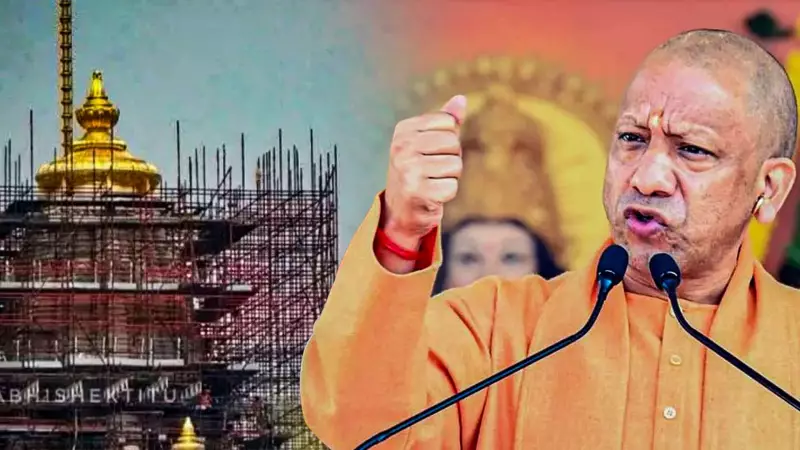
Uttar Pradesh Chief Minister Yogi Adityanath has made a significant statement regarding the future course of action following the construction of the Ram Temple in Ayodhya. Speaking at the Hindustan Times Leadership Summit 2025 in New Delhi, the CM indicated that the focus would now extend to other sites of cultural and religious significance.
"We Will Reach All Places": Adityanath's Declaration
When questioned about whether the ancient cities of Kashi (Varanasi) and Mathura are next on the agenda after Ayodhya, Yogi Adityanath gave a pointed response. He stated that the government intends to "reach all places" and added, "we have already reached." His remarks are seen as a direct reference to the ongoing disputes at the Gyanvapi Mosque complex in Varanasi and the Shahi Eidgah Mosque in Mathura.
This statement echoes a popular slogan heard in certain quarters: "Ayodhya to bas jhaankee hai… Kashi-Mathura abhi baaki hai" (Ayodhya was just a glimpse, Kashi and Mathura are still remaining). The Chief Minister's words have placed these long-standing issues back into the national political discourse.
Pride in Heritage and a Democratic Milestone
During his address at the summit on December 6, 2025, Adityanath emphasized the importance of taking pride in India's cultural heritage. He lauded the Supreme Court's verdict on the Ram Janmabhoomi issue, describing it as a major democratic milestone for the nation.
Reflecting on the culmination of the Ayodhya movement, he described the construction of the Shri Ram Janmabhoomi Temple as one of the most significant and iconic moments of his political journey. He highlighted that the temple was built after a wait of 500 years, marking the resolution of a deeply contentious chapter in modern Indian history.
Political Repercussions and the Road Ahead
The Chief Minister's comments are likely to have wide-ranging political repercussions. They signal the intent to keep issues of cultural reclamation at the forefront of the political agenda in Uttar Pradesh and at the national level. The mention of Kashi and Mathura, without explicitly naming the disputed structures, is being interpreted as a strategic political message to his core constituency.
This development comes at a time when legal proceedings related to both the Gyanvapi and Shahi Eidgah sites are ongoing in various courts. Adityanath's statement is expected to influence public sentiment and potentially the political narrative leading up to future elections. It underscores a continued focus on themes of historical justice and cultural renaissance, which have been central to his governance model.