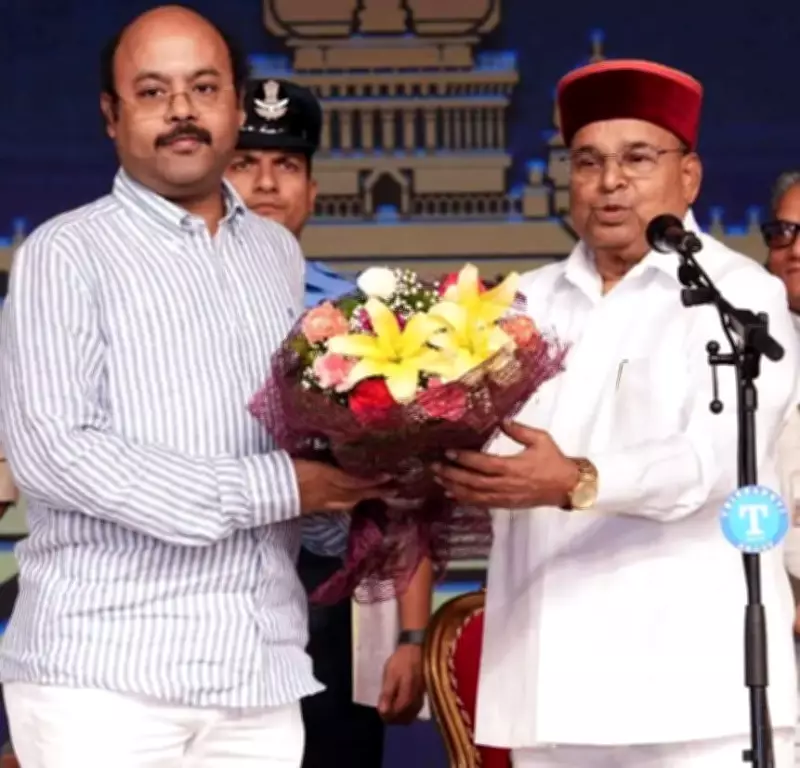
The elevation of Yathindra Siddaramaiah, son of former Chief Minister Siddaramaiah, to the position of a minister in the Karnataka cabinet has once again brought the issue of dynasty politics to the forefront. The move has sparked a heated debate among political circles and the public, with critics accusing the ruling Congress party of promoting nepotism while supporters defend the decision based on Yathindra's qualifications and experience.
The Appointment and Its Context
Yathindra, who represents the Varuna constituency, was inducted into the cabinet during a recent expansion. This decision comes amidst ongoing discussions about the prevalence of political families in Indian politics, where power often passes from one generation to the next. The Congress party, which has been in power in Karnataka since 2023, has defended the appointment, stating that Yathindra has worked diligently as a legislator and has the necessary credentials to serve as a minister.
Criticism from Opposition Parties
The opposition Bharatiya Janata Party (BJP) and Janata Dal (Secular) were quick to criticize the move. BJP leaders argued that the Congress party is perpetuating a culture of dynasty politics, which undermines democratic principles and prevents new talent from emerging. JD(S) leaders echoed similar sentiments, pointing out that the Congress had previously criticized the BJP for similar practices. They accused the Congress of hypocrisy, noting that the party often speaks against dynastic politics but practices it when in power.

Support from Congress and Allies
Congress leaders, however, have rallied behind the decision. They argue that Yathindra's educational background and his work as a legislator make him a suitable candidate for the ministerial role. Supporters also highlight that many political families exist across party lines, and singling out the Congress is unfair. They point to examples within the BJP, such as the families of former Prime Minister Atal Bihari Vajpayee and other senior leaders, to illustrate that dynasty politics is not limited to one party.
Public Reaction and Media Coverage
The public reaction has been mixed. Some citizens expressed disappointment, feeling that the appointment undermines meritocracy. Others, particularly from the Varuna constituency, have welcomed the move, citing Yathindra's accessibility and work in the area. Media coverage has been extensive, with debates on television channels and opinion pieces in newspapers analyzing the implications of this appointment for Karnataka's political landscape.
The Broader Debate on Dynasty Politics
Yathindra's elevation has once again highlighted the broader issue of political dynasties in India. Several studies have shown that a significant number of elected representatives in India come from political families. This trend is often attributed to factors such as name recognition, established support networks, and access to resources. Critics argue that this discourages new entrants and stifles democratic competition. Proponents, however, contend that political families can also produce capable leaders who have been groomed in public service from a young age.
Conclusion
The debate over Yathindra's ministerial appointment is unlikely to subside soon. As Karnataka moves towards the next assembly elections, this issue may become a focal point for opposition parties to rally against the Congress. Meanwhile, the Congress party will seek to showcase Yathindra's performance in office to counter the criticism. The episode serves as a reminder of the complex dynamics of Indian politics, where family legacy often intersects with democratic principles.