

Why the Proposed Alliance Between Kerala's Nair and Ezhava Outfits Failed
In January, Kerala witnessed a significant political development as two prominent Hindu caste organizations, the Nair Service Society (NSS) and the Sree Narayana Dharma Sangham (SNDP), hinted at forging a united alliance ahead of the upcoming Assembly elections. This potential alliance, which could have reshaped community equations and had far-reaching political ramifications, ultimately collapsed, raising questions about the underlying reasons for its failure.
The Initial Proposal and Swift Backtracking
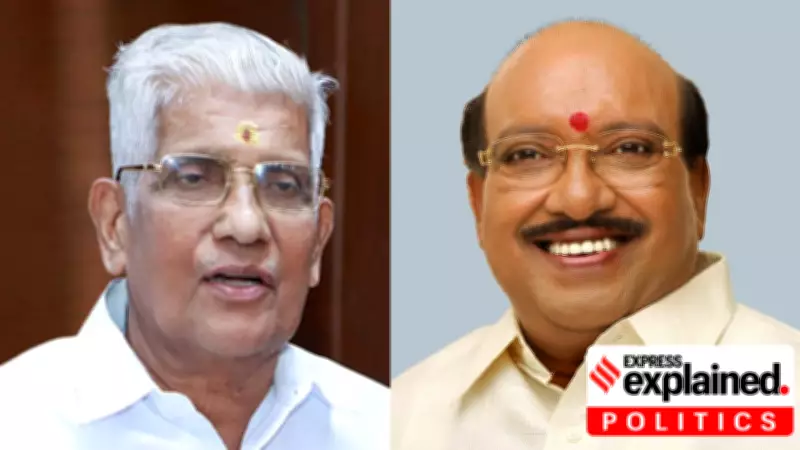
SNDP general secretary Vellappally Natesan floated the idea of an alliance after a general council meeting in January, describing it as the "need of the hour." The NSS, representing the forward Nair community comprising around 12-15% of Kerala's population, initially welcomed the development. However, NSS counterpart G Sukumaran Nair soon backed away, stating that the organization follows a policy of equidistance from all political formations. He revealed that the NSS abandoned the effort after realizing a political agenda lay behind the move, casting doubt on the sincerity of the proposal.
Historical Context and Fractured Relationships
The NSS and SNDP Yogam, which represents the numerically strong backward Ezhava community, have maintained a fractured relationship over the years, disagreeing on several issues, chiefly reservation policies. Despite this, there have been multiple attempts to unite them. In December 1950, they launched the Hindu Mahamandalam, which fell apart over disagreements regarding the Travancore Devaswom Board presidency. A more recent effort in 2012, the Grand Hindu Alliance, collapsed two years later over the proposed Devaswom Board Recruitment Board.

According to Dalit scholar and political analyst T S Syamkumar, a concrete alliance is neither possible nor sustainable because both organizations have divergent interests. "For example, SNDP, representing a backward community, has always advocated for a caste census whilst NSS has always been against it," Syamkumar notes, highlighting the fundamental differences that hinder long-term cooperation.
Political Motivations Behind the Alliance Talks
Political analyst and advocate A Jayashankar explains that both organizations have historically feared the Indian Union Muslim League's (IUML) perceived dominance within the opposition Congress-led United Democratic Front (UDF) and alleged minority appeasement by Congress. In 2012, a controversy arose when the Muslim League demanded a fifth cabinet position, leading to a perception among the Hindu community that they were being neglected, with minority communities holding 'hegemony' in Kerala politics. This sentiment was inflamed by the leadership of the NSS and SNDP Yogam.
The unity talks emerged amid Natesan stressing SNDP's vision of unity from Nayadi to Nasrani to Namboothiri communities, excluding Muslims, and expressing strong displeasure with the "communal politics" of the IUML. Jayashankar suggests that the NSS might have considered joining hands with SNDP Yogam to counter the Muslim League's influence.
Reasons for NSS's Withdrawal
Sukumaran Nair stated that the NSS doubted the political intent behind sending Natesan's son, Thushar Vellapally, who is the national president of the National Democratic Alliance (NDA) constituent Bharath Dharma Jana Sena (BDJS), to lead the talks. Syamkumar adds that the alliance would have created an impression of the NSS being in cahoots with the Bharatiya Janata Party (BJP), harming its bargaining power with both the Left Democratic Front (LDF) and UDF fronts.
"NSS is not an all-India organization and has always maintained equidistance from all political parties. It would work against their interests if they were seen working closely alongside the BJP in the state," Syamkumar said. He also noted that with around 10 members from the Nair community in the LDF cabinet, the NSS had little to gain from an alliance with SNDP Yogam.

Potential Beneficiaries and Political Implications
The BJP stands to gain from a united NSS-SNDP front, as it could help fuel anti-Muslim sentiments in the long run, according to Jayashankar. While the UDF and LDF trod a cautious line by not welcoming the initially proposed unity pact, the BJP welcomed it, with state chief Rajeev Chandrasekhar terming it a strong response to UDF's attempt to legitimize "Islamist organizations" in Kerala.
In recent years, the BJP has made inroads into the Nair community, which is politically flexible and known to shift allegiance between Congress and the BJP. Meanwhile, the Ezhava vote bank, traditionally a major support base for the LDF, has been shifting towards the BJP since 2016, following the formation of BDJS in late 2015. A CSDS-Lokniti post-poll survey noted that 32% of Ezhava voters supported the BJP in the 2024 Lok Sabha elections, up from 23% in the 2021 assembly polls.
Limited Impact on Existing Political Equations
Syamkumar notes that an NSS-SNDP alliance would have minimal impact on the LDF, which is grappling with challenges such as anti-incumbency and erosion of its core vote bank. He added that a united Hindu front wouldn't suffice to overcome the troubles haunting the government. The LDF leadership has denied claims that the alliance was part of the CPI(M)'s attempt to consolidate Hindu votes.
Interestingly, the Sabarimala Global Ayyappa Sangamam held last September, organized by the ruling LDF, was endorsed by both the NSS and SNDP Yogam, viewed as a result of government outreach efforts. However, Syamkumar points out that the LDF lacks a proper recalibration strategy to win back the trust of the Ezhava community, relying on short-term tactics like critiquing Muslim organizations.
According to Jayashankar, Nair community members are not "ideological or political slaves" to their leaders, meaning even an NSS-SNDP alliance wouldn't automatically guarantee a vote shift to any particular political front. This underscores the complex and independent nature of voter behavior in Kerala's dynamic political landscape.





