

As the new year dawns, the mood in Vijayawada is a complex mix of hope and frustration. While the broader capital region of Amaravati witnesses a construction boom, Vijayawada itself remains entangled in a web of long-delayed infrastructure projects. For its citizens, 2026 has become a critical deadline, a year where the city's patience must finally be rewarded with tangible progress.
Core Infrastructure: A Litany of Delays
The city's struggle is visible in its daily chaos. Unfinished flyovers, chronic traffic snarls on NH-16, and streets flooding after mild rains have become an unacceptable norm. One of the most symbolic failures is the Gunadala flyover, whose foundation stone was laid back in 2009. Affecting nearly three lakh commuters daily due to railway crossings and canals, the project has only recently been handed over to the railways, with a new completion target of December 2026.
Similarly, the West Bypass project, designed to divert highway traffic away from the city, missed its October 2025 deadline. Authorities now pledge completion by May 2026, citing delays in diverting high-voltage power lines near Jakkampudi. Commuters are desperately hoping this new deadline will be honored.

Critical Projects Awaiting Liftoff
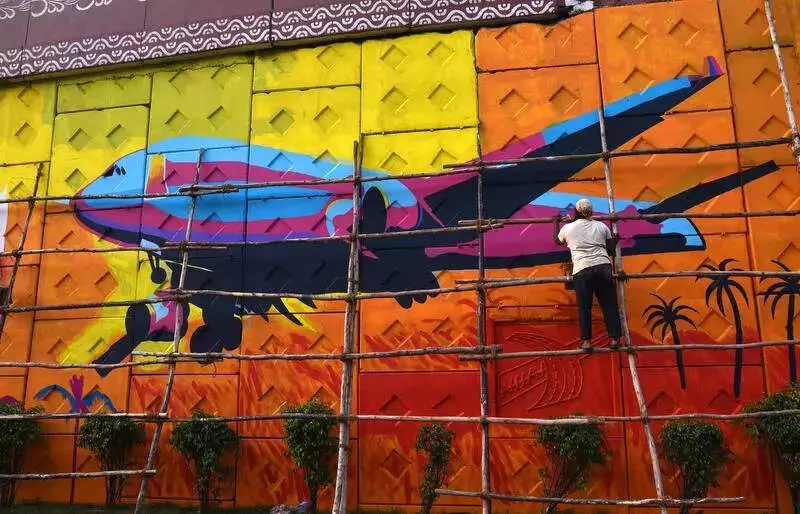
Eight years after being declared an international airport, Vijayawada airport still operates without a modern integrated terminal. Work that began in 2019 has seen multiple deadlines come and go, drawing recent criticism from Chief Minister Nara Chandrababu Naidu. He has directed officials to consider changing the contractor, raising hopes that 2026 might see the terminal finally completed to handle growing air traffic.
Another potential game-changer is the proposed Mahanadu-Nidamanur flyover. A detailed project report for this five-kilometre structure has been sent to the central government for approval. Traffic experts believe it could resolve up to 70% of Vijayawada's congestion, though its final execution may depend on the alignment of the proposed Vijayawada metro.
Expansion, Connectivity, and Revitalization
Beyond traffic, other essential civic projects are in limbo. The demand for Greater Vijayawada, which would bring 72 peripheral villages into the municipal fold, has persisted for nearly two decades. These areas lack basic amenities like proper roads and sanitation, despite their proximity to the Krishna River. The state government has linked the process to the upcoming population census, leaving citizens hopeful for action in 2026.
To decongest the bustling Vijayawada railway junction, satellite stations at Gunadala and Rayalapadu are being developed. With most works nearing completion, their operational launch in 2026 could significantly ease passenger load.
The city's fragile drainage, exposed by every rainy season, is the target of a ₹460-crore storm water drain project stalled since 2022. The Vijayawada Municipal Corporation is now trying to revive it. City MP Kesineni Shivnath has stated that comprehensive proposals worth ₹2,000 crore for road and drainage modernization have been submitted to both state and central governments.
On the tourism front, the redevelopment of Bhavani Island under a public-private partnership model promises to unlock the city's potential. Plans inspired by Kerala's backwaters, including theme parks, water sports, and houseboats, have been stalled for years. Locals are eager to see this vision materialize in 2026, putting Vijayawada firmly on the tourism map.
The collective sentiment in Vijayawada is clear: the time for announcements and delays is over. The year 2026 stands as a crucial test for the administration's ability to deliver on its promises and transform the city's infrastructure landscape.






