Vijayawada's LPG Crisis Shows Signs of Recovery Following Iran War Disruption
After enduring weeks of severe disruption caused by the Iran war, the cooking gas crisis in Vijayawada is finally beginning to ease, providing much-needed relief to both residents and the hospitality industry across the city.
Hospitality Sector Rebounds as LPG Supplies Improve
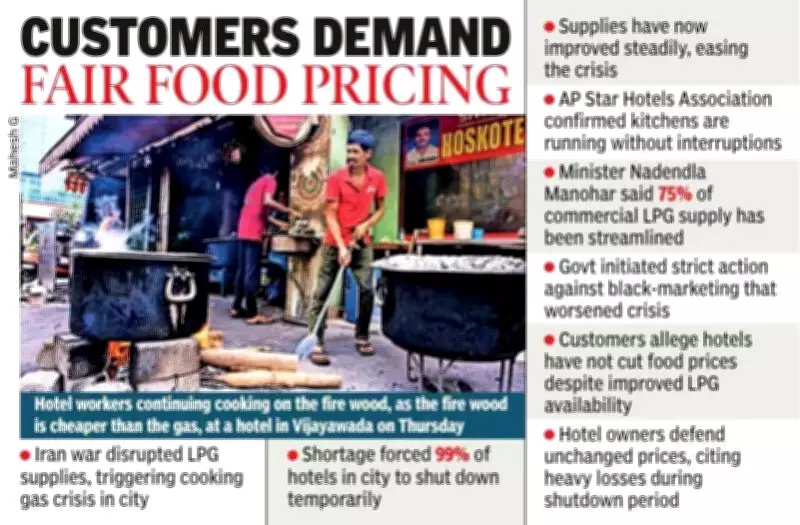
With LPG supplies steadily improving, nearly 99% of hotels that were forced to shut down due to acute shortages have now resumed their operations. This marks a significant turnaround from the peak of the crisis when establishments struggled to secure even basic cooking fuel.
Hotel owners report that the situation has improved dramatically compared to just a few weeks ago. "We struggled to even get a single cylinder a few weeks ago. Now supplies have improved, and we are able to run our kitchens without interruptions," explained RV Swamy, president of the AP Star Hotels Association.

Many establishments that had temporarily switched to alternative cooking methods are now returning to LPG as availability increases throughout the city. This transition back to normal cooking operations represents a crucial step toward full recovery for the hospitality sector.
Government Confirms Stabilization and Cracks Down on Black Marketing
Civil Supplies Minister Nadendla Manohar has confirmed the improvement in LPG distribution, stating that the situation is stabilizing rapidly across Vijayawada. "About 75% of commercial LPG supply has already been streamlined, and domestic consumers are also receiving cylinders at the earliest," he announced.
The minister further warned that the government has initiated serious action against black-marketing activities that worsened the crisis in recent weeks. This crackdown aims to prevent similar disruptions in the future and ensure fair distribution of essential cooking fuel to all consumers.
New Concern Emerges Over Unchanged Food Prices
Despite the return to normalcy in LPG supply, a fresh concern has emerged regarding food prices at local hotels and restaurants. Customers are alleging that establishments have not reduced their prices even after LPG availability has improved significantly.
"During the shortage, they increased prices saying gas costs had gone up. Now that supply is back, prices should come down, but that hasn't happened," said K Raghu Babu, a concerned customer who has noticed the price discrepancy.
Hotel Owners Defend Pricing Decisions Citing Accumulated Losses
Hotel owners, however, are defending their current pricing stance by pointing to the substantial financial losses they incurred during the shutdown period. "We incurred heavy losses when our hotels were closed. It will take some time to stabilize financially before we can consider reducing prices," explained M Narayana, a local restaurateur.
This mismatch between improving LPG supply and unchanged food prices has led to growing dissatisfaction among consumers, who are now urging authorities to ensure fair pricing practices throughout the hospitality industry.
Looking Ahead: Balancing Recovery with Consumer Concerns
As Vijayawada continues to recover from the cooking gas crisis triggered by international conflict, the focus is shifting toward addressing consumer concerns about pricing transparency. While the hospitality sector celebrates its return to normal operations, pressure is mounting for establishments to reflect improved supply conditions in their pricing structures.
The coming weeks will be crucial in determining whether hotel owners can find a balance between recovering their financial losses and responding to legitimate consumer expectations for fair pricing in the post-crisis environment.