Urban Mobility Emerges as Central Electoral Issue in Tamil Nadu
Public transportation has decisively moved from bureaucratic policy files to the forefront of political speeches during this election season in Tamil Nadu. Both Chief Minister M K Stalin and opposition leader Edappadi K Palaniswami have prominently invoked metro expansion projects, bus connectivity improvements, and overall urban mobility in their campaign rhetoric. This development signals a significant shift where the daily commute and transportation infrastructure are entering mainstream electoral politics as critical voter concerns.
From Welfare to Governance: The Evolution of Mobility Politics
For decades, Tamil Nadu elections have been predominantly driven by welfare schemes and direct benefit transfers. Mobility was traditionally treated as a welfare issue, exemplified by initiatives like the free bus travel scheme for women introduced in previous administrations. A comprehensive 2024 study conducted by Bharathidasan University and Alagappa University confirmed that this particular scheme substantially improved women's access to employment opportunities and enhanced financial independence, despite some operational implementation gaps.
The profound connection between mobility and social empowerment has deeper historical roots in the state. During the 1990s in Pudukkottai district, a literacy-linked cycling movement empowered thousands of rural women to take to bicycles, effectively breaking longstanding social barriers and gaining unprecedented access to work, education, and public life participation. Later in 2014, under the previous AIADMK government, the Greater Chennai Corporation formally introduced a non-motorised transport policy designed to prioritize walking and cycling infrastructure, though implementation remained inconsistent and incomplete.

Metro Projects Become Political Battleground
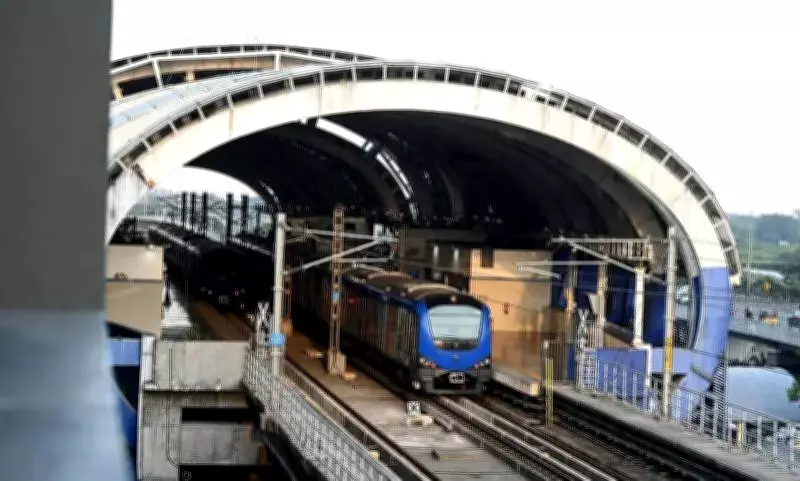
Currently, the daily commute is being strategically reframed as a fundamental question of governance quality and delivery efficiency, areas where both successive governments have faced considerable challenges. Metro rail projects have become particularly central to this evolving political messaging. The ambitious phase-1 metro project was originally conceived under a previous DMK administration but was executed largely during AIADMK's tenure, which subsequently launched the phase-2 expansion. This infrastructure is now being expanded yet again by the current DMK government, effectively transforming metro development into a contentious site of political competition and credit-claiming.
During a recent campaign speech in Thiruvarur, Chief Minister M K Stalin explicitly accused the central government of deliberately delaying crucial approvals for phase-2 metro expansion, forcing the state government to shoulder substantial financial burdens. In a counter-narrative at Alandur, opposition leader Edappadi K Palaniswami asserted that all necessary approvals were successfully secured under his previous AIADMK administration, presenting this as a significant achievement of his government. Caught directly in this political crossfire remains the ordinary commuter, whose daily transportation needs often take secondary priority to political point-scoring.
Implementation Gaps and Last-Mile Connectivity Challenges
Despite massive financial investments in metro infrastructure, actual ridership numbers remain disappointingly low, primarily due to persistent poor last-mile connectivity solutions. The recent announcement of 220 new feeder buses, coming years after the problem became evident and merely months before crucial elections, reflects a familiar pattern where substantive fixes arrive belatedly, often coinciding with heightened political stakes and electoral calculations.
Former CMRL director R Ramanathan provided critical insight, stating, "When phase-1 was originally proposed, the comprehensive plan specifically aimed to help commuters access stations either by foot within 500 meters or by small shuttle buses within 2-3 kilometers. However, genuinely serving people's practical transportation needs has never been the operational priority in implementation."

The glaring gap between political promises and actual delivery is visibly apparent across multiple transportation systems. The Metropolitan Transport Corporation bus network has largely stagnated without meaningful expansion, suburban rail services operated by Southern Railway remain poorly integrated with other transit modes, the Mass Rapid Transit System takeover remains pending without resolution, and the Chennai Unified Metropolitan Transport Authority has consistently struggled to enforce meaningful coordination among disparate agencies.
Aswathy Dilip, managing director of the Institute for Transportation and Development Policy, explained the structural challenges: "Different government departments independently plan different transportation elements without cohesive integration. CUMTA could theoretically provide coordination, but only if all relevant organizations genuinely listen and collaborate effectively."
Political Promises Outpace Delivery Realities
Nevertheless, political messaging and campaign promises have surged ahead of actual delivery capabilities. Currently, the AIADMK opposition promises to extend free bus travel benefits to men while proposing entirely new metro projects. Simultaneously, the ruling DMK proposes substantial MRTS upgrades and concrete last-mile connectivity measures as part of their electoral platform.
C Paul Barnabas, president of the Tamil Nadu Consumer Protection Organisation, emphasized the growing voter consciousness: "Commute time duration and transport reliability have undeniably become key quality-of-life indicators for urban residents. These practical daily concerns will significantly influence how people ultimately cast their votes in the upcoming elections."
The transformation of urban mobility from technical planning to political priority represents a fundamental shift in Tamil Nadu's electoral landscape, with transportation infrastructure now positioned as both a governance test and a potent electoral weapon that could determine political fortunes.