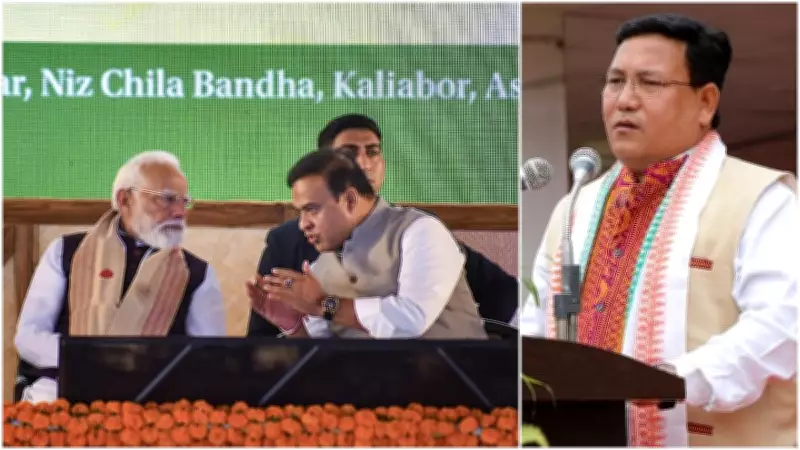
UPPL Announces Solo Run for Assam 2026 Elections Following Failed BJP Alliance Talks
The political landscape in Assam is witnessing a significant shift as the United People's Party Liberal (UPPL), a key regional ally of the Bharatiya Janata Party (BJP), has decided to contest the upcoming Assam Assembly elections 2026 independently. This decision comes after preliminary discussions between the two parties regarding seat-sharing arrangements reached an impasse, effectively collapsing their alliance in the state.
Seat-Sharing Negotiations Break Down, Prompting UPPL's Independent Strategy
According to recent reports, the preliminary talks between the UPPL and the BJP have failed to yield a consensus on the distribution of seats for the 2026 polls. The breakdown in negotiations has led the UPPL, which has its origins in the Bodoland region, to adopt a solo electoral strategy. The party is now preparing to field candidates across a broad spectrum of constituencies, signaling a bold move to assert its regional influence without relying on its former national partner.
UPPL's Ambitious Electoral Plan: Contesting 27 Constituencies
The UPPL has outlined an ambitious plan to contest in a total of 27 Assembly constituencies. This includes:

- All 15 constituencies within the Bodoland Territorial Region (BTR), where the party holds significant sway due to its roots in the area.
- An additional 12 constituencies located outside the BTR, indicating the party's intent to expand its political footprint beyond its traditional stronghold.
This strategic expansion underscores the UPPL's confidence in its grassroots support and its determination to play a more prominent role in Assam's political arena.
Implications for Assam's Political Dynamics
The decision of the UPPL to go solo could have far-reaching consequences for the Assam Assembly elections 2026. It may lead to:
- Increased competition in the BTR and other regions, potentially splitting votes and altering electoral outcomes.
- A reconfiguration of alliances, as other political parties might seek to capitalize on the rift between the UPPL and the BJP.
- Enhanced focus on regional issues, with the UPPL likely to emphasize local concerns in its campaign, contrasting with the BJP's broader national agenda.
This development marks a critical juncture in Assam's politics, as the UPPL's move could reshape the electoral dynamics and influence the formation of the next state government.
Background and Future Prospects
The UPPL, formed in the aftermath of the Bodoland movement, has been a crucial player in Assam's coalition politics, particularly in the BTR. Its decision to contest independently reflects a growing assertiveness among regional parties in India. As the 2026 elections approach, political observers will closely monitor how this split affects voter sentiment and alliance strategies. The failure of seat-sharing talks highlights the challenges in maintaining coalition unity, especially in a diverse state like Assam, where regional aspirations often intersect with national politics.
In summary, the collapse of talks between the UPPL and the BJP has set the stage for a more competitive and fragmented electoral battle in Assam. With the UPPL gearing up to contest 27 seats on its own, the political equations in the state are poised for a significant transformation, making the 2026 Assembly elections a pivotal event to watch.