A recent event at the police lines in Bareilly, Uttar Pradesh, has ignited a significant controversy after a religious storyteller, popularly known as Kathavachak, was accorded a ceremonial guard of honor typically reserved for dignitaries. The incident, which took place on a Sunday, has raised serious questions about the adherence to official protocol and the potential misuse of state machinery.
The Controversial Ceremony at Bareilly Police Lines
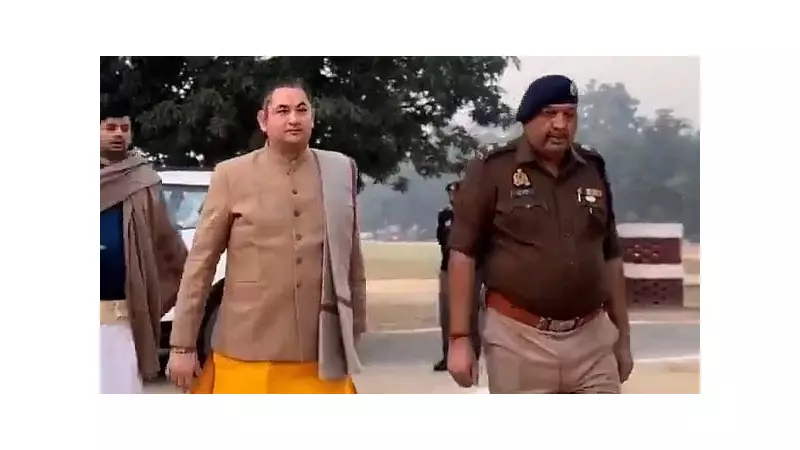
On Sunday, a prominent Kathavachak, a narrator of religious texts and discourses, arrived at the Bareilly police lines. In a move that has since drawn widespread criticism, a formal guard of honor was presented to him by police personnel. Visuals from the event, which quickly circulated on social media, show the Kathavachak standing in a vehicle while police officers in uniform saluted him in a structured formation.
This ceremonial practice, known as a guard of honor or 'Salami', is governed by strict police manuals. It is traditionally extended to constitutional authorities, high-ranking government officials, and visiting dignitaries. The sight of it being offered to a private religious figure immediately triggered a debate on propriety and rules.

Official Response and Defense
Facing immediate backlash, senior police officials in Bareilly were compelled to address the incident. The police clarified that the guard of honor was not an officially sanctioned ceremony. Instead, they described it as a spontaneous gesture by police personnel who were devotees of the Kathavachak.
An official statement attempted to downplay the formality of the event, suggesting it was a personal expression of reverence by the staff present, rather than a directive from the department's leadership. However, this explanation did little to quell the rising tide of criticism from opposition parties and civil society observers, who viewed the act as a clear violation of service norms.
Political Reactions and Broader Implications
The political reaction to the event was swift and sharp. Leaders from opposition parties, including the Samajwadi Party (SP) and the Congress, seized upon the incident to accuse the ruling Bharatiya Janata Party (BJP) government in Uttar Pradesh of blurring the lines between state function and religious promotion.
Critics argue that such actions undermine the secular ethos of the police force and set a dangerous precedent for the misuse of official positions and state resources. The controversy taps into larger, ongoing debates in India about the relationship between religion and state institutions, and the obligations of uniformed services to remain neutral.
The incident in Bareilly is not occurring in a vacuum. It reflects a pattern where symbols of state authority are increasingly seen in contexts that favor particular religious or cultural figures, leading to accusations of partiality. The police force, as the most visible arm of the state's executive power, is expected to maintain an image of impartiality, and breaches of this principle attract intense scrutiny.
While the local police defense hinges on the personal faith of its personnel, the question of whether such collective, uniformed displays on official premises can be deemed "personal" remains at the heart of the controversy. The event has undoubtedly put the Uttar Pradesh Police administration in a spot, prompting calls for a clear directive to prevent similar occurrences in the future and to uphold the sanctity of official protocol.