
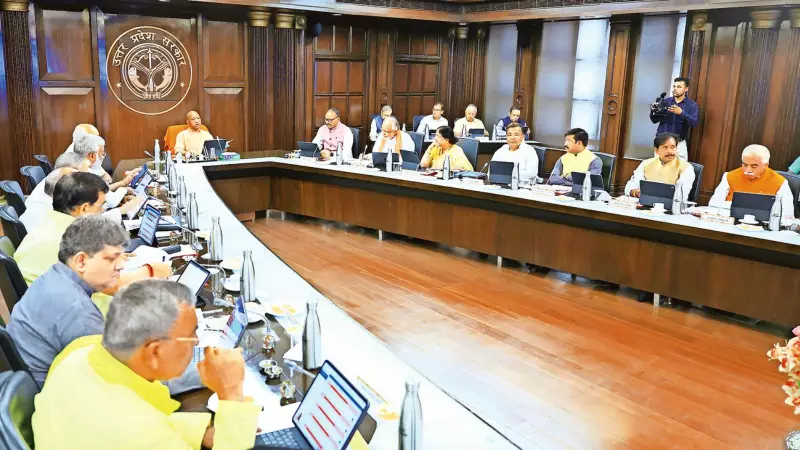
In a major push to position itself as a global hub for electronics manufacturing, the Uttar Pradesh government has rolled out a red carpet for large-scale investments in the semiconductor sector. The state cabinet, in a meeting held on Tuesday, approved a proposal to offer special, customised incentives on a case-to-case basis for investments of Rs 3,000 crore or more under the newly formulated Semiconductor Policy, 2024.
Tailored Packages for Mega Chip Projects
Finance and Parliamentary Affairs Minister Suresh Khanna, addressing the media, highlighted the global expansion of semiconductor manufacturing in nations like the USA, Japan, Taiwan, and across Europe. To compete and attract a slice of this strategic industry, the Yogi Adityanath-led cabinet has approved a powerful package of subsidies and exemptions for eligible units.
The approved incentives include an interest subsidy, reimbursement of employee costs, and a full exemption from net State GST (SGST) for a decade. Furthermore, the policy promises 100% reimbursement of the Employees' Provident Fund (EPF) for domiciles of Uttar Pradesh, up to Rs 2,000 per month. Companies will also benefit from concessions on water charges and a substantial electricity tariff relief of Rs 2 per unit for 10 years.
Investment Pipeline and Employment Generation
Industrial Development Minister Nand Gopal Gupta provided an encouraging update on the state's industrial momentum. He revealed that 21 companies have already initiated their investment plans in the current financial year. These commitments are expected to generate significant direct and indirect employment opportunities, giving a substantial boost to the state's economy and skill development.
The cabinet's decision is a calculated move to secure high-value, future-ready industries. "The offer of special incentives for investments above Rs 3,000 crore is designed to attract anchor investors who can establish entire ecosystems around them," a government official explained.
Other Key Decisions: Sports, Education, and Healthcare
Beyond the semiconductor push, the cabinet meeting also yielded several other significant decisions aimed at bolstering sports, education, and healthcare infrastructure in the state.
In a reform for the Sports Department, the recruitment process for regional sports officers has been amended. Out of 18 sanctioned posts, 12 will now be filled through promotion to retain administrative expertise, while 6 will be reserved for international medal-winning athletes from the Olympics, Asian Games, and Commonwealth Games. This aims to infuse top-level sporting experience into the administration.
In a boost for Varanasi, the Prime Minister's parliamentary constituency, the cabinet approved the free allotment of 50 acres of land for establishing a campus of the National Forensic Sciences University (NFSU), Gandhinagar. The land, located in Raja Talab tehsil, will be transferred from the Animal Husbandry Department on a 99-year lease. This campus is expected to significantly strengthen education and technical capacity in forensic science, cybercrime investigation, and criminal justice in Uttar Pradesh.
Furthermore, a new 500-bed multi-super speciality hospital has been approved for Varanasi, to be built at the site of the existing Shiv Prakash Gupta divisional district hospital. Finance Minister Khanna stated that the project, estimated to cost Rs 315 crore, will be completed within four years. The funding will follow a 60:40 pattern, with the Central government bearing 60% of the cost and the state government covering the remaining 40%.
These sweeping decisions underscore the Uttar Pradesh government's multi-pronged strategy to accelerate industrial growth, create jobs, and enhance critical public infrastructure across the state.