Uttar Pradesh BJP Grapples with Internal Dissent Over UGC Rules and Religious Controversy
The political landscape in Uttar Pradesh has been roiled by significant internal unrest within the ruling Bharatiya Janata Party, stemming from two major controversies that have converged to create a perfect storm of discontent. At the heart of this turmoil lie the newly notified University Grants Commission equity regulations and the contentious incident involving Jyotirmath's Shankaracharya Swami Avimukteshwaranand Saraswati during the Magh Mela in Prayagraj.
Resignations and Protests Escalate Political Tensions
The resignation of Bareilly city magistrate Alankar Agnihotri, a 2019-batch Provincial Civil Service officer, has sent shockwaves through the state's political establishment. Agnihotri stepped down from his position in protest against what he termed an "anti-Brahmin campaign" in Uttar Pradesh, specifically citing concerns about the UGC regulations and the treatment of Shankaracharya Avimukteshwaranand. His dramatic resignation was followed by swift suspension by the Yogi Adityanath-led administration for alleged indiscipline and violation of service rules.
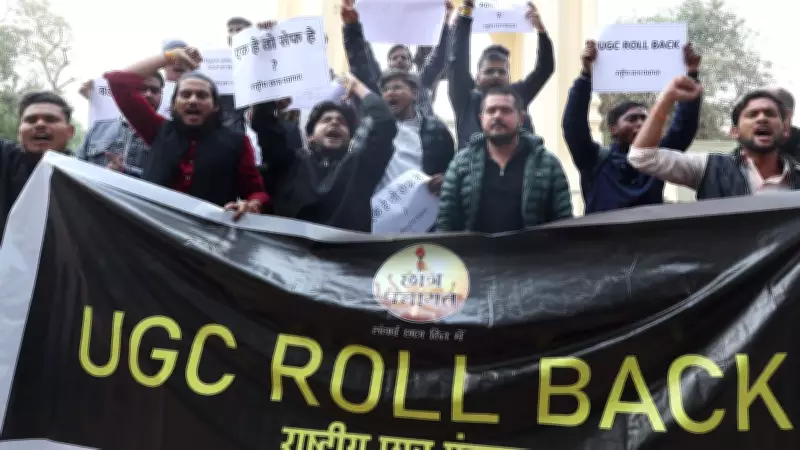
Simultaneously, student protests have erupted in Lucknow and New Delhi against the UGC regulations that mandate the formation of equity committees in higher education institutions to address discrimination complaints from Scheduled Castes, Scheduled Tribes, and Other Backward Classes. The regulations have become a flashpoint in the state's political discourse, with various stakeholders taking strong positions on their implications.

Brahmin Community Concerns and Political Repercussions
The BJP finds itself navigating treacherous political waters as these controversies have triggered deep concerns about alienating its crucial upper caste support base, particularly the Brahmin community that forms a significant vote bank in Uttar Pradesh. The suspended bureaucrat Agnihotri has claimed there exists a "conspiracy" against him and that Brahmin legislators have failed to adequately represent their community's interests.
This sentiment appears to resonate with broader unease within the party's Brahmin leadership. In December, approximately forty Brahmin MLAs and MLCs of the BJP gathered informally in Lucknow, where some legislators voiced concerns about perceived bias against their community. Although the party leadership subsequently reprimanded these members, the underlying tensions have continued to simmer beneath the surface.
Party Office-Bearers Resign Amid Growing Discontent
The discontent has manifested in tangible ways within the party structure itself. Reports indicate that eleven office-bearers in the BJP's Lucknow unit, led by mandal-level general secretary Ankit Tiwari, have tendered their resignations over the UGC rules. Similar resignations have been reported from other districts, including Raebareli, where mandal chief Shyam Sundar Tripathi reportedly stepped down while describing the UGC regulations as a "black law."
Lucknow district BJP chief Vijay Maurya acknowledged the situation, stating that while he hasn't personally received resignation letters, the matter has been communicated through social media channels. He emphasized the party's internal mechanisms for addressing concerns while expressing disappointment that some members chose to go public with their grievances instead of utilizing established channels.
Senior Leaders Weigh In on Controversial Regulations
The controversy has drawn reactions from senior BJP figures across the political spectrum. Veteran leader and former Union minister Kalraj Mishra raised concerns about the new UGC rules, acknowledging their intent to prevent discrimination while warning that "the way rules have come forward, it seems that differences would increase." He advocated for regulations that address discrimination against all groups, including upper castes, with mechanisms to prevent false complaints.
Controversial former Wrestling Federation of India chief Brij Bhushan Sharan Singh issued a video statement opposing the UGC rules, declaring "I am completely against these rules. If necessary, I will protest the rules. We don't need laws that will divide us." His son, Kaiserganj MP Karan Bhushan Singh, has also called for a re-evaluation of the regulations.

Shankaracharya Controversy Adds Religious Dimension
The political storm has been further complicated by the incident involving Shankaracharya Avimukteshwaranand, who was prevented by UP Police from taking a holy dip at the Triveni Sangam on January 18. The religious leader has been vocal in his criticism of both the UGC regulations and Chief Minister Yogi Adityanath, adding a significant religious dimension to the political controversy.
Firebrand BJP leader Uma Bharti entered the fray by targeting the state administration over its handling of the Shankaracharya incident, though she later clarified that her statements represented support for the religious leader rather than opposition to the Chief Minister. This delicate balancing act reflects the complex political calculations at play as the BJP attempts to manage multiple sensitive issues simultaneously.
Opposition Parties Seize Political Opportunity
As the BJP grapples with internal dissent, opposition parties have positioned themselves to capitalize on the situation. Bahujan Samaj Party chief Mayawati has strongly endorsed the UGC regulations, describing opposition to them as "unjustified" and rooted in a "casteist mindset." Similarly, Samajwadi Party leader Ram Gopal Yadav has supported the rules while highlighting the underrepresentation of marginalized communities in university leadership positions.
These developments place the Uttar Pradesh BJP in a challenging position, caught between maintaining its traditional upper caste support base and responding to the central government's push for the new regulations. With elections looming on the horizon, the party leadership faces the delicate task of addressing internal concerns while presenting a united front to the electorate.
Looking Ahead: Political Implications and Party Strategy
The convergence of these controversies has created what political observers describe as a "Pandora's box" of challenges for the Uttar Pradesh BJP. Senior party leaders are carefully weighing their options before making public statements on the matter, recognizing the potential electoral implications of mishandling these sensitive issues.
The party has issued guidelines discouraging public commentary on the UGC regulations, particularly after Union Education Minister Dharmendra Pradhan clarified that no one would be permitted to misuse the provisions and that discrimination against anyone would not be tolerated. However, the underlying tensions continue to simmer, with the BJP hoping to avoid a repeat of previous incidents that saw public demonstrations by party members over similar community concerns.
As protests continue in various parts of the state and internal dissent shows no signs of abating, the Uttar Pradesh BJP faces the formidable challenge of navigating these turbulent political waters while maintaining party unity and electoral viability in India's most populous state.