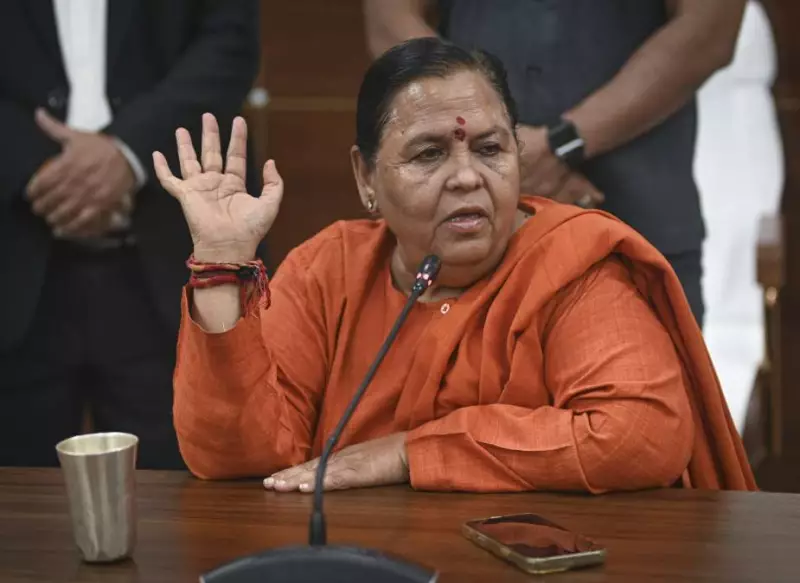
Senior Bharatiya Janata Party (BJP) leader and former Union Minister Uma Bharti has launched a scathing attack on the district administration of Indore, Madhya Pradesh, following a series of tragic deaths in the city. Bharti accused the authorities of being negligent and living in comfort while the general public suffers.
Bharti's Sharp Allegation: A Tale of Two Realities
In a strongly worded statement, Uma Bharti drew a stark contrast between the conditions of the officials and the common people. She alleged that those sitting in positions of power, metaphorically referred to as "sitting on chair," are enjoying amenities like Bisleri water, leaving the general populace to face dire circumstances, even death.
The veteran leader's comments come in the wake of several reported deaths in Indore, which have raised serious questions about administrative accountability and public welfare systems. While the specific nature and exact number of the incidents were not detailed in her initial remarks, the implication points towards a failure in governance and crisis management.

The Core of the Controversy
Uma Bharti, a prominent figure from Madhya Pradesh, did not mince her words. Her criticism suggests a deep-seated frustration with the local administration's response to public health or safety emergencies. The phrase "leaving the general public to die" is a severe indictment, indicating that the authorities might have been aware of the risks but failed to take adequate preventive or responsive measures.
This incident has sparked a fresh political debate in the state. As a senior BJP member, her public criticism of the administration in a BJP-ruled state is particularly noteworthy and highlights internal concerns about governance at the local level.
Political Repercussions and Public Outcry
The statement from Uma Bharti is expected to put significant pressure on the Indore district administration and the state government. It amplifies the public anger and seeks immediate answers regarding the lapses that led to the tragic outcomes.
Key questions now being asked include:
- What were the specific incidents that led to these deaths?
- Was there a failure in early warning or public communication systems?
- Are the basic amenities and emergency services in the city adequately equipped to handle crises?
- What corrective actions will be taken to prevent such tragedies in the future?
The use of "Bisleri" as a symbol for the comfortable life of officials versus the struggle of the common man is a powerful political metaphor. It resonates with the public perception of inequality in access to basic resources and administrative apathy.
As the news spreads, there is a growing demand for a transparent investigation into the incidents and accountability from the concerned officials. The state government is likely to face increased scrutiny over its handling of public safety and welfare in one of its major cities, Indore.
The coming days will be crucial to see how the administration responds to these serious allegations from a senior leader within the ruling party's own ranks. Whether it leads to concrete action or remains a political statement remains to be seen, but it has undoubtedly brought the issue of administrative responsibility into sharp focus.