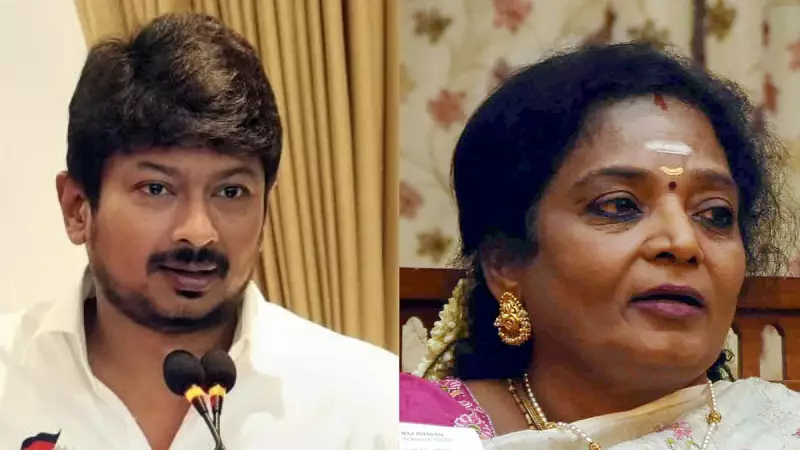
Tamil Nadu Sports and Youth Welfare Minister Udhayanidhi Stalin has ignited a major political firestorm by describing Sanskrit as a "dead language" during a public event, drawing sharp condemnation from BJP leaders who accused him of disrespecting Indian culture and heritage.
The Controversial Remarks That Sparked Outrage
Speaking at the ‘Samuga Samathuva Padhukappu Vizha’ (Social Justice Protection Festival) in Chennai on Saturday, the DMK leader made comments that have since gone viral across social media platforms. Udhayanidhi Stalin, who is also the son of Tamil Nadu Chief Minister M.K. Stalin, stated that Sanskrit holds no practical value in contemporary society and questioned its relevance compared to living languages.
The event, organized by the Tamil Nadu government, focused on promoting social justice and equality across communities. However, the minister's linguistic observations quickly shifted attention to what has become yet another chapter in the ongoing cultural and political battles between the ruling DMK and the national BJP party.

BJP's Furious Response and Political Fallout
The Bharatiya Janata Party reacted swiftly and strongly to the Tamil minister's statements. BJP national spokesperson Shehzad Poonawalla led the charge, accusing Udhayanidhi of displaying "anti-Hindu hatred" and showing disrespect toward one of India's most ancient languages.
Poonawalla emphasized that Sanskrit remains a living language with continuous scholarly work, literary production, and everyday usage in various parts of India. He pointed to the language's significance in India's cultural, religious, and historical context, noting its importance in numerous classical texts and constitutional recognition.
The BJP spokesperson further alleged that the DMK's consistent stance against Sanskrit and Hindi reflects what he described as their "anti-national mentality." This criticism comes amid ongoing linguistic tensions in Tamil Nadu, where regional parties have historically opposed the imposition of Hindi while championing the Tamil language.
Deepening Political Divides Over Language and Culture
This controversy represents the latest episode in the long-standing linguistic and cultural debates that have characterized Indian politics, particularly in Tamil Nadu. The state has witnessed numerous language-related movements throughout its history, with strong sentiments about preserving Tamil identity and resisting what many perceive as linguistic imposition from northern India.
The DMK, which leads the ruling coalition in Tamil Nadu, has consistently positioned itself as a defender of Tamil language and culture. Meanwhile, the BJP has increasingly sought to make inroads in the southern state while promoting what it describes as India's unifying cultural heritage, which includes Sanskrit.
This incident occurs against the backdrop of increasing political tensions between the DMK and BJP, with both parties frequently clashing over various ideological and policy matters. The Sanskrit remarks have provided fresh ammunition for this ongoing political warfare, with both sides mobilizing their supporters around the issue.
As the controversy continues to develop, it highlights the enduring sensitivity of language issues in Indian politics and the challenges of balancing regional linguistic pride with national cultural heritage. The incident also underscores the deepening political polarization around cultural symbols and historical narratives in contemporary India.