Uddhav Thackeray Loses BMC Control as BJP Alliance Secures Victory
India's political landscape witnessed a significant shift on Friday. The Brihanmumbai Municipal Corporation (BMC) elections delivered a decisive blow to Uddhav Thackeray's political fortunes. This event will resonate through India's power corridors for years to come. It demonstrates how strategic missteps can dismantle political dominance built over decades.
Uddhav Thackeray first lost control of the Shiv Sena, the party his father Bal Thackeray founded. Now he has surrendered his final power stronghold - the BMC. This civic fortress was once ruled unchallenged by Bal Thackeray himself. In Asia's wealthiest municipal polls, the Thackeray political brand faced a critical deficiency. It lacked its core equity: Hindutva.
The Missing Hindutva Element
Uddhav Thackeray never openly opposed Hindutva, even after aligning with Congress and Sharad Pawar's NCP. However, he struggled to champion this ideological banner as his father did. Eknath Shinde embraced Hindutva wholeheartedly after splitting the party in 2023. He wore it proudly on his sleeve.

Uddhav attempted to redirect the party's ideological compass. He focused heavily on Marathi pride and regional identity. He sought momentum by reconciling with his estranged cousin, Raj Thackeray. Ultimately, these efforts fizzled out without significant impact.
Marathi Pride Falls Short
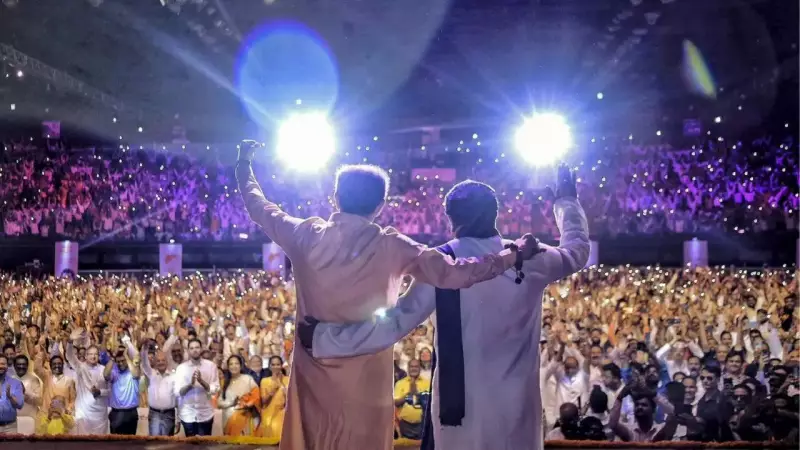
The Shiv Sena (UBT) and Maharashtra Navnirman Sena (MNS) alliance framed the BMC polls as a battle to save Mumbai and the Marathi community. They presented the contest as both a regional pride assertion and a referendum on the Thackeray legacy. The cousins' reunion after nearly twenty years tested the Thackeray brand's strength.
Some Marathi voters did rally behind the Thackeray cousins. Yet this consolidation proved insufficient to retain BMC control. The 'save Marathis' narrative demonstrated limited electoral appeal. The alliance held pockets in south and central Mumbai, plus parts of western and eastern suburbs. These included Dadar-Mahim, Worli, Dindoshi, Bhandup, Vikhroli and Bandra East.
However, they failed to penetrate BJP-dominated constituencies like Colaba, Bandra West, Andheri West, Borivli, and Dahisar. Political observers noted that many upwardly mobile Maharashtrian voters, particularly in western suburbs, leaned toward the BJP.
Election Numbers Tell the Story
Shiv Sena (UBT)'s underperformance worsened due to MNS's poor showing. MNS secured only single-digit seats, dragging down the overall Thackeray tally. This highlighted the reunion's limited electoral impact.
Uddhav Thackeray himself called the BMC election a decisive test last September. Shiv Sena (UBT) contested 163 seats, MNS 53 seats. Meanwhile, BJP fielded candidates in 137 wards and Eknath Shinde's Shiv Sena in 90.
The BJP-led Mahayuti alliance crossed the halfway mark of 114 seats in the 227-member body, but narrowly. BJP won 89 seats and Shinde's Shiv Sena secured 29. Essentially, BJP will require Eknath Shinde's support for major decisions.
The Uddhav-Raj Thackeray combine won 71 seats total. Uddhav's Sena captured 65 while Raj's MNS took just 6. They retained substantial wards in Mumbai's Marathi heartland.
Shiv Sena (UBT) received some Muslim voter backing, with two community candidates winning. Yet this support proved weaker than during the 2024 Lok Sabha and assembly elections. The Congress absence from the alliance contributed significantly to this decline.
Bal Thackeray's Hindutva Evolution
When Bal Thackeray established Shiv Sena in 1966, the party wasn't conceived as a Hindutva platform. Its political foundation rested firmly on Marathi identity and regional assertion. The Sena positioned itself as the Marathi community's voice in an increasingly cosmopolitan Bombay. It protested perceived economic and cultural marginalization.
Early campaigns focused on securing local jobs, resisting South Indian migrant dominance in clerical and industrial workforces, and asserting linguistic and cultural primacy. Hindu nationalism remained peripheral initially, not foundational.

This changed as India's political landscape evolved during the late 1970s and 1980s. Congress dominance slowly eroded while BJP rose. The Ram Janmabhoomi movement created space for assertive Hindu political identity, especially in urban centers. Bal Thackeray, a keen political mood reader, consciously pivoted to occupy this space.
By the early 1990s, particularly during the Babri Masjid movement period, Hindutva moved from margins to center stage in Sena politics. The party formally aligned with BJP. Bal Thackeray emerged as one of Hindutva movement's most unapologetic and influential mass leaders. Crucially, he didn't abandon Marathi identity. Instead, he layered Hindutva over Marathi pride, fusing both into a single, emotionally charged political narrative.
This fusion proved powerful. It gave Shiv Sena ideological clarity, street-level mobilization, and cross-community appeal within Mumbai's Hindu electorate. Bal Thackeray didn't inherit Hindutva as founding principle; he evolved into it. His political success recognized that Marathi pride alone had limits. Combined with Hindutva, it transformed into a durable, expansive political brand.
Uddhav's Gradual Hindutva Departure
Unlike his father, Uddhav Thackeray didn't abandon Hindutva in one decisive moment. His departure was incremental and tactical, shaped more by political compulsion than ideological conviction. During his early political career, Uddhav remained within the broad Hindutva framework his father established. He often projected himself as a legacy custodian rather than an innovator.
The first visible shift occurred after the 2019 Maharashtra assembly elections. Uddhav broke with BJP and formed an unlikely alliance with Congress and NCP. Creating the Maha Vikas Aghadi (MVA) government required ideological accommodation. Hindutva, once Sena's most assertive plank, was deliberately softened. Rhetoric gave way to governance language, secular inclusivity and constitutionalism. This signaled recalibration rather than outright rejection.
This softening deepened during Uddhav's chief minister tenure. While never publicly disowning Hindutva, he also stopped articulating it aggressively. Temple politics, street mobilization, and confrontational cultural messaging - Bal Thackeray's hallmarks - became conspicuously absent. Instead, Uddhav leaned into administrative legitimacy and coalition management. He sought to broaden Sena's appeal beyond its traditional base.
This ideological dilution created a vacuum. Sena's core voters, accustomed to ideological clarity, grew uncertain about the party's stance. That ambiguity proved costly when Eknath Shinde split the party and openly reclaimed Hindutva as its defining identity. By positioning himself as Bal Thackeray's ideological heir, Shinde offered continuity when Uddhav appeared to be reimagining Sena without fully replacing its ideological core.
Ultimately, Uddhav's deviation from Hindutva wasn't about renunciation. It involved subtraction without substitution. In a political ecosystem built on legacy and emotional mobilization, this became a strategic miscalculation.
The Thackeray Reunion's Limitations
The Uddhav-Raj Thackeray reunion before BMC polls represented political necessity more than sentimental moment. For nearly two decades, the cousins traveled divergent paths, divided by personal rivalry and competing claims over Marathi political space. BMC election altered their calculus. Having lost Shiv Sena and facing weakened organizational base, Uddhav needed fresh mobilization axis. Raj, struggling with electoral irrelevance and shrinking footprint, needed relevance. Their reunion was driven by weakness convergence rather than shared resurgence.
Together, they attempted to revive the original Thackeray political brand encompassing Marathi community, regional pride, and Mumbai cultural ownership. Their pitch deliberately bypassed Hindutva to reclaim Marathi pride's emotional terrain. They projected BMC polls as a fight to save Mumbai and protect Maharashtrian interests. The cousins sharing a platform after twenty years symbolized unity, closure, and consolidated Marathi vote bank.
Both Thackerays recalled the 1961 Samyukta Maharashtra movement where their grandfather Prabodhankar Thackeray participated. They claimed BJP planned to separate Mumbai from Maharashtra and merge it with Gujarat.
Chief Minister Devendra Fadnavis, leading BJP's campaign, refuted these charges repeatedly. He spoke in Nashik on January 11 and again at Shivtirth in Mumbai next day. Fadnavis ensured Thackerays' Mumbai and Marathi pride card didn't stick this time.
Thackerays' arguments about growing unemployment and son-of-the-soil neglect faced counter-punching. Fadnavis presented a Global Mumbai narrative. BJP also fielded over ninety Marathi candidates for BMC and announced the next mayor would be Marathi.
Intense Regional Identity Politics
The Thackerays' regional identity push grew so intense that Uddhav mockingly called BJP leader K Annamalai rasmalai. He questioned Annamalai's standing to discuss Mumbai issues. Thackeray attacked Annamalai for suggesting Mumbai is an international city. He referenced his uncle Bal Thackeray's Hatao lungi, bajao pungi slogan from the 1960s and 1970s.
Thackeray also said he would kick people from Bihar and Uttar Pradesh out of Maharashtra if they tried to impose Hindi.
Last July, the Thackeray brothers held an Awaz Marathicha rally opposing what they called state government's Hindi imposition attempt over Maharashtra. Uddhav Thackeray said they had come together to stay together.
Raj Thackeray launched veiled attacks on Maharashtra Chief Minister Devendra Fadnavis. He said the CM accomplished what even Balasaheb Thackeray couldn't - bringing the estranged brothers together.
The Thackerays hugged at a joint rally after Maharashtra government scrapped two Government Resolutions introducing Hindi as third language. Raj Thackeray said Maharashtra Government rolled back the three-language formula decision due to strong Marathi people unity. He claimed this decision preceded plans to separate Mumbai from Maharashtra.
Attacking BJP-led Mahayuti during his address, Raj Thackeray questioned how they suddenly brought Hindi imposition without discussion. He asked for what purpose and for whom, calling it injustice to young children. He asserted that while they may rule the assembly, we rule the streets.
However, the reunion came with structural limits. While generating attention and nostalgia, it failed to translate into city-wide electoral wave.
Legacy Politics' Limits Exposed
The BMC verdict exposed legacy politics' limits in a city steadily changing its political expectations. The Thackerays managed to revive old memories and emotional connections through unity, rallies and renewed Marathi identity push. Yet nostalgia alone couldn't compensate for clear, contemporary ideological anchor absence. Mumbai's electorate has grown more aspirational and diverse. It appears less willing to rally behind single, narrow identity pitch.
For Uddhav Thackeray, this defeat completed slow political unraveling. He lost the father-founded Shiv Sena, then ceded control of the civic institution symbolizing Bal Thackeray's unquestioned authority. For Raj Thackeray, the outcome reinforced converting sharp rhetoric into electoral relevance challenges. Their reunion sent solidarity message, but solidarity without organizational depth and ideological clarity fell short.
Ultimately, the BMC result wasn't merely about seats or numbers. It signaled deeper shift in Mumbai's politics. Legacy and sentiment must now contend with sharper purpose and direction demands.