

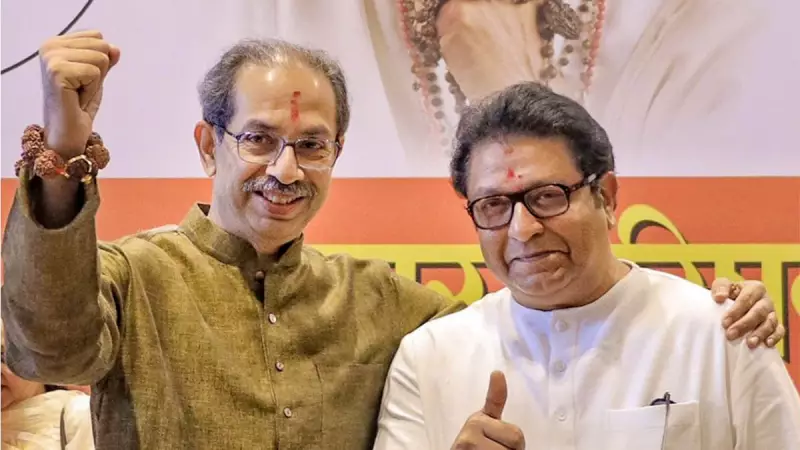
In a significant political development that is set to reshape the landscape of Mumbai's civic politics, the estranged Thackeray cousins have decided to join forces. Uddhav Thackeray of the Shiv Sena (UBT) and Raj Thackeray of the Maharashtra Navnirman Sena (MNS) will address a series of joint public rallies commencing January 5, 2026, marking a formal electoral alliance ahead of the crucial Brihanmumbai Municipal Corporation (BMC) elections.
A Strategic Alliance For Mumbai's Civic Body
The decision to unite was finalized during a meeting held at 'Matoshree,' the Thackeray family residence in Bandra. This move is a direct strategic counter to the ruling Mahayuti alliance, which comprises the Bharatiya Janata Party (BJP), Chief Minister Eknath Shinde's Shiv Sena, and the Ajit Pawar-led Nationalist Congress Party (NCP). The BMC elections 2026 are considered a high-stakes battle, often termed a 'mini-assembly' election due to the corporation's massive budget and administrative clout.
Sources close to both parties confirmed that the joint rally schedule is being meticulously planned. The first of these major public gatherings is slated for January 5, 2026. This collaboration signals the end of a long period of political distance between the two factions, who share a common ideological base and voter demographic in the state, particularly in Mumbai and its surrounding areas.

Political Calculations and Future Roadmap
The alliance is seen as a pragmatic step by both Uddhav Thackeray and Raj Thackeray to consolidate the Marathi manoos (Marathi-speaking people) vote bank, which has seen fragmentation in recent years. The split in the original Shiv Sena and the MNS's fluctuating fortunes have benefited the BJP and Shinde's Sena. By coming together, the Thackeray cousins aim to present a united front and reclaim their core constituency.
The joint rallies will serve as the primary platform to launch their campaign, criticize the current state government and BMC administration, and present a shared vision for Mumbai. The focus is expected to be on local civic issues, infrastructure, and the alleged mismanagement by the ruling coalition. This reunion is poised to inject a new and unpredictable dynamic into Maharashtra's political arena, with potential ramifications beyond the BMC polls for future state-level elections.
Implications for the Ruling Coalition
This new opposition axis poses a direct challenge to the Mahayuti government. The BJP-Shinde Sena combine had been hoping to capitalize on the division within the Thackeray camp to secure a decisive victory in the BMC, which has been controlled by the Shiv Sena for decades. The formal Shiv Sena MNS alliance threatens to upend those calculations. It forces the ruling alliance to recalibrate its strategy and could lead to a more intense and closely fought electoral contest than previously anticipated.
Political analysts view this as one of the most important developments in Maharashtra politics in recent times. The success of this partnership will depend on seat-sharing agreements, campaign coordination, and the ability to mobilize ground workers from both parties effectively. As the city prepares for the polls, all eyes will be on the stage shared by Uddhav and Raj Thackeray on January 5, marking a historic moment of reconciliation with a clear political objective.






