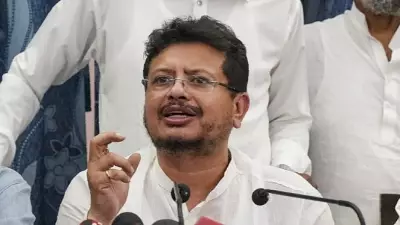
A high-level committee in Tamil Nadu has presented its crucial report on pension reforms to Chief Minister M K Stalin, aiming to find a middle ground between employee demands and the state's fiscal constraints. This development comes even as the Joint Action Council of Tamil Nadu Teachers Organisations and Government Employees Organisations (Jacto-geo) has announced a protest starting January 6.
Key Recommendations of the Bedi Committee
The committee, led by senior officer Gagandeep Singh Bedi, has examined the feasibility of implementing a unified pension scheme (UPS) as recommended by the Union government, while selectively incorporating benefits from the discontinued old pension scheme (OPS). Official sources indicate the panel has proposed a blended model. This new structure would integrate "certain benefits" of the OPS into the UPS, attempting to address long-standing employee grievances without jeopardizing the state's financial future.
It is expected that the state government will soon initiate talks with representatives of Jacto-geo to build a consensus on the proposed framework. A source familiar with the report's contents revealed specific benefits suggested for inclusion in the hybrid UPS model. Commutation of pension, an insurance cover, and the death-cum-retirement gratuity (DCRG) are among the key OPS features recommended. The model is also proposed to include Pongal festival benefits for pensioners.

Why a Full Return to OPS Was Deemed Unviable
The committee's recommendations were carefully framed with Tamil Nadu's financial position as a primary consideration. A pivotal factor in the analysis was the state's high life expectancy, which is among the highest in India, ranging between 72 and 74 years. This demographic reality made a full restoration of the OPS for the 6.94 lakh employees currently under the Contributory Pension Scheme (CPS) fiscally unsustainable.
The source explained the stark contrast: "When the OPS was introduced, life expectancy stood at 58 years. Now it has risen to nearly 74 years." This increase means the pension payout period for each retiree would extend by at least 15 years compared to the past. A wholesale return to the OPS would have a severe long-term impact on government finances, potentially diverting a substantial portion of state resources toward pension payments. The committee warned that pension expenditure could eventually exceed the salary outgo for the current workforce.
Advised Against Pay Commission-Linked Revisions
In a significant recommendation, the Bedi-led committee advised the state government against adopting pay commission-linked revisions of basic pay for pension calculations. Instead, it suggested following the UPS model where the basic pay remains static. This approach is seen as crucial for maintaining fiscal predictability and control over long-term pension liabilities.
As of March 2025, 1,98,331 state employees remain covered under the old pension scheme, which was discontinued for new recruits from January 2004. The committee's report now sets the stage for decisive negotiations between the Tamil Nadu government and its employee unions, seeking a solution that balances welfare with economic prudence.