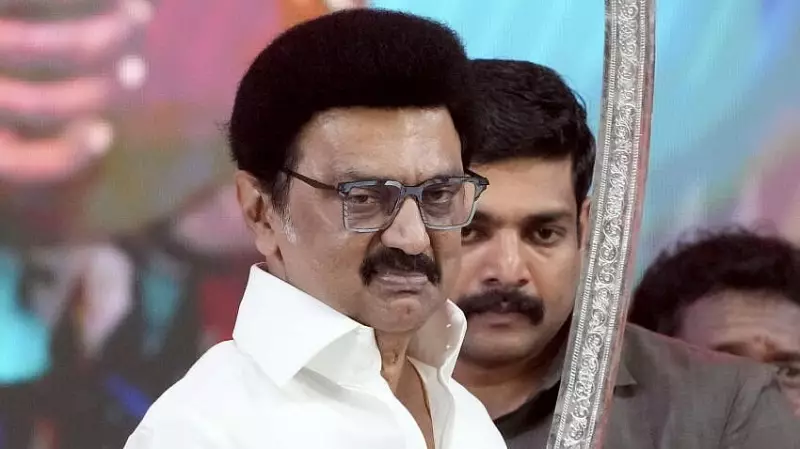
Tamil Nadu Chief Minister M.K. Stalin has delivered a resolute statement reaffirming the state's unwavering commitment to the Tamil language, explicitly rejecting any attempts to impose Hindi within its borders. In a powerful declaration that echoes longstanding Dravidian political sentiments, Stalin asserted that there is "no place for Hindi in Tamil Nadu—then, now, and forever." This firm stance underscores the deep-rooted linguistic and cultural identity that has defined the region for decades, positioning Tamil as the sole official language of the state.
Historical Context of Linguistic Assertiveness
The Chief Minister's remarks are not merely a contemporary political statement but are deeply embedded in Tamil Nadu's historical resistance to linguistic homogenization. Since the mid-20th century, the state has been at the forefront of opposing Hindi imposition, viewing it as a threat to its distinct Dravidian heritage. Stalin's words serve as a reminder of the anti-Hindi agitations that have shaped Tamil Nadu's political landscape, emphasizing that the state's autonomy in language matters remains non-negotiable. This historical backdrop adds weight to his declaration, connecting it to a legacy of cultural preservation and regional pride.
Political Implications and National Discourse
Stalin's statement carries significant political implications, particularly in the context of India's ongoing debates over language policy and federalism. By taking such a definitive stand, he reinforces the Dravida Munnetra Kazhagam (DMK) party's longstanding ideology, which champions Tamil linguistic rights and opposes any form of centralization that undermines regional identities. This position is likely to resonate strongly with Tamil Nadu's electorate, bolstering the DMK's image as a protector of state interests. Moreover, it contributes to the broader national conversation about linguistic diversity, challenging notions of a single lingua franca and advocating for a pluralistic approach that respects India's multilingual fabric.

Cultural and Social Dimensions of the Language Debate
Beyond politics, Stalin's declaration highlights the profound cultural and social dimensions of the language issue in Tamil Nadu. Tamil is not just a means of communication but a cornerstone of the state's identity, with a rich literary tradition and deep emotional resonance among its people. The rejection of Hindi imposition is seen as a defense of this cultural heritage, ensuring that future generations can thrive in their mother tongue without external pressures. This stance also reflects broader societal values in Tamil Nadu, where linguistic pride is intertwined with social justice and egalitarian principles, often contrasting with perceived hierarchies associated with Hindi dominance.
Future Outlook and State Autonomy
Looking ahead, Stalin's firm position signals that Tamil Nadu will continue to resist any policies perceived as undermining its linguistic autonomy. This could influence upcoming state and national discussions on education, governance, and cultural promotion, with potential ramifications for inter-state relations and federal dynamics. By declaring "no place for Hindi" in perpetuity, the Chief Minister sets a clear boundary that may shape policy decisions and public discourse for years to come. It reinforces the idea that language rights are integral to state sovereignty, ensuring that Tamil remains the primary medium for official, educational, and cultural endeavors without compromise.
In summary, M.K. Stalin's unequivocal rejection of Hindi imposition in Tamil Nadu is a multifaceted statement that blends historical legacy, political strategy, cultural pride, and a vision for the future. It serves as a powerful reminder of the state's commitment to preserving its linguistic identity, positioning Tamil at the heart of its socio-political framework while engaging with broader national debates on diversity and unity.