

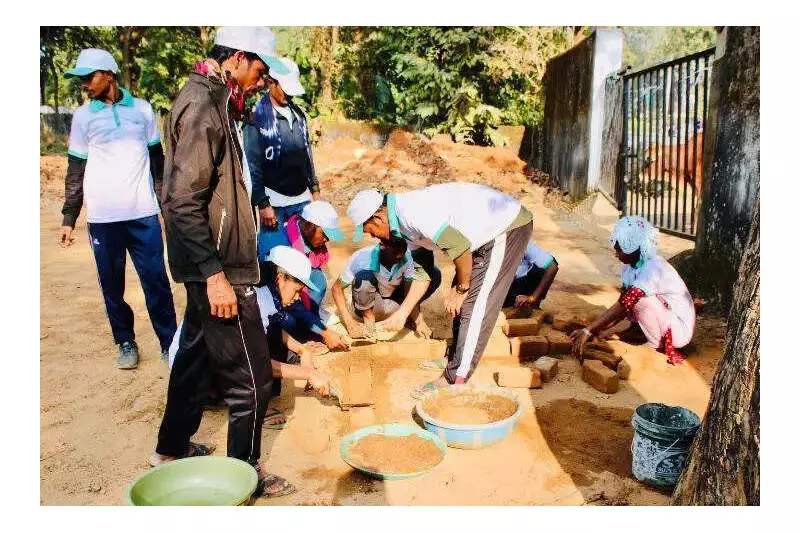
In the dense forests of Sukma, Chhattisgarh, where the sound of conflict once dominated, a new sound is emerging—the sound of construction and hope. A transformative initiative is underway where 35 surrendered Maoists are being trained as professional masons, laying the foundation for both buildings and their own renewed futures.
From Arms to Trowels: A Concrete Rehabilitation Plan
The district administration of Sukma, in partnership with the State Bank of India's Rural Self Employment Training Institute (SBI-RSETI), is conducting a structured masonry training programme. The cohort includes 15 women and 20 men who have left behind lives of insurgency. The comprehensive course covers foundational construction techniques, bricklaying, plaster work, roof casting, and adherence to quality standards.
Officials emphasize that this initiative goes far beyond mere skill development. Once trained, these individuals will be deployed to contribute to the construction of incomplete and new houses under the Pradhan Mantri Awas Yojana (Rural). This strategic move serves a dual purpose: it ensures a stable livelihood for the surrendered cadres and simultaneously addresses the chronic shortage of skilled masons in the remote, conflict-affected pockets of the Bastar region.

Personal Transformations: Voices from the Ground
For the participants, this shift represents a profound personal journey. Podyam Bhima from Polampalli, who spent nearly three decades with the CPI (Maoist), stated that surrender changed everything. "The arrangements here are good. We are being trained as masons, and earlier I was trained as an electrician too. Now I can work with dignity," he shared.
Muchaki Ranwati from Puvarti, associated with the organisation for 24 years, said rehabilitation finally brought her long-awaited stability. "I received tailoring training earlier; now I'm learning masonry. I reunited with my family, participated in the Bastar Olympics too," she said. Another trainee, Gangaa Vetti from Dabbamarka, declared her life has "completely changed," noting they received mobile phones and masonry tool kits as part of their support.
Building Peace Through Development and Dignity
Chhattisgarh Chief Minister Vishnu Deo Sai expressed a deep sense of responsibility towards surrendered cadres. He stated that such initiatives are vital for achieving lasting peace through dialogue and development. "Providing skills, employment and dignity to surrendered youth is the core of rehabilitation policy," CM Sai affirmed.
Sukma Collector Devesh Dhruv called the programme a crucial step towards social transformation. "Surrender is not just about giving up arms. It means gaining self-reliance and returning to society with dignity. Our effort is to provide every youth in the rehabilitation centre with skills, livelihood support and essential services so they can rebuild their lives," Dhruv explained.
Mukund Thakur, CEO of Zila Panchayat, highlighted the practical benefits for government schemes. He pointed out that skilled manpower is essential for the timely execution of construction projects, and this training will connect surrendered youths with meaningful employment and social responsibility.
In a related digital empowerment step, around 75 surrendered cadres were provided with 5G smartphones equipped with 50-megapixel dual cameras and 5000 mAh batteries. Officials stated these devices will help the youths access digital education, skill development courses, government schemes, and news, further integrating them into the mainstream.
This pioneering programme in Sukma stands as a powerful testament to the idea that true rehabilitation is built not just on forgiveness, but on the solid groundwork of opportunity, skill, and restored dignity.






