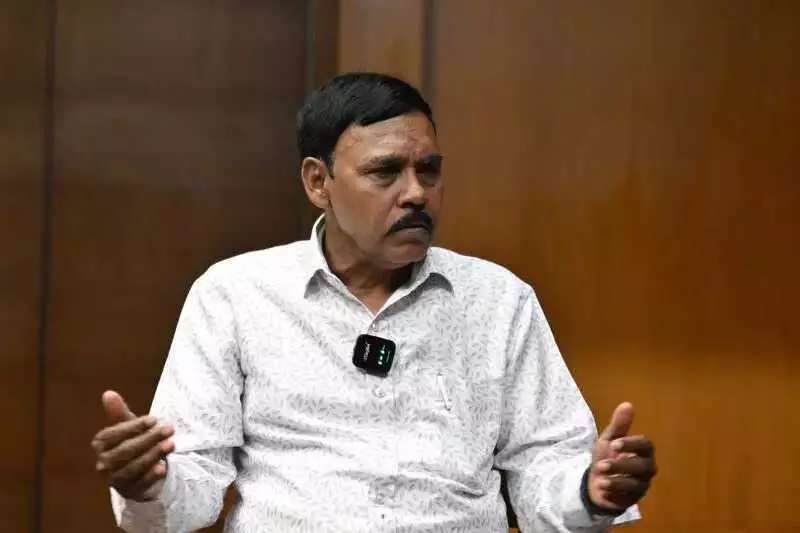
In a stark warning from the shadows, a former senior leader of the banned CPI (Maoist) has stated that the deep-rooted social and economic problems that once fueled the armed Left-Wing Extremist movement in India remain largely unaddressed. Chandranna, who has now surrendered, cautioned that a potent mix of rising unemployment—expected to be intensified by automation, artificial intelligence, and robotics—could generate a fresh cycle of public discontent and grievances.
From Armed Struggle to Mass Politics: The Ideological Survival
In an exclusive interaction with The Times of India at an undisclosed location, Chandranna acknowledged that the Maoist armed structure has weakened significantly across the country. However, he argued that the ideology itself would survive the organisational decline. "Maoist ideology existed across the world and could not be eliminated entirely," he stated, suggesting that "a new generation might take it forward in different ways."
He emphasized that struggle need not always be through weapons and could shift to "open mass politics." While reiterating his personal renunciation of armed struggle, Chandranna did not outline a clear personal roadmap post-surrender, stating he had no definite plan for a future political or social role.

Persistent Fault Lines: Unemployment, Land, and Livelihood
Chandranna directly linked potential future mobilization to present-day distress. He identified unemployment, exploitation, discrimination, and societal divisions as the core reasons people were drawn to the Maoist party. "Whether the party existed or not, people would continue to fight on people's issues," he asserted.
He cited several persistent issues that earlier fueled the movement:
- Acute Unemployment: He highlighted joblessness as a critical, unresolved issue.
- Land and Water Crises: Disputes over land ownership and a severe lack of irrigation continue to undermine livelihoods, particularly in Adilabad district's Sirpur and Chennur areas.
- Housing Shortage: He pointed to schemes like the Congress government's Indiramma housing as an indicator of the chronic depth of the housing crisis.
- Education and Healthcare: These remain major pressure points, with families in both rural and urban areas struggling with fees and medical costs.
Rehabilitation and Public Sentiment: A Crucial Test for the State
Calling rehabilitation a decisive issue, Chandranna warned that surrendered Maoists require proper housing and sustainable livelihood support. Failure on this front could push some individuals back into conflict. "How the state takes care of surrendered Maoists will be very important, in any state," he said, adding that public sentiment on such matters ultimately shapes political outcomes, including elections.
Reflecting on the movement's impact, he noted that in some areas during its peak, landlords fled, leading to a heightened level of awareness among people regarding their rights, especially in Adivasi strongholds and North Telangana concerning land and forest rights. This awareness, he described as a positive development, endures, with people increasingly questioning what they perceive as abnormal.
Chandranna also revealed an early Maoist stance on Telangana's statehood, noting that the party had issued a document backing the demand for a separate state as early as 1996, an outcome once seen as improbable.