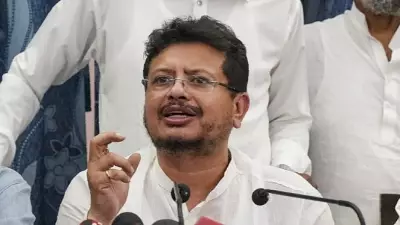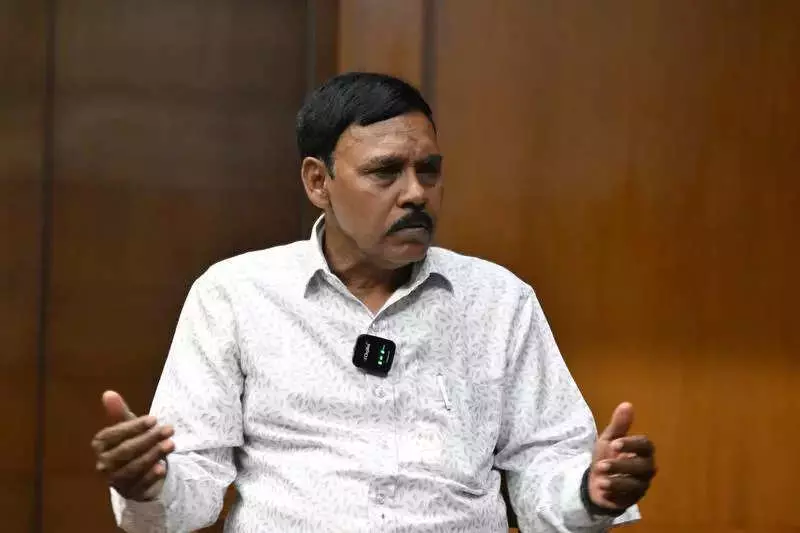
In a rare disclosure, surrendered CPI (Maoist) central committee leader Chandranna has provided an unprecedented look into the banned organisation's financial operations, internal dynamics, and social strategies. Speaking from Hyderabad, he firmly denied any monetary connections to the massive Kaleshwaram irrigation project while outlining a collection model he described as a 'Robin Hood approach.'
The 'Robin Hood' Funding Model Exposed
Chandranna explained that the Maoist party primarily raises funds from contractors, whom they label as "looters" of public resources. This is supplemented by voluntary contributions from local communities, where individuals sometimes donate a single day's wage. He emphasized that these collections are used to sustain the organisation, run the 'Janatana Sarkar' (people's government), and fund party activities.
The largest annual collections, according to his account, come from states outside Telangana. He stated that Jharkhand and Bihar each generate approximately ₹25 crore per year. Collections in Chhattisgarh once reached around ₹20 crore annually. In contrast, Telangana's contribution is relatively limited, amounting to just a few crores of rupees.

He acknowledged that financial management is handled at the state committee level, with surplus funds being transferred to the central party. Chandranna also admitted to isolated instances of fund misuse within the organisation, confirming that internal disciplinary action was taken in such cases.
Categorical Denial of Kaleshwaram Project Links
Addressing specific allegations head-on, Chandranna categorically denied that the Maoists received any money from contractors or sub-contractors associated with the multi-crore Kaleshwaram Lift Irrigation Project. He asserted that "not even a single payment was received" from the project. He dismissed claims of such funding, particularly those circulating about north Telangana, as completely false.
Social Integration: The Key to Endurance in Tribal Heartlands
Chandranna linked the party's prolonged presence in Adivasi regions to a deliberate strategy of deep social integration. He revealed that the Maoists initially had no base in the Dandakaranya region and that it was built primarily by Telugu leadership from the erstwhile united Andhra Pradesh.
To counter the 'outsider' narrative and build trust, early leaders fully integrated with local communities. A common practice was leaders marrying Adivasi women. Chandranna cited his own marriage as an example—he is from the Velama community and married an Adivasi woman. He also mentioned leader Lanka Papareddy as another prominent figure who followed the same path.
He stated that such inter-caste and inter-ethnic marriages were widespread within the organisation and played a crucial role in bridging social divides and cementing local bonds.
Refuting Caste Bias and Describing Non-Military Role
Chandranna rejected allegations of caste-based discrimination within the Maoist leadership hierarchy. He argued that it was incorrect to claim that Brahmins, Velamas, and Reddys dominated due to their caste. Instead, he said, these individuals were senior leaders who joined during the early days of the Revolutionary Students Union and rose through ranks based on dedication and accumulated experience.
To broaden representation, he noted, leaders like Hidma and Majji Ramdhar were later inducted into the central committee based on their performance and merit.
Describing himself as a 'non-military' figure, Chandranna said his role focused on organisational and mass front activities rather than armed combat. He also shared an unusual challenge faced by cadres: encounters with wildlife. On several occasions, cadres suffered injuries, but in most instances, animals were driven away by firing shots into the air, with only a few such incidents being formally reported.