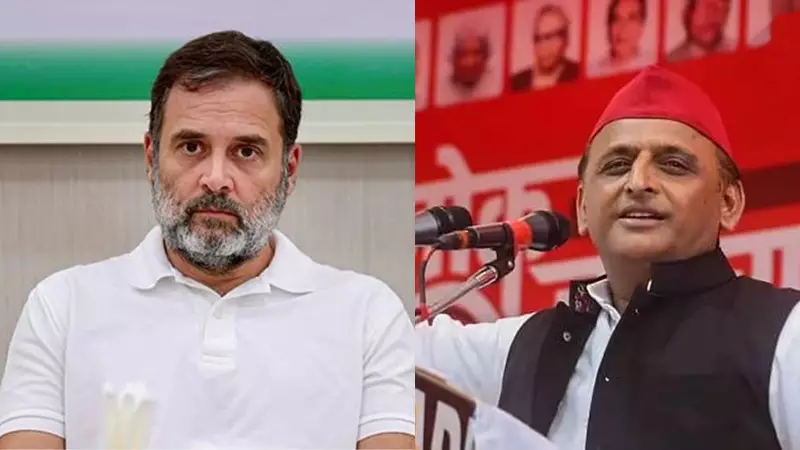
The Opposition INDIA alliance, reeling from its defeat in the Bihar Assembly elections, is facing fresh internal strain as its two key constituents in Uttar Pradesh, the Samajwadi Party (SP) and the Congress, appear to be drifting apart. The allies have decided to contest the upcoming panchayat and Legislative Council (MLC) elections separately, trading accusations of "arrogance" even as they publicly insist their partnership for the crucial 2027 state polls remains intact.
Separate Paths in Upcoming Polls
The immediate flashpoint is the decision by both parties to go solo in the forthcoming electoral tests. The three-tier panchayat elections in UP are scheduled for early 2026, while polls for 11 MLC seats are due in November 2026. UP Congress president Ajay Rai confirmed that his party is preparing to contest both sets of elections independently, focusing on building a strong party cadre across all 403 Assembly constituencies.
Although the panchayat polls are not fought on party symbols, the Congress plans to issue a centralised list of party-backed candidates from its Lucknow headquarters to project its presence. The MLC elections, for graduate and teacher constituencies, will also see the SP and Congress competing against each other and the ruling BJP-led NDA. These polls are particularly critical for the SP, which needs to retain at least three seats to keep its Leader of Opposition status in the state's 100-member Upper House.
Underlying Tensions and Accusations
The friction marks a significant cooling of relations since the 2024 Lok Sabha elections, where the SP-Congress alliance delivered a stellar performance, winning 43 of UP's 80 seats against the NDA's 36. Recent events, however, have exposed the cracks. During the Bihar polls, SP chief Akhilesh Yadav campaigned for the RJD but not for the Congress. Earlier, in the Delhi Assembly elections, the SP supported the AAP against the Congress.
Leaders from both sides have now openly traded barbs. A Maharashtra SP leader, Abu Azmi, accused the Congress of "arrogance" and stated his party would go solo in all elections in the state. A UP-based SP leader alleged, "The Congress wants to grow by riding on its allies but does not want to let its partners grow." They cited the example of the Madhya Pradesh Assembly polls as a case where the Congress did not accommodate its weaker ally.
Congress leaders have retaliated with similar charges. One leader remarked that the SP "is very arrogant and does not want to make efforts in taking our alliance along," warning that the 2024 Lok Sabha success cannot guarantee a stable partnership for 2027 without concerted effort.
The Long Road to 2027
Despite the public sparring, both parties maintain that their alliance for the 2027 Uttar Pradesh Assembly elections is still operational. However, the path to sealing a seat-sharing agreement appears fraught with challenges. The Congress is actively engaged in an organisational overhaul campaign, "Srijan Abhiyan," aiming to revive its cadre. The party believes a strong showing in the panchayat and MLC polls will strengthen its bargaining position during future negotiations with the SP.
Senior SP leader Udaiveer Singh explained his party's alliance policy, stating they prioritize supporting the stronger ally in each state against the BJP, which is why they backed the AAP in Delhi and the TMC in West Bengal. "In UP, which is our prime state, we are stronger... all we expect is our other partners to support us," Singh said, outlining the SP's expectation of a lead role in the state.
The Congress, meanwhile, highlights its "key role" in consolidating Dalit votes for the INDIA bloc in 2024. However, Congress insiders admit that working out a seat-sharing formula for the Assembly elections will be more complex than for the Lok Sabha, as convincing local ticket aspirants to step aside for allies will be difficult. The memory of the disastrous 2022 UP Assembly polls, where the parties contested separately—the SP won 111 seats and the Congress just 2—looms large, making the stakes for 2027 incredibly high for both.