Karnataka Budget 2026-27 Unveils Ambitious Plan for Bengaluru's Transformation
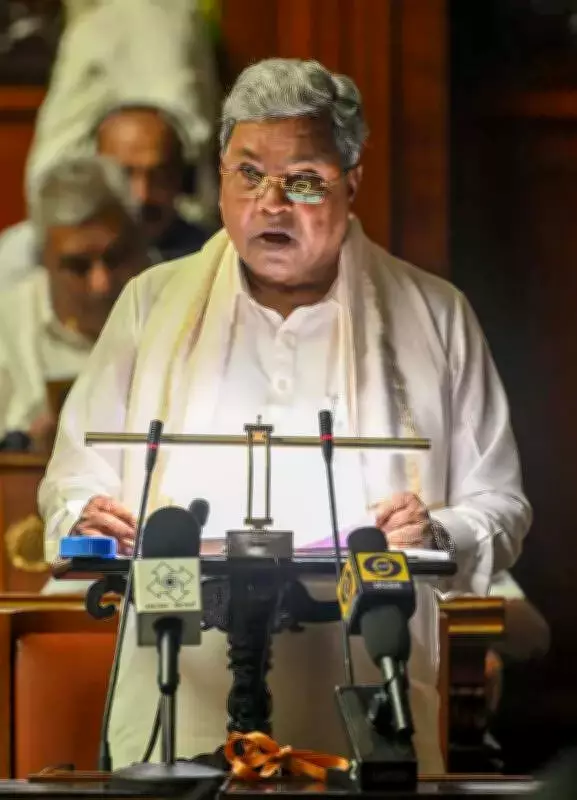
In a significant move aimed at addressing long-standing urban challenges, Karnataka Chief Minister Siddaramaiah presented the state budget for 2026-27, with a bold declaration to elevate Bengaluru to the status of the world's most liveable city. The budget outlines comprehensive allocations across key areas such as mobility, water supply, sanitation, and governance, targeting the city's rapid growth and infrastructure needs.
Substantial Funding Boost for Bengaluru's Development
The government has increased the annual grant for Bengaluru's development from Rs 3,000 crore to Rs 7,000 crore, a commitment that will continue into the current fiscal year. This enhanced funding is part of a broader strategy to build upon projects initiated in 2025-26, including ward-level infrastructure works worth Rs 1,255 crore across the five city corporations and the concretisation of 158 kilometers of roads at a cost of Rs 1,700 crore.
Additionally, Rs 1,936 crore has been allocated for the development of 101 arterial and sub-arterial roads, with plans to deepen these investments over the coming years. Siddaramaiah announced that more than 450 kilometers of roads across Bengaluru will be white-topped over the next three years at an estimated cost of Rs 3,000 crore, aimed at improving durability and reducing maintenance needs.
Focus on Mobility and Urban Planning
Mobility projects dominate the budget announcements, with Namma Metro receiving significant attention. As the country's second-largest Metro network with 96 kilometers of operational lines and a daily ridership of 10 lakh passengers, plans are in place to add 41 kilometers of Metro lines, which is expected to increase daily ridership to 15 lakh. Metro officials have been allocated Rs 2,110 crore for Phase 3 Orange Line, loan repayments, and cash loss compensation.
Urban planning is set for a reset with the Revised Master Plan 2041 expected to be implemented by the end of 2027, and a comprehensive mobility plan to be prepared within six months. Other key mobility initiatives include:
- Rs 450 crore earmarked for developing a global-standard corridor along the Outer Ring Road between Silk Board and KR Pura.
- Approval of 40 kilometers of tunnel roads linking Hebbal with Silk Board and KR Pura with Mysuru Road, estimated at Rs 40,000 crore under the BOOT model.
- A tunnel and elevated road between Hebbal and Mekhri Circle costing Rs 2,250 crore.
- A proposed intermediate ring road linking Nelamangala, Tavarekere, and Bidadi to ease regional traffic.
Water Supply and Infrastructure Upgrades
With Bengaluru's population expanding, water supply remains a critical focus. The city currently receives 2,225 million liters per day (MLD) of water through phases 1 to 5 of the Cauvery Water Supply Project, serving 1.4 crore residents. The government has committed to a Rs 6,939-crore project with JICA assistance to bring 6 TMC of water under Cauvery Phase 6, ensuring sustainable water resources for the growing metropolis.
Infrastructure enhancements extend beyond roads and water, with civic bodies tasked to beautify 175 junctions, upgrade 500 kilometers of footpaths, and build 100 skywalks using internal municipal resources over the next three years. A Rs 2,000-crore program under World Bank funding is also planned for stormwater drain upgrades.
Challenges and Realistic Implementation Timelines
Despite the ambitious announcements, a deep dive into the proposed projects reveals that many are continuations of old initiatives, with allocations for ward roads and stormwater drains resembling annual maintenance contracts rather than transformative investments. Most infrastructure projects, including the Bengaluru Business Corridor Phase 1 spanning 73 kilometers with a four-year completion target, are unlikely to be implemented in the upcoming fiscal year, meaning not all allocated funds will be disbursed immediately.
Key takeaways from the budget include:
- Rs 7,000 crore: Annual grant for Bengaluru's development.
- Rs 3,000 crore: For white-topping 450 kilometers of roads over three years.
- 500 kilometers of footpaths to be upgraded over three years.
- 100 skywalks to be built over three years.
- Rs 2,000 crore: For stormwater drain upgrades under a World Bank program.
- Bengaluru Business Corridor Phase 1: 73 kilometers with a four-year completion target.
- Tunnel corridors (Hebbal–Silk Board, KR Pura–Mysuru Road): 40 kilometers at Rs 40,000 crore.
While Siddaramaiah's vision sets a high bar for Bengaluru's future, the effectiveness of these plans will hinge on timely execution and addressing the city's evolving needs beyond short-term fixes.