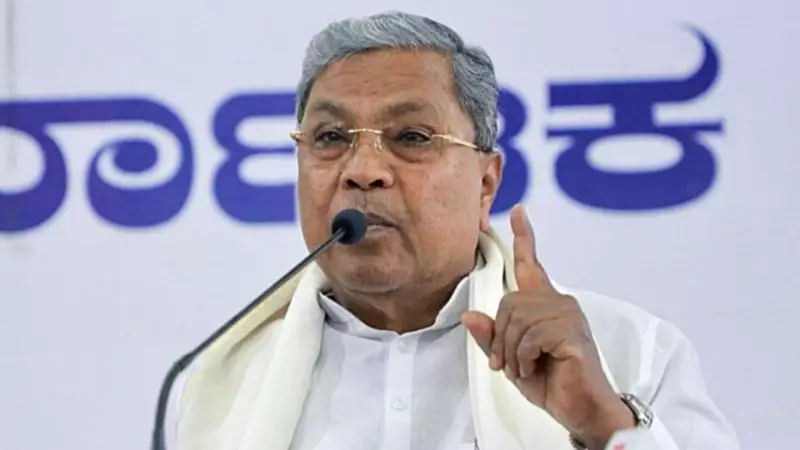
Congress leader Siddaramaiah is poised to etch his name in Karnataka's political history on Wednesday, January 7, 2026, by becoming the state's longest-serving Chief Minister. He will surpass the previous record held by D Devaraj Urs of 2,792 days in office.
A Milestone Amidst Political Turbulence
This historic achievement arrives at a critical juncture for the Congress party in Karnataka. The government recently crossed the halfway mark of its five-year term on November 20, 2025, intensifying speculation about a potential leadership change. The rumors have been fueled by discussions of an alleged "power-sharing" agreement made in 2023 between Siddaramaiah and Deputy Chief Minister D K Shivakumar.
Addressing the speculation on Tuesday, Siddaramaiah stated that any decision rests with the party high command. He expressed confidence in completing the full five-year term. Remarkably, he downplayed the record, calling it a coincidence. "I had not entered politics to set records," he said, attributing his rise to the right opportunities that allowed him to progress from a hopeful MLA to a Minister, Deputy CM, Leader of the Opposition, and finally, Chief Minister.
From Humble Beginnings to Mass Leader
Siddaramaiah's journey to the state's top post is a tale of grassroots ascent. Born in August 1948 into a Kuruba family in Siddaramanahundi village, Mysuru, his early life involved herding cattle. His formal education began late, only after joining a folk troupe. His political awakening occurred during his law studies at Sarada Vilas Law College in Mysuru, inspired by farmer leader Prof M D Nanjundaswamy.
His political career officially launched after a rebellion within the Karnataka Rajya Raitha Sangha (KRRS) over contesting the 1983 polls. He won his first election from Chamundeshwari on a Bharatiya Lok Dal ticket. After moving to the Janata Party, he began his ministerial career following the 1985 mid-term polls, handling crucial portfolios like Transport and Finance, and serving as Deputy CM in various Janata Dal governments.
A defining moment in his career was the Ahinda convention in Hubballi in August 2004. Ahinda, representing minorities, Backward Classes, and Dalits, became his core political identity, cementing his status as a mass leader across Karnataka. This move also led to his expulsion from the JD(S). After a brief stint with his own party, he joined the Congress in 2006, rapidly rising to become Leader of Opposition in 2009 and then Chief Minister in 2013, leading the party to a clear majority.
Legacy, Welfare, and Unfinished Agendas
Political observers and rivals acknowledge Siddaramaiah as one of the last leaders in Karnataka with genuine mass appeal, alongside figures like H D Deve Gowda and B S Yediyurappa. His administrative legacy is marked by welfare schemes. The Anna Bhagya scheme, implementing the Right to Food, was a landmark of his first term. His current tenure is defined by the implementation of five major guarantee schemes.
With 16 state budgets presented (eight as CM), he is widely respected as an authority on state finances and a formidable debater in the legislature. However, a key promise remains unfulfilled: implementing the recommendations of the Karnataka State Commission for Backward Classes caste survey. Despite pushing for it in early 2025, resistance from dominant communities forced a new survey. For Siddaramaiah, seeing this through would be a legacy-defining achievement.
His second term has been notably different from his first, marked by an ongoing tussle for supremacy with Deputy CM Shivakumar. Despite this and facing allegations in the Mysuru Urban Development Authority (MUDA) scam—from which he was cleared—Siddaramaiah remains confident, backed by the support of a majority of party MLAs. As he stands on the cusp of history, his legacy as Karnataka's longest-serving administrator is still being written.