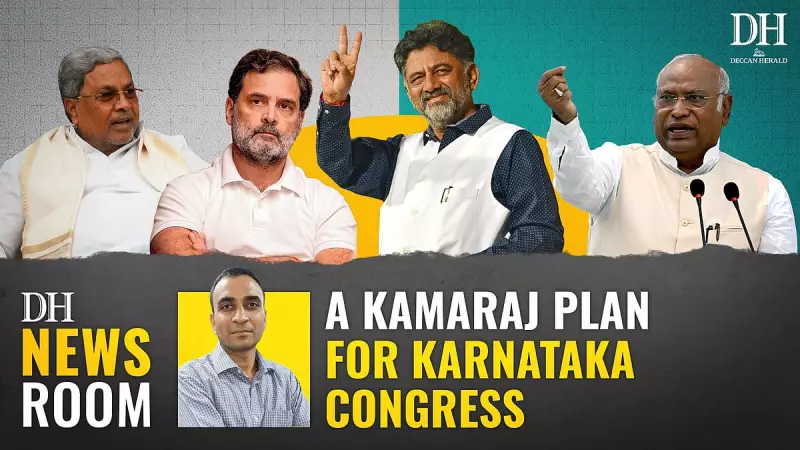
Karnataka Deputy Chief Minister DK Shivakumar has put forward a significant proposal to restructure the state cabinet, drawing inspiration from the historic Kamaraj Plan of the 1960s. The ambitious plan suggests that senior ministers voluntarily resign from their positions to focus on strengthening the party organization ahead of the crucial 2024 Lok Sabha elections.
The Kamaraj Plan Inspiration
The original Kamaraj Plan was implemented in 1963 when then Congress President K. Kamaraj proposed that senior ministers resign from government posts to work exclusively for party organizational strengthening. This historical precedent now serves as the model for Shivakumar's contemporary proposal aimed at revitalizing the Congress party's structure in Karnataka.
Shivakumar emphasized that his suggestion is specifically about cabinet restructuring rather than leadership change, clearly distinguishing between ministerial reshuffles and alterations in the top leadership positions. The proposal comes at a critical juncture as the Congress party prepares for the upcoming parliamentary elections.
Political Context and Timing
The Deputy Chief Minister made these revelations during an interaction with reporters in Bengaluru, where he addressed various political developments within the state. The timing is particularly significant given the approaching Lok Sabha elections, where the Congress party aims to improve its performance from the previous electoral cycle.
Shivakumar's proposal underscores the importance of having dedicated party workers focused exclusively on organizational matters rather than dividing their attention between administrative responsibilities and political work. This approach, he believes, would create a more robust party machinery capable of effectively contesting elections across the state.
Clarification on Leadership Stability
Addressing potential speculation about leadership changes, Shivakumar explicitly stated that his proposal does not involve altering the current leadership structure. The clarification aims to prevent any misinterpretation of his suggestions as being directed against Chief Minister Siddaramaiah or other senior leaders.
The Deputy CM's emphasis on maintaining stable leadership while suggesting ministerial changes reflects a strategic balance between organizational renewal and political stability. This nuanced approach acknowledges the need for refreshment in the cabinet while preserving continuity in governance.
Political observers note that the Kamaraj Plan reference adds historical weight to the proposal, connecting current political strategies with successful approaches from the Congress party's past. The original plan had significantly strengthened the party organization during the 1960s, and Shivakumar appears to be advocating for a similar focused approach in contemporary politics.
As the discussion around cabinet restructuring gains momentum, the proposal highlights the ongoing efforts within the Karnataka Congress to optimize its political strategy and organizational capabilities. The coming weeks will reveal how this suggestion is received by other party leaders and whether it translates into concrete political action.