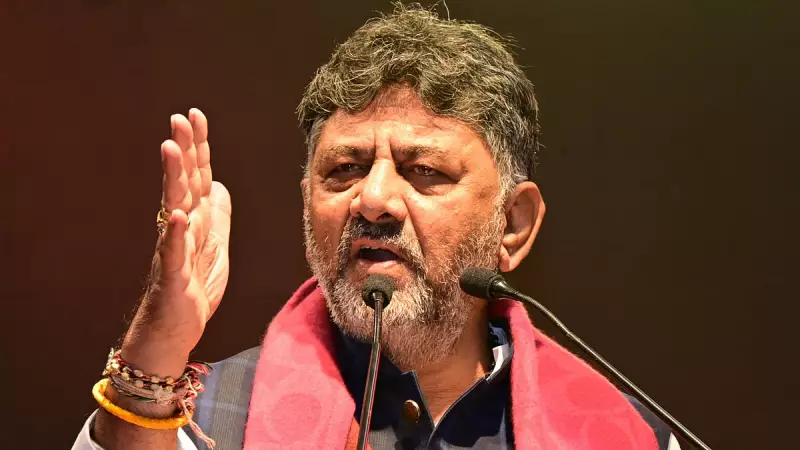
Deputy Chief Minister of Karnataka, DK Shivakumar, on Wednesday chose to maintain a conspicuous silence regarding a critical internal letter written to Congress leader Rahul Gandhi. The letter, penned by Karnataka Pradesh Congress Committee (KPCC) working president Ramalinga Reddy, reportedly flags significant organizational shortcomings at the booth level in Bengaluru.
Internal Dissent Surfaces Publicly
When approached by journalists for his reaction to the contents of Reddy's communication, Shivakumar, who also serves as the state Congress president, declined to offer any remarks. "I don't want to comment on that," was his brief and pointed response. This refusal to engage with the issue publicly underscores the sensitivity of the matter within the party's state unit.
The letter from Ramalinga Reddy, a senior figure and former minister, is addressed directly to Rahul Gandhi. It brings to the fore serious concerns about the party's ground-level preparedness in Bengaluru, a key urban bastion. While the full contents have not been officially released, it is understood to detail lapses in booth management and organizational structure that could impact the party's electoral performance.

A Pattern of Organizational Concerns
This incident is not an isolated expression of concern. It follows recent comments made by another senior Congress leader, Satish Jarkiholi. Jarkiholi had openly stated that the party's performance in the recent Lok Sabha elections within the state would have been stronger if the organization had been more robust and cohesive.
The combined effect of Jarkiholi's statements and Reddy's formal letter paints a picture of internal unease regarding the party's operational strength in Karnataka. It highlights a perceived gap between the leadership and the grassroots machinery, a critical element for success in Indian elections.
Leadership in the Spotlight
The development places Deputy CM Shivakumar in a delicate position. As the head of the state Congress, he is ultimately responsible for the party's organizational health. His decision to not comment can be interpreted in multiple ways: as an attempt to avoid airing internal dirty laundry in public, a sign that the matter is being handled privately, or an acknowledgment of the validity of the concerns raised.
Other top leaders have also been drawn into the conversation. When asked about the letter, Karnataka Health Minister Dinesh Gundu Rao stated he was unaware of its specifics. "I have not seen the letter. I do not know what is written in it," Rao said, distancing himself from the direct issue while the party leadership seemingly grapples with the implications.
The timing of this internal communication is crucial. With the political landscape in Karnataka remaining highly competitive, any perceived weakness in the Congress's foundational structure in its major cities is a cause for strategic alarm. The letter to Rahul Gandhi is a direct appeal to the central leadership, suggesting that some state leaders believe intervention or review from the top is necessary to rectify the situation.
This episode serves as a reminder that despite being in power in the state, the Congress party in Karnataka faces the continuous challenge of managing internal feedback and maintaining a battle-ready organization. How the leadership, including DK Shivakumar, addresses these pointed concerns from within its own ranks will be closely watched by both allies and opponents in the run-up to future electoral battles.